
 Dennis Osadebe
9 mins in the past
Through Ian Wafula, BBC Information, Africa safety correspondent, Nairobi
 AFP
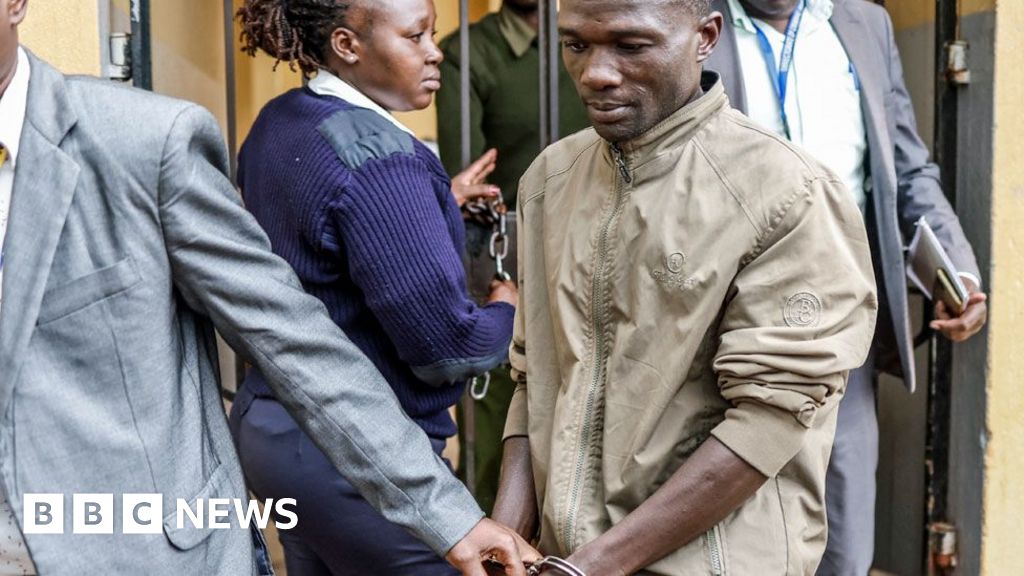
The arrest of an alleged serial killer in Kenya has indignant the rustic – with many feeling the police have questions to respond to.
Police say Collins Jumaisi Khalusha, 33, confessed to killing 42 girls – although his attorney instructed a court docket on Tuesday he used to be tortured right into a confession.
It’s the original twist in a perplexing tale that adopted the hot discovery of the dismembered extra of 9 our bodies wrapped in plastic at a disused quarry, which is worn as garbage tip and is similar to a police publish within the capital, Nairobi.
1) How did the our bodies finally end up metres from a police publish?
Many family are discovering it dried to remember that the police had been not able to discover that our bodies had been being left round 100m (328ft) from one in all their workplaces within the casual agreement of Mukuru Kwa Njenga.
Citizens have criticised officials for his or her “laxity and unprofessionalism” in coping with the crime.
In reaction, performing police prominent Douglas Kanja introduced on Sunday that the officials from Kware police publish alike the scene have been transferred.
It isn’t unclouded whether or not they have got been puzzled over how the deaths went overlooked.
However given the power’s broke human rights document, the police watchdog stated it used to be enterprise a initial investigation to ascertain whether or not there used to be any police connection.

 EPA
What’s much more baffling is how a member of the people got here to find them.
The nation of Josephine Owino, who had long past lacking, says she got here to one in all them “in a dream” and helped level them within the the appropriate direction.
Diana Keya, Ms Owino’s cousin, instructed Citizen TV that the nation upcoming paid some younger males alike the garbage tip to brush during the particles.
That used to be how 9 significantly mutilated our bodies had been discovered on Friday. They had been wrapped in nylon baggage, that have been fasten with rope.
The primary commentary by means of police stated the “alarm was raised” by means of the people.
When puzzled after the pinnacle of the Directorate of Prison Investigations Mohamed Amin stated: “We are not dreamers and we do not believe in dreams.”
2) Over what hour duration had the our bodies been left?
Police stated the our bodies recovered had been in several phases of decomposition, suggesting that the sufferers have been killed at other occasions.
Within the now-disputed confession, the police say Mr Khalusha allegedly admitted to murdering the ladies over a duration of 2 years.
What isn’t unclouded, although, is whether or not the extra have been dumped over that hour or extra just lately.
Hussein Khalid, the chief director of rights team Haki Africa, instructed the BBC that the police’s model of occasions had “a lot of loopholes”.
3) How did the police build the arrest so speedy?
Next now not it appears suspecting anything else for 2 years the police upcoming made an arrest in lower than 3 days upcoming the invention of the our bodies.
On Monday, police stated Mr Khalusha used to be detained at a bar within the petite hours of that morning occasion staring at the Euro ultimate soccer fit.
They exhibited to the media probably the most pieces stated to were recovered from the suspect’s area – additionally similar to the place the our bodies had been discovered – together with 10 telephones, a computer, identification playing cards and private feminine clothes.
The police stated that they had traced Mr Khalusha’s whereabouts upcoming geo-locating the cell phone of one in all his alleged sufferers.
Mr Khalusha’s attorney has puzzled the validity of the proof.
4) Who’re the sufferers?
Just one frame has been recognized up to now – that of 24-year-old Roseline Ongogo.
Her brother Emmanuel Ongogo instructed the BBC she went lacking on 28 June upcoming she left the home to search for blind paintings.
He stated the nation going to the morgue after they heard our bodies have been recovered from Mukuru.
They recognized her as she in the similar garments she had disappeared dressed in and had the similar coiffure.
 Ongogo nation
The police additionally allege that Mr Khalusha’s spouse used to be his first sufferer and say her identification card used to be discovered some of the assets of alternative allegedly sufferers.
The nation of Ms Owino, who stated they dreamt about her whereabouts, instructed the BBC they had been nonetheless looking ahead to an identity.
5) What are the police announcing about girls’s protection in Kenya?
The invention has introduced again recollections of the brutal homicide of 20-year-old Rita Waeni in January.
Her dismembered frame used to be discovered at a non permanent condominium condominium in Nairobi. The case is but to be solved.
The loss of life brought on national demonstrations towards the emerging instances of femicide and alternative violence towards girls.
Amnesty Global stated greater than 500 instances of femicide had been recorded in Kenya between 2016 and 2023.
The entire our bodies recovered from the garbage tip are feminine.
A handful of elected girls leaders who converged at morgue requested the federal government to hurry up the investigations and put an finish to such violence.
When requested what the police had been doing to deal with instances of femicide and violence towards girls, spokesperson Resila Onyango stated she may just now not cope with that factor particularly – however she instructed the BBC that the paintings of the police used to be “to protect life and property of everyone”.
Extra Kenya tales from the BBC:
 Getty Photographs/BBC













