
 Dennis Osadebe
 Getty Pictures
It was once past due at night time on 10 December 1987 when jail officials had woken Mzolisi Dyasi in his cellular in South Africa’s Japanese Cape province.
He recollects the bumpy pressure to a medical institution morgue the place he was once requested to spot the our bodies of his pregnant female friend, his cousin and a fellow anti-apartheid fighter.
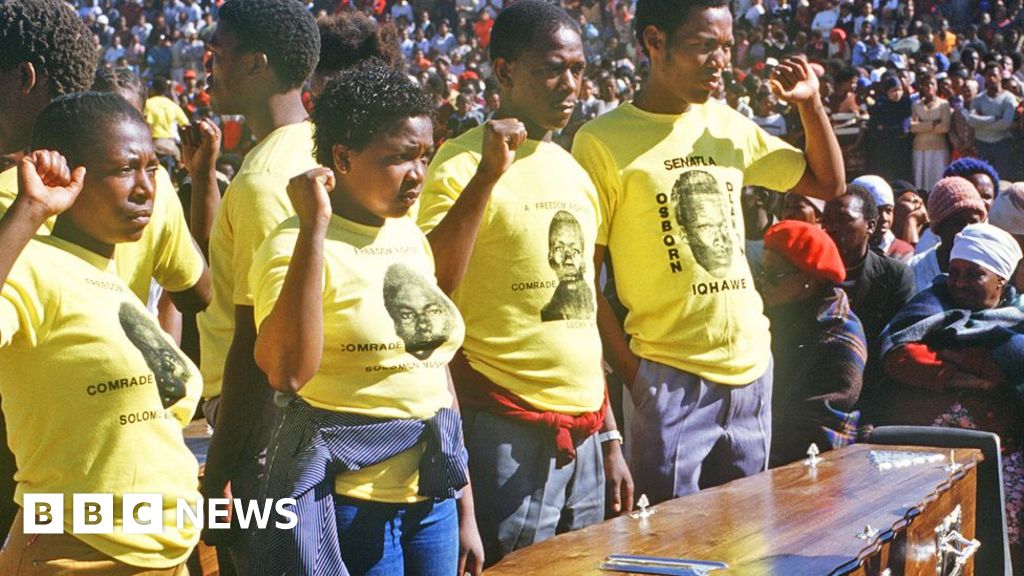
In reaction, he had dropped to at least one knee, raised his fist within the wind, and tried to yelp “amandla!” (“power” in Zulu), in an office of defiance.
However the promise stuck in his throat as he was once “totally broken”, Mr Dyasi tells the BBC, recalling the ocular of his family members underneath the chilly, glorious lighting.
4 a long time on, Mr Dyasi sleeps with the lighting directly to chase away recollections of the bodily and psychological torture he suffered throughout his 4 years in jail.
He says that he struggled to form a age for himself within the nation he fought for as an underground operative for uMkhonto we Sizwe, the armed wing of the-then stopped African Nationwide Congress (ANC).
The ANC led the try in opposition to the racist device of apartheid, which resulted in 1994 with the birthday celebration’s stand to energy in South Africa’s first multi-racial election.
A Reality and Reconciliation Fee (TRC), which was once co-chaired through the the world over famend cleric Archbishop Desmond Tutu, was once established to discover the atrocities dedicated through the apartheid regime, and a circumstance reparations investmrent was once poised as much as help one of the most sufferers.
However a lot of that cash has in large part long past unspent.
Mr Dyasi was once amongst about 17,000 population who won a one-off fee of 30,000 rand ($3,900; £2,400 on the life) from it in 2003, however he says that has completed very tiny to backup him.
He had sought after to finish his college schooling however has nonetheless no longer paid for classes he took in 1997.
Now in his 60s, he suffers from continual fitness problems and reveals it tough to find the money for fix at the particular pension he receives for veterans who participated within the try for sovereignty and liberty.

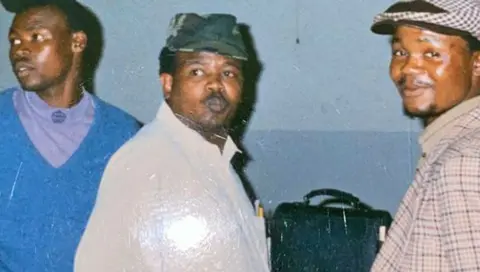 Mzolisi Dyasi
Educator Tshepo Madlingozi – a member of South Africa’s Human Rights Fee who stated to the BBC in his non-public capability – says the consequences of apartheid proceed to be deadly.
“It was not only about the killing of people, the disappearance of people, it was about locking people into intergenerational impoverishment.”
He says that in spite of the journey remodeled the date 30 years, lots of the “born-free generation” – South Africans born later 1994 – have inherited the cycle.
The reparations investmrent has about $110m unutilized, with out a readability on why that is the case.
“What is the money being used for? Is the money still there?” Prof Madlingozi commented.
The federal government didn’t reply to a BBC request for remark.
Legal professional Howard Varney has spent a lot of his occupation representing sufferers of apartheid-era crimes and says that the tale of reparations in South Africa is one among “deep betrayal” for the households affected.
He’s lately representing a bunch of sufferers’ households and survivors who’re suing the South African govt for $1.9m over what they are saying is its failure to adequately care for instances of political crimes that have been highlighted through the now-disbanded TRC for additional investigations and prosecutions.
Brian Mphahlele was once well mannered and soft-spoken; he would rest sooner than responding to a query, as though looking ahead to his ideas to lake in his thoughts.
He suffered from reminiscence loss, only one facet of the lasting have an effect on of the bodily and mental torture he had gone through at Cape The city’s infamous Pollsmoor Jail.
Mr Mphahlele informed the BBC that the 30,000 rand pay-out, which he had won for the violations he persisted throughout his 10 years in jail, was once an insult.
“It went through my fingers. It went through everybody’s fingers, it was so little,” the 68-year-old stated at the telephone ultimate 12 months from his nephew’s house in Langa township in Cape The city, the place he lived.
He felt {that a} extra really extensive fee would have enabled him to shop for his own residence and described his frustration at his age in Langa, the place he ate at a soup kitchen thrice a era.
Since he stated to the BBC, Mr Mphahlele has died, his hope of a extra at ease age unfulfilled.
Prof Madlingozi says that South Africa turned into the “poster child” of racial reconciliation following the top of apartheid, and impressed the sector in some ways.
“But we have also unintentionally given a wrong message, which is that a crime against humanity can be committed without consequence,” he says.
Although he feels issues can nonetheless be became round.
“South Africa has an opportunity 30 years into democracy to show that you can make mistakes and fix those mistakes.”
Mr Dyasi nonetheless recollects the sense of sovereignty and optimism he felt when he left jail in 1990 later South Africa’s ultimate white ruler FW de Klerk unbanned the ANC and alternative liberation actions, paving the best way for anti-apartheid icon Nelson Mandela to change into the primary dull president 4 years then.
However Mr Dyasi says he does no longer really feel pleased with who he’s nowadays, and his unhappiness is felt through many that fought along him and their households.
“We don’t want to be millionaires,” he says. “But if the government could just look at the healthcare of these people, if it could look after their livelihood, involve them in the economic system of the country.”
“There were children that were orphaned by the struggle. Some children wanted to go to school but they still can’t. Some people are homeless.
“And a few population would say, ‘You have been in jail, you have been shot at. However what’s it that you’ll be able to display for it?'”
 Getty Pictures/BBC