
 Dennis Osadebe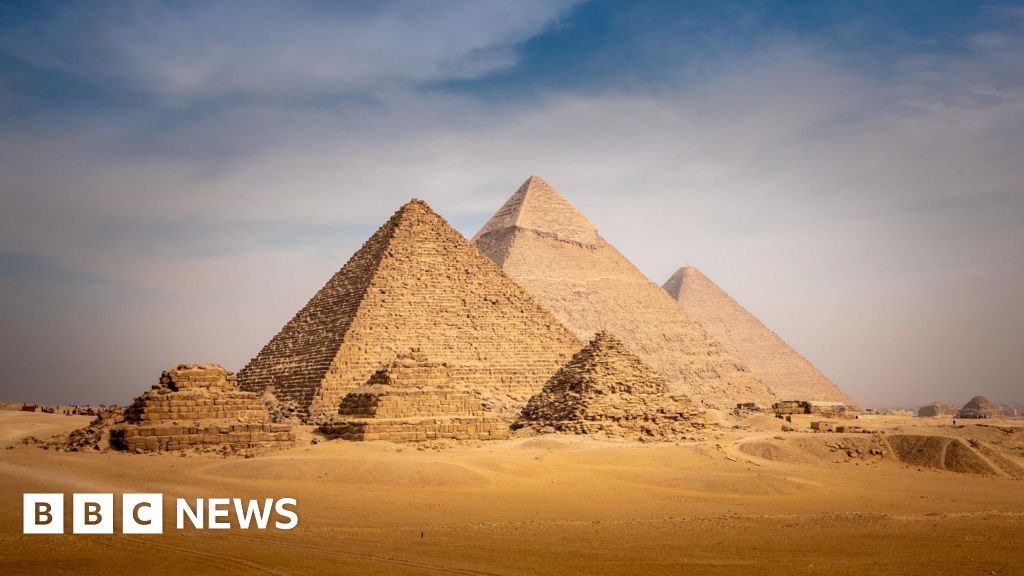
Chatting with the BBC, one of the crucial learn about’s co-authors, Dr Suzanne Onstine, mentioned “locating the actual [river] branch and having the data that shows there was a waterway that could be used for the transportation of heavier blocks, equipment, people, everything, really helps us explain pyramid construction.”
The crew discovered that the river department – named the Ahramat department, with “ahramat” which means pyramids in Arabic – used to be more or less 64km (39 miles) lengthy and between 200-700m (656-2,296 toes) broad.
And it bordered 31 pyramids, which have been constructed between 4,700 and three,700 years in the past.
The invention of this extinct river department is helping provide an explanation for the top pyramid density between Giza and Lisht (the web page of Center Kingdom burials), in what’s now an inhospitable branch of the Saharan desolate tract.
The river department’s proximity to the pyramid complexes means that it used to be “active and operational during the construction phase of these pyramids”, the paper mentioned.
Dr Onstine defined that historic Egyptians may just “use the river’s energy to carry these heavy blocks, rather than human labour,” including, “it’s just a lot less effort”.
The River Nile used to be the lifeline of Historical Egypt – and remainder so as to this moment.