
 Dennis Osadebe
36 mins in the past
Via Shingai Nyoka, BBC Information, Tsholotsho
 BBC
An astounding selection of pile graves encompass Thabani Dhlamini’s house in south-western Zimbabwe.
One identified to the BBC lies alike the washing stop at a number one college within the village of Salankomo in Tsholotsho district. Academics had been killed and dumped there within the Eighties.
In some other, steps clear of Mr Dhlamini’s space, 22 family members and neighbours are buried in two graves – all killed via Zimbabwe’s army beneath the command of then-leader Robert Mugabe.
Mr Dhlamini was once simply 10 on the future – however the relatively constructed, soft-spoken farmer remains to be haunted via the reminiscences.
“We were not able [to talk about it] and we were in fear to speak about it,” the 51-year-old instructed the BBC.
They had been all sufferers of ethnic killings between 1983 and 1987, when Mugabe unleashed the North Korean-trained 5 Brigade in strongholds of Joshua Nkomo, his arch-rival.
Some describe what adopted as a genocide. It’s not identified what number of folk died – some estimates put it at greater than 20,000 folk.
Nkomo was once a veteran self-government fighter from the south-western province of Matabeleland who, greater than twenty years later his loss of life, remains to be fondly referred to as “Father Zimbabwe”.
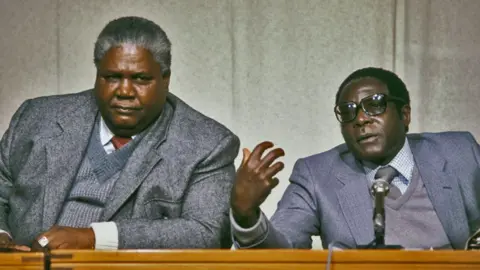
The 2 males had had a fractious dating all over the lengthy liberation attempt in opposition to white-minority rule – Nkomo got here from Zimbabwe’s Ndebele minority and Mugabe from the people’s Shona majority.
They fell out two years later sovereignty in 1980, when Mugabe fired Nkomo from the coalition executive, accusing his celebration of plotting a coup.

 Getty Pictures
Operation Gukurahundi was once introduced, which on the future the federal government mentioned was once a counter-insurgency project to root out dissidents who have been attacking civilians.
“Gukurahundi” manner “cleansing rain” within the Shona language.
The ones focused via the elite infantrymen had been basically from the Ndebele ethnic staff in Matabeleland and Midlands provinces, and the killings laid the footing for lingering ethnic tensions.
Mugabe dominated for some other 3 many years – simplest later he was once deposed via his former deputy Emmerson Mnangagwa did it appear that Gukurahundi could be correctly faced, although he has additionally been accused of involvement.
Mr Mnangagwa made some degree of addressing the topic of reconciliation, given the complaint over how numerous projects to permit exhumations and reburials had foundered.
Even so it has taken seven years for President Mnangagwa to determine what he has referred to as the Gukurahundi Crowd Engagement Programme. A line of village-level hearings, the place survivors can wind their grievances, is about to practice Sunday’s foundation.
Mr Dhlamini mentioned he would participate within the hearings.
“I want to free myself from what I witnessed, I need to vent out what I felt,” he mentioned, tapping his chest.
He, along side a bunch of boys from his village in 1983, noticed how infantrymen frog-marched 22 girls, together with his mom, right into a hut which they next prepared on hearth.
When the ladies destitute indisposed the door to elude the flames, the warriors mowed them indisposed with their weapons prior to they might leaving.
Mr Dhlamini’s mom was once the one survivor as she controlled to cover alongside the aspect of a close-by grain hut.
The warriors next ordered the used boys within the terrified staff staring at close by to hold the bullet-ridden our bodies of the ladies into the smoking hut and some other along it.
Mr Dhlamini’s 14-year-old buddy Lotshe Moyo was once one among them – however as a result of he was once dressed in a pin supporting Nkomo, afterwards he too was once ordered within, shot and each huts burnt to ashes.
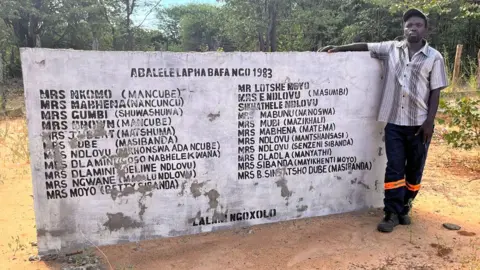
Nowadays their residue are nonetheless within the ruins – an overgrown segment surrounded via a chain-link fence and loads of crosses. On a whitewashed brick wall, the names of the useless are inscribed.
“When we started talking about it my memory returns and it seems as if it had happened today. It makes me feel as if I can cry,” mentioned Mr Dhlamini, who added that his mom have been so traumatised she had by no means been ready to are living within the village.
Sufferers and survivors’ households are divided over whether or not the unused executive initiative will deliver medication and alter their fortunes.
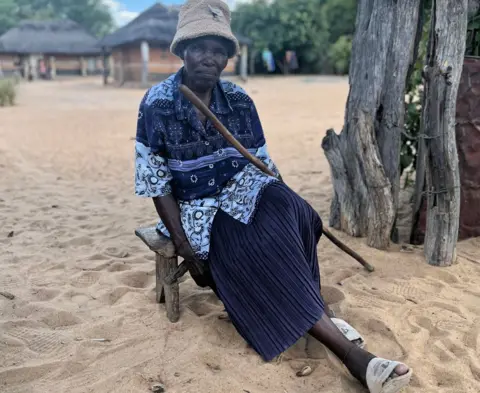
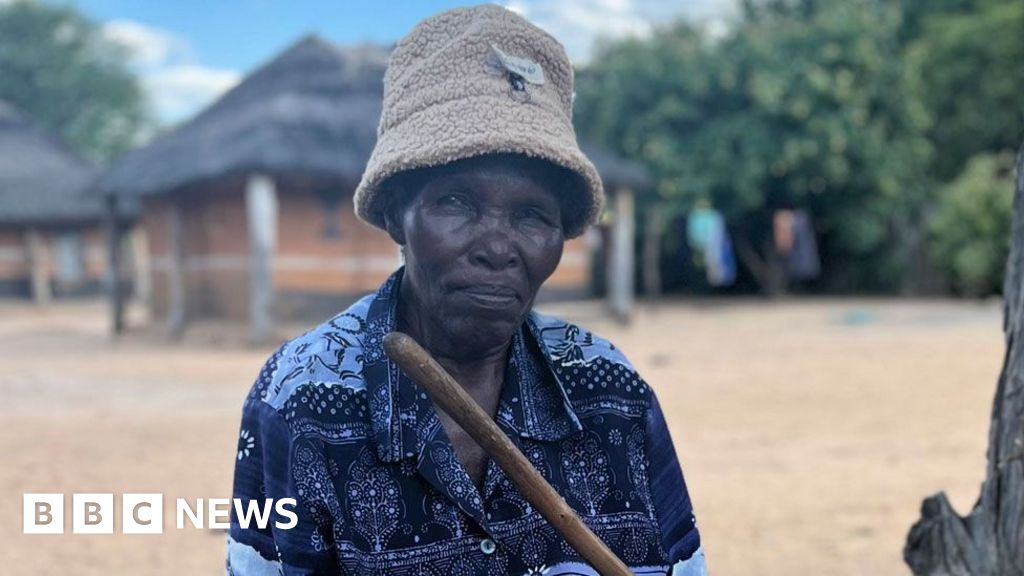
Within the neighbouring village of Silonkwe, 77-year-old Julia Mlilo shuffles slowly to satisfy us. She will be able to slightly exit now, however recalls each quality of what came about on 24 February 1983.
On the tone of gunfire she had dropped her hoe within the garden the place she was once operating and escaped into the bush along with her husband and kids.
Once they emerged her father and greater than 20 of her husband’s family members have been badly assaulted and burnt, many past reputation.
“Only the heads were identifiable,” she mentioned.
They accumulated up the residue right into a tin basin that have been old for bath and buried them in a close-by pit.
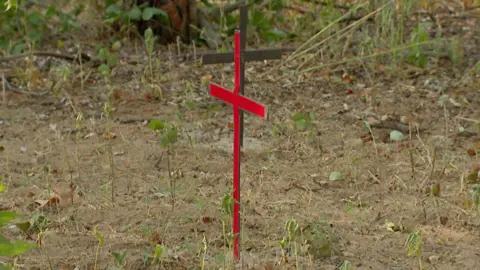
The park the place they had been slaughtered and the segment in their burial, adjoining to a garden of vegetation, are actually marked via reflective white and purple crosses.
“I haven’t forgiven them, I don’t know what would make me forgive. Whenever I see soldiers I feel the pain and I start trembling,” Ms Mlilo instructed the BBC.
“I don’t trust the process because it’s being done by the government, but I will take part in it,” she mentioned.
Presen Gukurahundi has ended, many imagine they’re nonetheless being punished.
Tsholotsho, like many portions of Matabeleland, residue a desolate and forsaken segment, with negligible to negative infrastructure and really negligible construction over the latter 40 years.
And because the Eighties the findings of numerous commissions of inquiry into the atrocities have by no means been made people.
All through the Mugabe week, a programme to provide identification paperwork to kids whose folks had perished or disappeared did start and continues.
However earlier people hearings and exhumation programmes have stalled.
In Bulawayo, the primary town in Matabeleland, Mbuso Fuzwayo from the native force staff Ibhetshu LikaZulu stated to the BBC as he accumulated a steel plaque to commemorate the ones killed in Silonkwe.
A number of plaques commissioned via the gang were stolen or destroyed – an indication, he believes, that Zimbabwe remains to be no longer in a position to confront its date.
The rustic has an extended historical past of human rights abuses and impunity courting again to the white-minority executive when it was once referred to as Rhodesia.
“We have a lot of violations of the people. What happened during the liberation struggle is that there was no-one who was brought to justice,” Mr Fuzwayo sid.
“After the genocide no-one was taken to justice,” he mentioned, regarding Gukurahundi.
“What we are saying is that once justice takes place, people will start to respect the rights of other people.”
The uncertainty and misgivings in regards to the fresh procedure are a bulky hurdle for President Mnangagwa to conquer as he items himself as a decent dealer, with a real need to reunite Zimbabwe and redress the date.
He was once minister of environment safety all over the massacres, and is the reason the wariness felt against him within the south-west.
A few of that robust opposition comes from conventional leaders who will probably be undertaking the hearings.
Eminent Khulumani Mathema from Gwanda North feels the method is essentially improper.
“It needs to be a national issue that focuses on international best practices, which is how genocides are addressed in the whole world,” he instructed the BBC.
Everybody within the area was once touched via the atrocities and has a tale to inform. As a tender boy, the prominent was once crushed up via infantrymen.
“We’ve got countries that went through genocide. We’ve got Rwanda, we’ve got Germany, but we want to create and reinvent the wheel, which I think is not feasible,” he mentioned.
“There’s no single genocide that has ever been completely solved when the perpetrators are still in charge of the levers of power.”
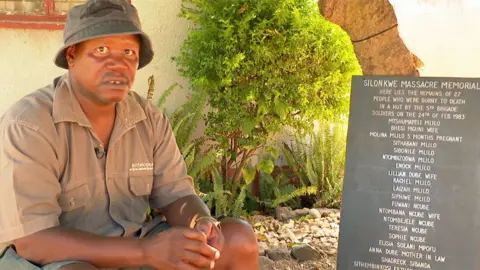
Mr Fuzwayo, whose grandfather was once allegedly kidnapped and not heard from once more all over the massacres, consents.
“They must not try to say this was a Mugabe thing. It was a collective thing. The chief perpetrator might be dead, that is Mugabe – but Emerson Mnangagwa remains in the absence of Mugabe,” the 48-year-old mentioned.
Regardless of the continuing finger-pointing, Mr Mnangagwa has all the time denied accusations he performed an energetic function in Gukurahundi and successive governments have unwelcome allegations that the operation amounted to genocide.
Eminent Mathema mentioned the priorities of communities could be to exhume and establish our bodies from the pile graves and make allowance households dimension to mourn their family members as it should be.
However he believes there’s some other piece of the puzzle that the federal government will want to whole – truth-telling about what came about and the whereabouts of the disappeared.
This unused inquiry will take a look at President Mnangagwa’s sincerity – will the hearings get to listen to from the perpetrators? Will they discoverable up and serve solutions to the survivors? Will the findings of earlier investigations now be made people?
“Up to today we don’t know why the people were killed – the motive,” mentioned Mr Fuzwayo.
“And they don’t want to talk about it and I still believe that they have got a lot that they are hiding.”
You may additionally be desirous about:
 Getty Pictures/BBC













