
 Dennis Osadebe
 Getty Photographs
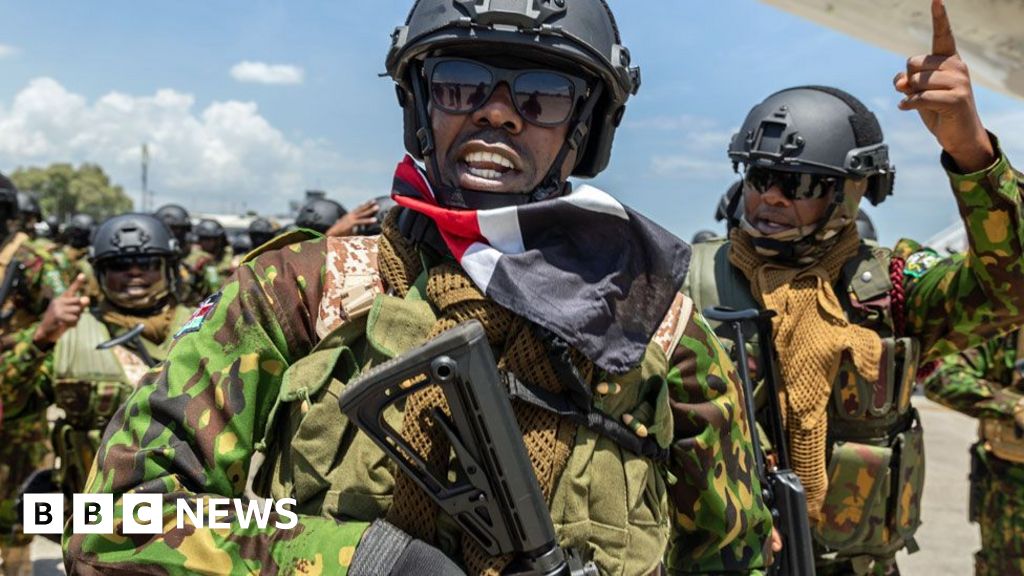
When the primary contingent of 200 elite Kenyan cops flew into Haiti’s capital Port-au-Prince on 25 June, they filed with a bit of luck off their Kenyan Airlines aviation clad in helmets and battle equipment, wearing their guns and keeping towering the Kenyan nationwide flag.
They chanted in Swahili era they psyched themselves up at the airport tarmac, as did a 2nd bundle of 200 Kenyan officials who landed 3 weeks upcoming.
“Let’s go!” and “We’re moving!” got here the shouts.
Hopes have been towering that the Kenyan police would carry much-needed muscle to Haiti’s beleaguered Nationwide Police (PNH), as they struggled to store again a unfortunate offensive via Haitian felony gangs that experience terrorised the capital and immense swathes of the rustic for greater than 3 years.
The Kenyans are the exit barricade core of a UN-mandated, multinational pressure that can search to revive leisure to Haiti.
They have been first of all welcomed and feted via Haitian govt leaders, and via many in Haiti’s media too.
Radio Independante FM posted on X a welcome greeting within the nation’s Creole language for the Kenyans, announcing:
“Haiti is the country of all Africans. Since you are black Haiti is your home… You Kenyan soldiers are at home and must be welcomed to help fight these wasters [the gangs] that prevent us from living in our country”.
On the other hand, weeks upcoming the a lot expected deployment, which had already been behind schedule via prison demanding situations in Kenya and logistical hitches, many Haitians appear pissed off and disappointed that the pressure, along side their Haitian police colleagues, have now not moved extra temporarily and decisively in opposition to the gangs, their bosses and their identified hideouts.

 Getty Images
Annoyed remark, expressing impatience and sadness, is at the stand in Haitian media and social media circles.
There was refrain of requires “actions not words” and “concrete results”.
One of the vital sharpest complaint accuses the Kenyans of “theatrics” and being mere “tourists”.
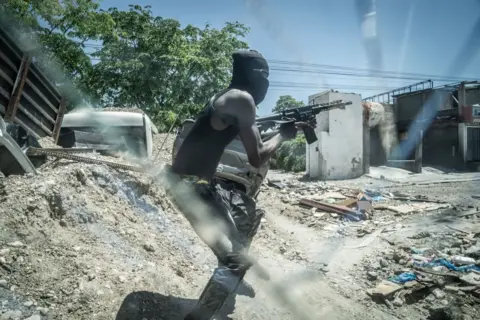
Critics indicate that – regardless of high-profile joint patrols via Kenyan and Haitian police in Port-au-Prince the place they have got exchanged hearth with suspected gangmen – the gangs most effective appear to have tightened their fondle at the capital’s south-western and north-eastern suburbs because the Kenyan undertaking started.
Gang individuals have attacked and burned or in part destroyed police stations and proceed to prey on main highways out of the capital and inland.
There’s a feeling amongst some that the Kenyan pressure has been too sluggish to put together its presence felt.
“What are the Kenyans waiting for to act against the bandits?,” requested native information outlet AyiboPost in an editorial posted to X on 11 July, a fortnight upcoming the East Africans landed.
Some two weeks upcoming, on-line information web page Le Filet Data was once commenting pointedly: “The presence of the Kenyan police in the country does not manage to frighten the bandits.
“They proceed to bloodbath individuals of the civilian folk.”
 Getty Images
The Kenyan contingent has already experienced its first casualty since arriving in Haiti.
On 30 July, a Kenyan policeman received a gunshot injury in the shoulder in Port-au-Prince when a Kenyan patrol engaged gang members.
That same day, the Haitian police chief Rameau Normil, accompanied by the Kenyan force commander Godfrey Otunge, appeared to try to counter unfavourable local media commentary by announcing that more than 100 “bandits” had been killed by the Haitian and Kenyan police in operations conducted under a state of emergency declared in the most gang-plagued zones since mid-July.
Such statements however have not succeeded in placating public scepticism.
Confidence was not improved by the publication online of videos showing top Haitian government officials, as well as Kenyan and Haitian police escorting them, making a hasty retreat on 29 July, amid a barrage of gunfire, from the abandoned General Hospital in downtown Port-au-Prince they had just visited.
Both Haitian and Kenyan police had said this facility was firmly under their control.
Despite such criticism Haiti’s interim Prime Minister Garry Conille told BBC HARDtalk he welcomed the support given how undermanned the Haitian police are.
“We do need the help… yet it’s coming in too slow and Haitians are growing impatient,” he acknowledged.
The prime minister also batted off those who questioned the deployment of Kenyan officers given their heavy-handed handling of recent anti-government riots at home.
“The respect for our laws and operational procedures have been very very good and we’re very happy with the accompaniment we’re receiving,” he said, emphasising that the role of the Kenyans was to support and accompany the police – not operate independently.
Nonetheless the Kenyans have faced open defiance from prominent Haitian gang leaders.
 Getty Images
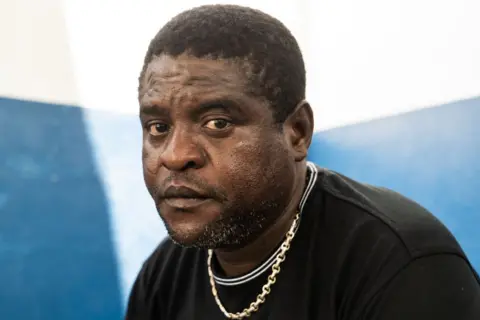
Only days after the arrival of the first group of Kenyans, Jimmy “Fish fry” Chérizier, an outspoken leader of the “Viv Ansanm” (Live Together) gangs coalition, appeared in a provocative video lasting almost eight minutes that was posted on X.
Leading his masked foot soldiers in a strutting, chanting war dance through his Delmas 6 stronghold, they held their automatic weapons aloft.
“Right here’s Kenya [the Kenyans], bullets [for them],” they chanted in Creole at one point.
Other gang leaders, including Wilson “Lanmo Sanjou” Joseph, the boss of the “400 Mawozo” gang, and youthful gang chief “Ti Bebe Bougoy”, have also been appearing in videos taunting both Haitian authorities and the Kenyans, while the gangs continue to boast of their attacks.
In mid-July, the Kenyan contingent of the multi-national force launched their own X account, @MSSMHaiti, in a bid to set the tone of the public narrative of their mission in Haiti.
Its daily reports on the Kenyans’ activities range from receiving visiting dignitaries at their base, to human rights lessons, and upbeat accounts of “relief” patrols on the streets of Port-au-Prince.
But the determined optimism of the @MSSMHaiti stream, particularly references to “important luck” and “sluggish go back to normalcy”, appears to have rankled many in Haiti.
Some Haitians have denounced the Kenyan reports as, at best, overblown – and, at worst, “propaganda”.
You may also be interested in:
 Getty Photographs/BBC













