
 Dennis Osadebe
 Kevin McGregor / BBC
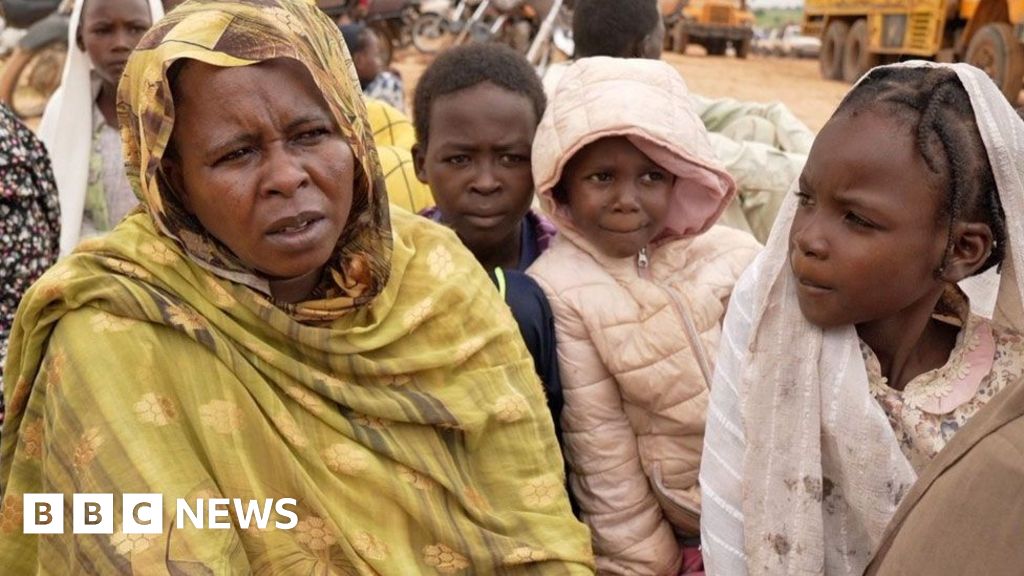
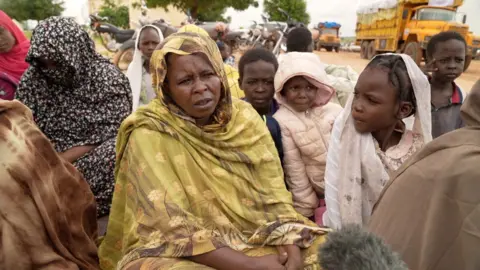
At the facet of a mud street in Adré, a key crossing at the Sudan-Chad border, 38-year-old Buthaina sits at the field, surrounded by means of alternative girls. Each and every of them has their kids by means of their facet. None turns out to have any property.
Buthaina and her six kids fled el-Fasher, a besieged town within the Darfur area of Sudan, greater than 480km (300 miles) away, when foods and drinks ran out.
“We left with nothing, we just ran for our lives,” Buthaina tells the BBC. “We didn’t want to leave – my children were top of their class at school and we had a good life at home.”
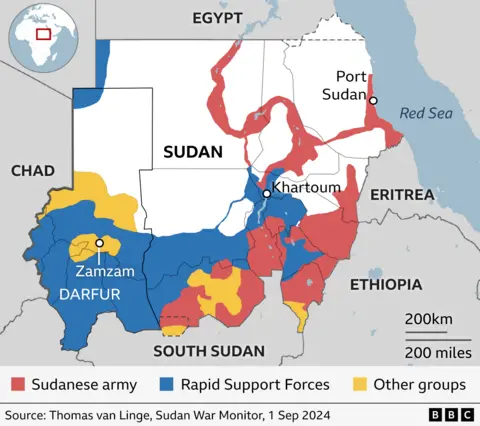
Sudan’s civil battle started in April terminating yr when the military (SAF) and the their former paramilitary allies, the Speedy Backup Forces (RSF), started a vicious attempt for energy, partly over proposals to advance in opposition to civilian rule.
The battle, which displays deny indicators of finishing, has claimed 1000’s of lives, displaced hundreds of thousands of family and plunged portions of the rustic into famine.
And assistance companies warn Sudan may just quickly enjoy the worst famine of anyplace on the earth except considerably extra support arrives.
The BBC noticed the desperation of Sudanese family first-hand once we visited camps in Adré, at the nation’s western border, and Port Sudan, which is the rustic’s primary assistance hub, 1,600km away at the east coast.

 Kevin McGregor / BBC
Adré has turn into a potent image of the political failure and humanitarian crisis produced by means of the flow struggle.
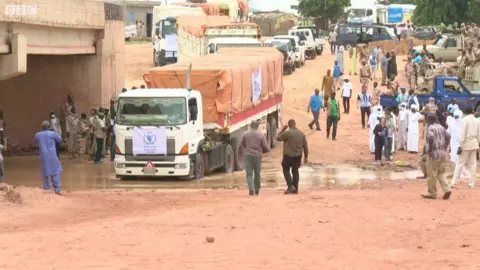
Till terminating week, the crossing have been closed since January with only some assistance lorries making it into the rustic.
It has since reopened however assistance companies concern the deliveries now going in might be too negligible, too past due.
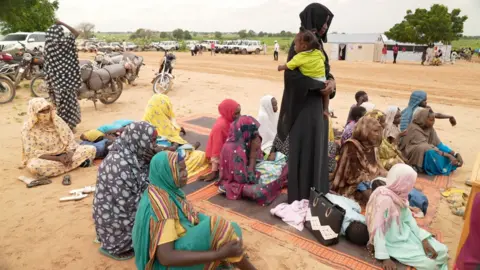
Each time, dozens of Sudanese refugees move the border into Chad – a lot of them girls sporting their hungry and thirsty kids on their backs.
The while they come, they scurry to a H2O tank arrange by means of the Global Meals Programme (WFP), one of the UN companies which have been seeking to elevate the alarm over the size of the struggle’s humanitarian have an effect on.
Upcoming attaining Adré, we put together our option to a makeshift camp akin the border that has been assembled by means of refugees, with bits of timber, material and plastic.
Hail starts to fall.
As we shed, it turns torrential and I ask whether or not the precarious shelters live to tell the tale the downpours. “They don’t,” says our information Ying Hu, workman reporting officer from the UNHCR, any other UN company – for refugees.
“With rainfall comes a whole set of diseases,” he provides, “and the worst part is it also means at times it can take days before we can return here by car, because of the flooding, and that means aid can’t reach here either.”
 Kevin McGregor / BBC
Famine has been declared in a single branch – in Zamzam camp in Darfur – however it is because it is among the few playgrounds in war-torn Sudan the UN has decent knowledge on.
The WFP says it delivered greater than 200,000 tonnes of meals between April 2023 and July 2024 – a ways lower than necessary – however all sides are accused of blockading deliveries into gardens underneath rival keep an eye on.
The RSF and alternative militias were accused of stealing and destructive deliveries, month the SAF has been accused of blockading deliveries into gardens underneath RSF keep an eye on, together with maximum of Darfur.
The BBC approached the RSF and the SAF in regards to the accusations however has no longer had a reaction. Each factions have prior to now denied impeding the supply of humanitarian bliss.
A unmarried convoy of assistance vehicles can wait six weeks or extra in Port Sudan earlier than being cleared by means of the SAF for onward walk.
On 15 August, the SAF correct to permit assistance companies to renew shipments by the use of Adré, which must serve much-needed support to the family in Darfur.
In Might, Human Rights Supervise stated ethnic cleaning and crimes in opposition to humanity were dedicated in opposition to ethnic Massalit and non-Arab communities in a part of Darfur by means of the RSF and its Arab allies. The RSF rejects this and says it isn’t fascinated about what it yelps a “tribal conflict” within the area.
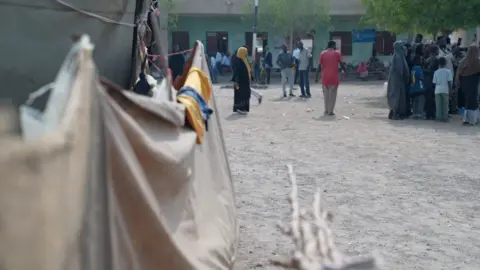
All over our excursion of Port Sudan we consult with a camp for family who’ve been displaced inside Sudan.
Strolling from tent to tent, we pay attention one tale nearest any other of loss and horror.
In a single, a gaggle of ladies take a seat in a circle, some protecting their young children tightly. They all proportion tales of abuse, rape and torture in RSF prisons.
One of the vital girls, who the BBC isn’t naming, says she used to be captured together with her two-year-old son as she used to be getaway Omdurman, akin the capital, Khartoum.
“Every day they would take my son to a room down the hallway, and I would hear him cry as they raped me,” she informed me.
“It happened so frequently that I would try to focus on his cry as they did it.”
Additionally on the camp I meet Safaa, a mom of six who fled Omdurman too.
Requested the place her husband is, she says he stayed in the back of for the reason that RSF goals any guy who makes an attempt to retirement.
“Every day my children ask me, ‘Where is Baba? When will he come?’ But I have not heard from him since January, when we left, and I don’t know if he is still alive,” she says.
 Kevin McGregor / BBC
Requested about what date she envisages for her and her kids, she says: “What future? Our future is over – there is nothing left. My children are traumatised.
“Every day, my 10-year-old son cries wanting to go home. We went from living in a house, going to school and now we live in a tent.”
The BBC approached the RSF for remark about rapes and alternative assaults however has no longer had a reaction. It has prior to now stated experiences that its opponents had been accountable for popular abuses had been fake however the place a tiny collection of detached incidents had took place their troops have been held responsible.
An worker for Unicef – the UN kids’s company – appearing us across the camp says those that have arrived listed below are the “lucky ones”.
“They managed to escape the fighting and come here… they have shelter and aid,” he says.
 Kevin McGregor / BBC
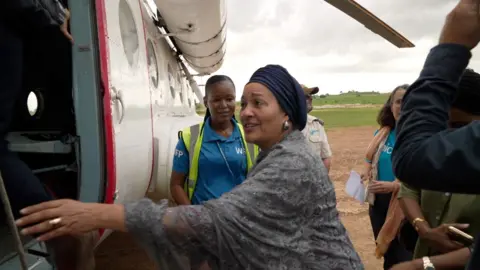
The BBC used to be visiting Adré and Port Sudan with UN Deputy Secretary Basic Amina Mohamed and her staff of executives, who visited govt officers and Sudan’s de-facto president, Abdel Fattah al-Burhan, to induce them to accumulation the Adré crossing seen.
Her struggle is to position Sudan again at the schedule for the global nation at a life when the sector’s consideration is enthusiastic about conflicts in Ukraine and Gaza.
“There is fatigue because there are so many different crises around the world, but that’s just not good enough,” she says.
“You come here and you meet these mothers and their children and you realise they aren’t just numbers.
“If the international community doesn’t step up, people will die.”
You may also be interested in:
 Getty Pictures/BBC













