
 Dennis Osadebe
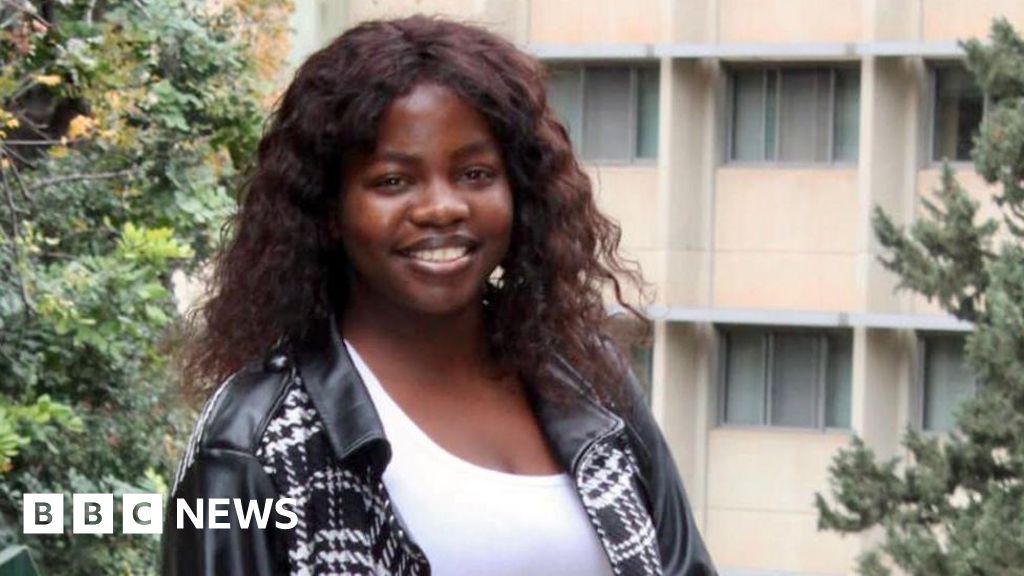
 Sharon Atyang
Farai Makamba, a 27-year-old scholar from Zimbabwe, impaired to retain his college books on his table at house in Beirut.
Now they’ve been changed by means of his passport, progress paperwork, and money.
“I have a plan for myself in case I need to leave urgently,” he says.
Mr Makamba, whose title we now have modified to offer protection to his identification, returned to Lebanon in September to complete the overall yr of his grasp’s level in mechanical engineering.
He spent the summer season sleep at house in Harare.
He got here again with the hope that the war would de-escalate. However since Hamas attacked Israel on 7 October closing yr, there was near-daily cross-border hearth between Israel and Hamas’s best friend Hezbollah, the Iran-backed army staff which is primarily based in Lebanon.
This closing while has observable the deadliest days of war in Lebanon in nearly twenty years.
As many as 1,000,000 society were compelled from their houses throughout Lebanon, the rustic’s Top Minister, Najib Mikati, has mentioned.
Israel’s army says it’s sporting out a stream of “extensive” moves in southern Lebanon and the Beqaa section, aiming to smash Hezbollah infrastructure. The crowd’s chief Hassan Nasrallah was once killed in an airstrike on Friday.
The while earlier than closing, 39 society had been killed and hundreds wounded when pagers and walkie-talkies impaired by means of Hezbollah contributors exploded around the nation. Hezbollah blamed Israel, which has neither showed nor denied it was once in the back of the assault.
The USA, UK, Australia, France, Canada and Bharat have all issued professional recommendation for his or her electorate to drop Lebanon once imaginable.
African scholars have informed BBC Information they now face a catch 22 situation – whether or not to stay in Lebanon as Israel continues to assault or go back house to international locations reminiscent of Uganda, Zimbabwe and Cameroon.
On the American College of Beirut (AUB), the place Mr Makamba is finding out, there are round 90 African scholars on a scholarship programme.
Mr Makamba says there was a “huge jump in fear” amongst scholars, particularly for the reason that pager and walkie-talkie explosions.
“We don’t know who is carrying a ticking time bomb in their pockets,” he says.
“Is it your taxi driver? Is it your Uber driver? Is it the person you are walking next to?”

 Reuters
Mr Makamba’s days impaired to be stuffed with categories and eye pals. Now he says he handiest leaves the home to move to buy necessities and the strain is palpable.
He lately stocked up on staples reminiscent of bread, pasta and bottled aqua in case of shortages.
The campus is closed and a number of other of his categories were moved on-line.
“Everyone is nervous. Even the way we communicate is different,” he says.
“When we finish class, our professor now says: ‘Have a good day and stay safe.’ We say the same thing because we know what is happening in the country.”
“No-one is safe.”
Nation faculties have additionally closed and the ministry of schooling says they’re being impaired to house society who’ve fled their houses as a result of the Israeli airstrikes within the south of the rustic.
The scholarship programme investment African scholars at AUB has given world scholars the approach to move house and end their direction on-line.
However some say that might not be imaginable.
Sharon Atyang, a 27-year-old scholar from northern Uganda, is lately finishing her grasp’s in family building at AUB.
She says electrical energy and web problems at house will build it nearly unattainable to finish her research on-line.
“I am also on a scholarship, and I don’t know if I travel home that they would bring me back here if the situation stabilises,” she says.
Adele Pascaline from Cameroon, whose title has been modified to offer protection to her identification, additionally says finishing her undergraduate radiology level again house shall be nearly unattainable.
“I cannot do my clinical rotations back home, but I need to complete them as part of my degree,” she says.
However, the continued assaults have intended she now has a go back price tag.
The Mastercard Scholarship Program funds dozens of African scholars in Lebanon.
Mastercard Understructure mentioned it’s carefully tracking traits and dealing with AUB to backup scholars.
Its spokesperson mentioned: “AUB is regularly communicating with the students and has offered support for their health and well-being.
“The academic curriculum remains flexible and necessary accommodations have been made to account for the current disruptions and to ensure academic continuity for the enrolled students. International students who wish to return home are supported to do so.”
While it is still possible to leave Beirut via the international airport, tickets are difficult to get hold of. Several airlines such as Emirates, Qatar Airways, Air France and Lufthansa have suspended their flights to and from the city.
 Reuters
Ms Atyang says that from her bedroom in Beirut, she can hear the sounds of the sonic booms caused by Israeli fighter jets flying low over the city.
“I was in a reading room and when I heard the sound barrier breaking, I just ran. But I had nowhere to run. I found myself hiding in the toilet,” she says.
The stress of waiting for another attack has left her “emotionally and mentally unstable – [unable] to do anything”.
She said many students have asked their professors to extend deadlines for assignments.
Between trying to study and write her thesis, Sharon is also answering frantic calls from her family in Uganda.
“They are demanding that I go back home, they are telling me I need to prioritise my life over academics.”
Some African governments have begun evacuations.
The Principal Secretary for Diaspora Affairs in Kenya, Roseline Njogu, confirmed that nine Kenyans had arrived back in the country in August.
She urged other Kenyans who wished to leave to register for evacuation with the embassy. There are an estimated 26,000 Kenyans currently in Lebanon.
Last month, the former spokesperson for Ethiopia’s Ministry of Foreign Affairs, Nebiyu Tedla, told the BBC they were monitoring the situation closely and were “preparing plans to evacuate if necessary”.
He added that there are an estimated 150,000 Ethiopians in Lebanon, the vast majority domestic workers.
Some of these workers face additional challenges as they work under Lebanon’s strict kafala system, which means they must ask permission from their employers to leave.
For students like Mr Makamba and Ms Atyang, getting out of Lebanon might be easier to organise. But they are held back because of their desperation to finish their studies.
Both say they will make a decision in the next few days.
Ms Atyang says it is particularly hard for African students.
“You are on your own, and you have to take care of yourself,” she says.
More BBC stories on Lebanon:
 Getty Photographs / BBC













