
 Dennis Osadebe

 Getty Pictures
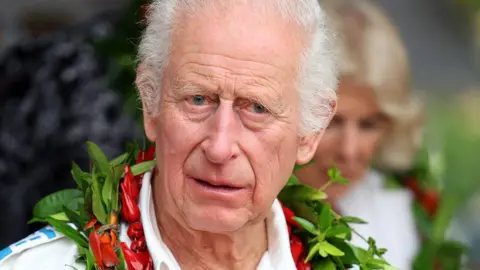
The “most painful aspects of our past continue to resonate”, King Charles III stated this era to Commonwealth leaders in Samoa, as arguments about reparations and apologies over the slave industry rumbled as soon as once more.
That’s change into an occupational danger for the Royal Community, as it could’t shake off questions concerning the lengthy silhoutte of historical hyperlinks to slavery.
It’s much more pointed in a discussion board such because the Commonwealth zenith, with leaders representing one of the most nations maximum suffering from the legacy of colonialism and slavery.
However even though the King had a private trust that there must be a symbolic apology or a loyalty to reparations, he wouldn’t had been in a position to bring it.
Monarchs discuss at the recommendation of ministers – and on a query of such political sensitivity, his speeches should keep inside the barriers of presidency coverage.
In alternative phrases, he has to persist with the script.
A era in the past, Downing Boulevard signalled relatively obviously that there would no longer be an apology or a do business in on reparations from the United Kingdom on the zenith in Samoa.
That intended that regardless of the King may privately suppose, anything else he stated about such historical wrongs would mirror the sequence prepared through the federal government.
“None of us can change the past,” the King stated diplomatically, well aligning with High Minister Keir Starmer’s sequence that we “can’t change our history”.
That hasn’t banned the King from going very alike to the twine.

 Reuters
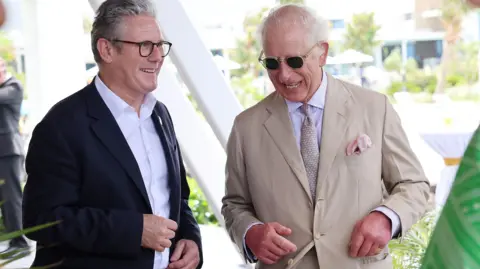
In Kenya utmost month, the King spoke of his “greatest sorrow and regret” on the wrongdoings of the colonial week.
In language more potent than in Samoa, he spoke of the “abhorrent and unjustifiable acts of violence committed against Kenyans” right through their attempt for sovereignty.
However consistent with executive coverage, there used to be not anything which may be pinned unwell as an particular apology.
The significance of “sorrow” moderately avoids pronouncing sorry. It used to be additionally worn through the then-Prince Charles on the earlier Commonwealth heads of presidency assembly in Rwanda.
Apparently, it mirrors the nearest a UK high minister has come, when Tony Blair in 2007 officially voiced his “deep sorrow and regret” over Britain’s phase within the slave industry.
On the occasion, there have been requires Blair to advance additional, however he nearest stated he had stated sorry.
Even if expressing it as “sorrow” contains the emotion, it avoids the legal responsibility and expectation of repayment that may include “sorry”.
As head of circumstance, the King is the symbolic center of attention of requires such redress, whether or not that’s monetary reparations or some alternative tactics addressing of historical wrongs. That’s no longer getting to advance away.
That’s awkward however he’ll whip that during his stride, because it’s a political determination that he can’t alternate and reparations for the day appear not going when stream UK budgets are beneath intense tension.
However there’s additionally the extra sophisticated query of the way a lot the monarchy, as each a nation and an establishment, may have a better duty.
As an example, the Royal African Corporate, based within the seventeenth Century beneath royal patronage, has been claimed as transporting extra enslaved crowd from Africa around the Atlantic than any alternative corporate.
However historical past, like crowd, will also be filled with contradictions.
When it got here to Britain’s pioneering efforts to abolish slavery, within the early nineteenth Century, analysis through historian Prof Suzanne Schwarz discovered the Royal Community itself used to be divided.
The nephew of George III, the Duke of Gloucester, used to be one of the crucial impressive campaigners to abolish slavery – a tireless opponent of the heartless industry and a supporter of the Royal Military’s efforts to intercept slave ships.
However prior to the royals really feel the clouds lifting, George III’s son, the era William IV, used to be one of the crucial aspiring defenders of slavery.
There’s a glowing silver provider nonetheless within the ownership of the Royal Assortment Consider, referred to as the “Jamaica Service”, which used to be given to the era William IV through the ones in Jamaica who sought after to thank him for his efforts to give protection to the slave industry.
Ahead of turning into King, William IV used to be Duke of Clarence – and Clarence Space, a royal place of abode, is known as next him.
 Reuters
There were makes an attempt in alternative nations to attract a sequence beneath the query of slavery.
The Dutch King delivered a proper apology, in a proceed co-ordinated with the rustic’s high minister.
However for King Charles and alternative senior royals, it’s a query that continues to hold within the background, specifically once they discuss with a former colony or a playground the place the slave industry had an have an effect on.
Prince William and Catherine’s go back and forth to the Caribbean in 2022 used to be dogged through rows over whether or not their discuss with had remaining of the appear and feel of a colonial discuss with.
Any go back and forth planners will have to have a look at conventional dancers and garlands and get started having nightmares about how it will come throughout.
However the King, who has been strolling this political tightrope for plenty of many years, prompt a cautious trail in Samoa.
“None of us can change the past. But we can commit, with all our hearts, to learning its lessons and to finding creative ways to right inequalities that endure,” he stated.
And in a accent that used to be extensively clear as being concerning the legacy of slavery – he by no means as soon as in fact referred to slavery in any respect.













