
 Dennis Osadebe
 Ifiokabasi Ettang / BBC
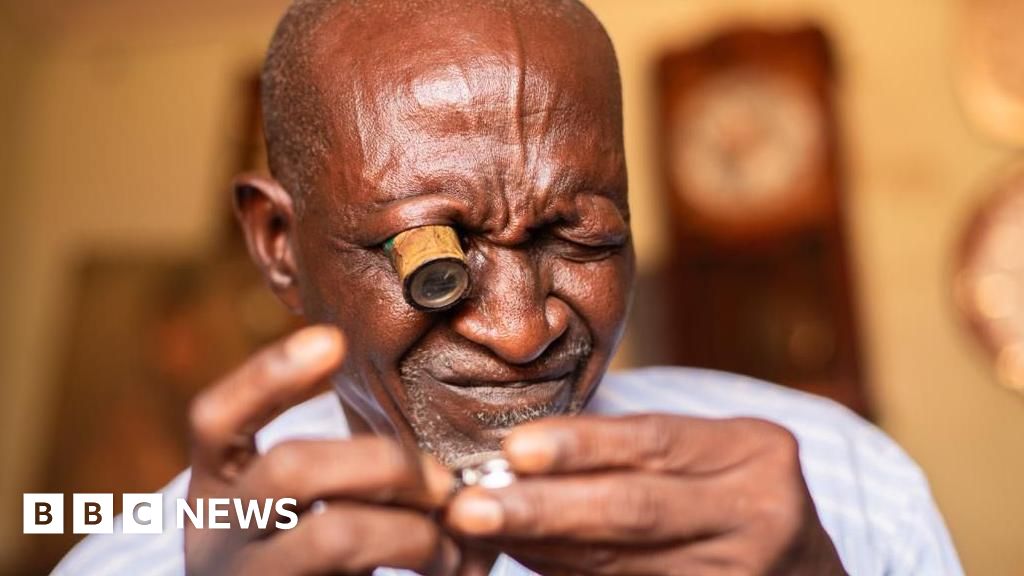
Ticking is the important tone inside of Bala Muhammad’s minute watch-repair store, tucked away on a bustling side road within the northern Nigerian town of Kaduna.
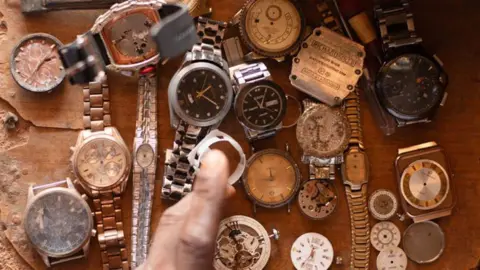
It is sort of a month tablet from a unique age with various clocks putting at the wall and miniature tables on the front filled with his equipment and watches in diverse states of fix.
His store is on one in every of Kaduna’s busiest buying groceries streets – sandwiched between development subject matter providers.
Till a couple of years in the past, he had a gradual wave of shoppers shedding via to get their watches fastened or get a unutilized battery fitted.
“There were times I get more than 100 wristwatch-repair jobs in a day,” the 68-year-old, popularly referred to as Baba Bala, instructed the BBC.
However he worries that his abilities – taught to him and his brother via their father – will die out.
“Some days there are zero customers,” he says, blaming folk the use of their cell phones to test the month for the moderate in his industry.
“Phones and technology have taken away the only job I know and it makes me very sad.”
However for greater than 50 years, the growth in watches allowed the crowd to produce a excellent dwelling.
“I built my house and educated my children all from the proceeds of wristwatch repairing,” he says.
His father would go all over the place West Africa for 6 months at a month – from Senegal to Sierra Leone – solving timepieces.
At one level Baba Bala used to be based totally within the capital, Abuja, the place most of the nation’s elite are living – and he made a excellent dwelling tending to the watches of the rich.
He reckons his best possible consumers had been supremacy officers of the state-owned oil company Nigerian Nationwide Petroleum Corporate (NNPC).
Some had Rolexes – those can range wildly in worth however a mean one prices round $10,000 (£8,000).
He says they’re gorgeous – and encapsulate his love for all watches from Switzerland. He himself owns a Longines, any other prestigious Swiss emblem, which he most effective eliminates when he sleeps.
“If I step out of my house and I forgot it, I have to go back for it. I will not be without it – that is how important it is to me.”
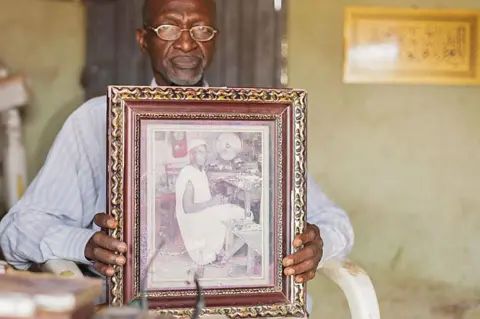
At his store, he helps to keep a gorgeous obese framed picture of his father, Abdullahi Bala Isah, taken as he seemed up from his paintings bench a couple of years prior to his loss of life in 1988.

 Ifiokabasi Ettang / BBC
Isah used to be a famend horologist and his contacts in Freetown and Dakar would name him to rush a travel once they had plethora watches for him to generally tend to.
He would additionally produce habitual visits to Ibadan, a city within the south-west of Nigeria – a literary hub and residential to the rustic’s first college.
Baba Bala says no-one within the crowd is aware of the place his father learnt his experience – however it will had been on the month of British colonial rule.
He himself used to be born 4 years prior to Nigeria’s sovereignty in 1960.
“My father was a popular wristwatch repairer and his skill took him to many places. He taught me when I was young and I am proud to have followed his footsteps.”
Baba Bala began taking a near hobby in figuring out the intricacies of what the wheels and levers inside of an eye fixed do when he used to be 10 – and used to be extremely joyful to find that as he were given used it was a excellent supply of patch cash.
“When my fellow students were broke in secondary school, I had money to spend at the time because I was already repairing wristwatches.”
He recollects his talent even inspired one in every of his lecturers: “He had issues with some of his wristwatches and had taken them to several places and they couldn’t do them. When he was told about me I was able to fix all three of the watches by next day.”
At one level, watches had been open as remarkable as garments in Nigeria and lots of folk felt misplaced with out one.
 Ifiokabasi Ettang / BBC
Kaduna old to have a devoted segment the place many watch-sellers and repairers arrange their companies.
“The place has been demolished and is now empty,” say Baba Bala mournfully, including that the majority of his colleagues are both useless or have give up at the industry.
A kind of who admitted defeat used to be Isa Sani.
“Going to my repair shop daily meant sitting down and getting no work – that’s why I decided to stop going in 2019,” the 65-year-old instructed the BBC.
“I have land and my children help me to farm on it – that is how I am able to get by these days.”
He laments: “I don’t think wristwatches will ever make a comeback.”
The children operating on the development provide stores nearest to Baba Bala agree.
Faisal Abdulkarim and Yusuf Yusha’u, each elderly 18, have by no means owned watches as they have got by no means open a necessity for them.
“I can check the time on my phone whenever I want to and it’s always with me,” one mentioned.
Dr Umar Abdulmajid, a communications educator at Yusuf Maitama College in Kano, believes issues might alternate.
“Conventional wristwatches are no doubt dying and with it jobs like wristwatch repairs too, but with the smartwatch I think they could make a comeback.
“The truth a smartwatch can do a lot more than simply display you the month approach it might proceed to draw folk.”
He suggests old watch-repairers learn how to grapple with this new technology: “If you happen to don’t travel with the days you get left in the back of.”
But Baba Bala, who returned from Abuja to Kaduna to set up his shop about 20 years ago as he wanted to be nearer his growing family, says this does not interest him.
“That is what I really like doing, I imagine myself a health care provider for ill wristwatches – plus I’m really not getting any more youthful.”
 Ifiokabasi Ettang / BBC
His tight-knit family remain loyal to his profession – his wife and all his five children wear watches and often pop in to visit him at the shop, where some of the timepieces on display are forgotten relics from old customers.
“Some introduced them a few years in the past and didn’t go back for them,” he says.
But Baba Bala refuses to give up and still opens up daily – his eldest daughter, who runs a successful clothes boutique nearby, helps him with bills when his business is slow.
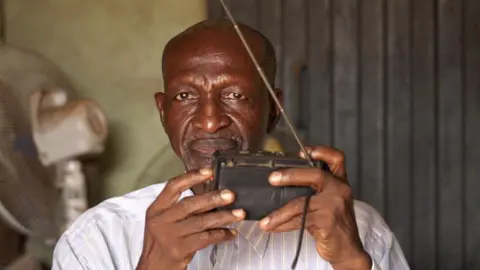
Without much to keep him busy – or the chatter and gossip of his customers, Baba Bala says he now often listens to his radio for company, enjoying the Hausa language programmes on the BBC World Service.
In the afternoon his youngest son, Al-Ameen, comes to visit after school – the only one of his children to show an interest in learning the art of watch-repairing. But he would not encourage him to take it up as a profession.
He is pleased that the 12-year-old has told him he wants to be a pilot – continuing the family tradition of seeing more of the world.
In a cockpit, he would be faced with many watch-like dials – not unlike his dad’s workshop.
You may also be interested in:
 Getty Photographs/BBC













