
 Dennis Osadebe
Africa fitness correspondent, BBC Information
 Mike Elvis Tusubira
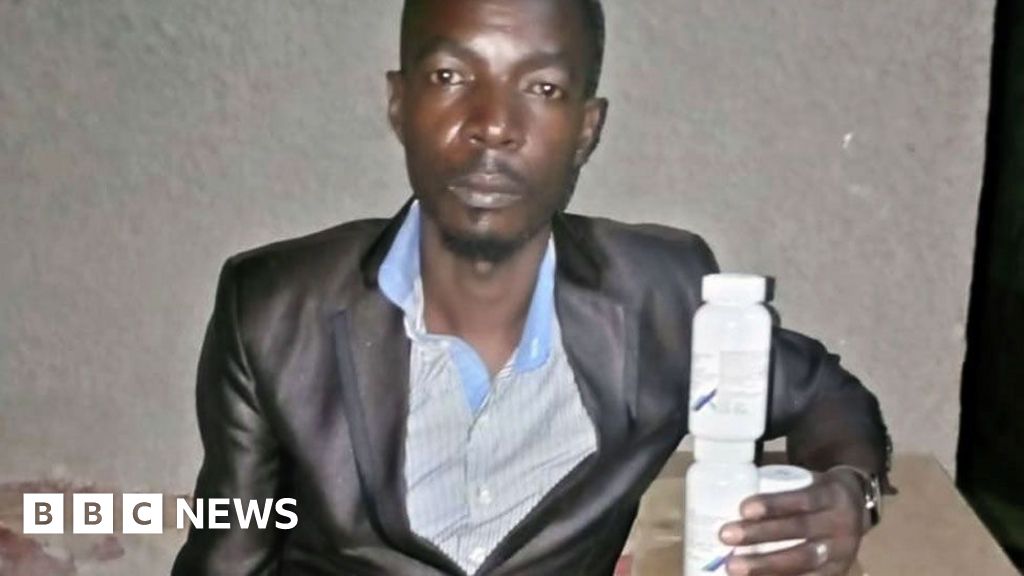
Generation for Mike Elvis Tusubira, a motorbike taxi rider with HIV in Uganda, has been grew to become the wrong way up since US President Donald Trump halted international assistance extreme age.
No longer handiest does the 35-year-old worry for his personal survival as he is taking life-saving anti-retroviral (ARV) medication – however he says he should fracture up from his spouse as they are able to now not have guard intercourse.
His spouse is HIV-negative and will depend on PrEP, a medication that reduces the danger of contracting HIV.
“It means that even my marriage will end, because actually without the preventive measures, she’s not going to stay,” he instructed the BBC.
“No condoms, no [anti-HIV] lubricants, no PrEP, nothing. We can’t stay in marriage without meeting. It means that I have to stay single.”
The entire couple’s medications and contraceptives had been equipped due to investment from america authorities’s major in another country assistance company USAID.
For the reason that surprising shutdown, which he heard about on social media, they’ve now not been ready to refill their provides. His spouse has totally running over of PrEP now and they’re each afraid that depending simply on condoms – they’ve some left – is simply too dangerous.
Trump ordered the 90-day laze on international assistance on his first moment again in place of job, then which stop-work orders started to be issued to organisations funded by means of USAID.
Waivers had been therefore issued for humanitarian initiatives, however by means of that pace the HIV programme Mr Tusubira was once a part of – running over of Marpi Medical institution within the north of the capital, Kampala – had closed.
He phoned his counsellor on the Kiswa Fitness Centre III within the town to determine what was once happening.
“My counsellor was in the village. He told me that he is no longer at the clinic.”
The daddy of 1, who examined certain for HIV in 2022, has since neglected a check to decide how a lot virus is in his blood and the power of his exempted device.
“I’m moving in the dark, in the darkness. I don’t know whether my viral load is suppressed. I’m traumatised.”
He does now not assume his process riding a bike taxi – identified in the community as a “boda-boda” – will be capable to backup his folk recover from the hurdles they now face.
“Some other people say that the drugs will be in private pharmacies… as a boda-boda rider I don’t know whether I can raise the money to sustain my treatment.”
They have got additionally been impacted by means of the lack of products and services equipped by means of non-government organisations (NGOs) that gained investment from USAID, he says.
His spouse was once getting her PrEP by the use of an NGO at Marpi and his five-year-old son was once benefitting from person who equipped faculty and meals for susceptible kids.
“My child is no longer at school now,” he stated.

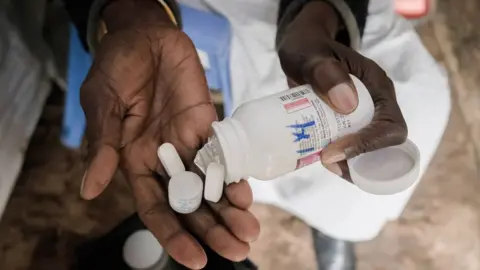 Getty Pictures
Uganda’s fitness sector is closely reliant on donor investment, which helps 70% of its Aids tasks.
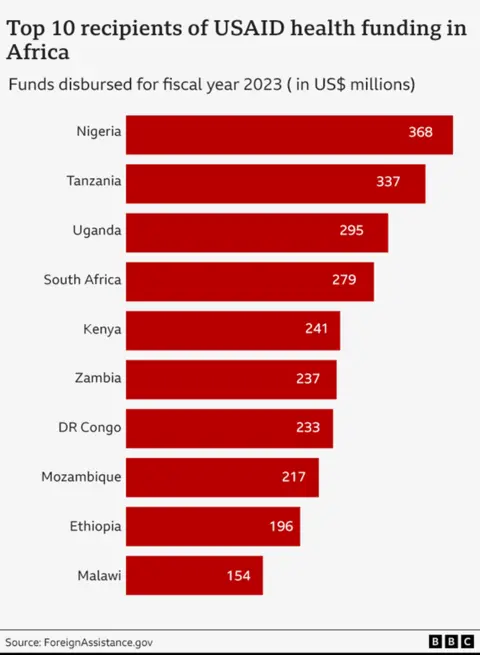
The East African folk is one of the govern 10 recipients of USAID finances in Africa. Consistent with US authorities information, the rustic gained $295m (£234m) in fitness investment from the company in 2023 – rating 3rd then Nigeria which gained $368m and Tanzania with $337m.
USAID additionally helps its malaria, tuberculosis and leprosy programmes – in addition to investment maternal and kid fitness products and services and situation fitness backup.
1000’s of healthcare employees were impacted by means of america investment freeze.
Dr Shamirah Nakitto, a clinician with Succeed in Out Mbuya (Rom) – a faith-based crowd organisation offering scientific and psychosocial assistance to society residing with HIV in Uganda – was once founded at Kisenyi Fitness Centre IV, which serves a densely populated slum in Kampala.
On reasonable, she attended to 200 sufferers with HIV/Aids and tuberculosis day by day. However then the stop-work sequence, all Rom-supported fitness employees had been laid off.
Its tuberculosis unit now stands quiet and its orphans and susceptible kids category has additionally been close at Kisenyi.
“We are waiting for the 90 days. So, this compulsory leave, I hadn’t prepared for it,” she instructed the BBC.
“It was so abrupt. We didn’t have a proper handover at the facility. We just stopped working.”
Uganda’s fitness ministry says it’s exploring tactics to minimise disruptions.
Dr Diana Atwine, the govern civil servant on the ministry, instructed team of workers “willing to continue working in the spirit of patriotism as volunteers” to get in touch.
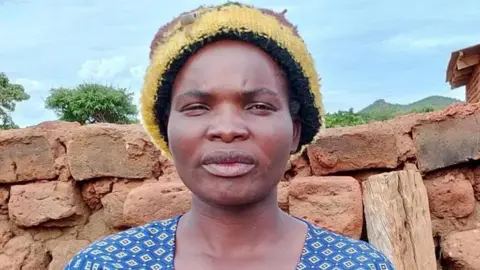
Additional south in Malawi, USAID-funded actions have additionally garden to a halt.
The rustic gained $154m from USAID’s fitness finances in 2023, making it the tenth greatest recipient in Africa.
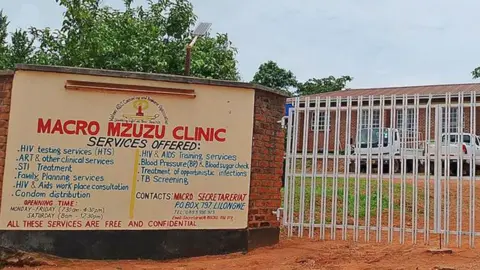
Within the northern town of Mzuzu, the gates are close at a sanatorium that has been a key supplier of HIV products and services within the pocket. Automobiles sit down inactive; there’s no signal of process on the Macro Mzuzu Medical institution. Employees locked the doorways, grew to become off the lighting fixtures and went house 18 days in the past.
In spite of america Circumstance Area’s waiver on 28 January permitting the supply of medication akin to ARVs, many clinics have closed as with out the essential team of workers who co-ordinate USAID’s actions, distributing medications is a problem.
Even the place products and services are technically authorised to renew, many oaths stay in limbo. Fitness employees are undecided of what they are able to and can’t do.
The Trump management plans to let fall USAID team of workers by means of greater than 90%.
Atul Gawande, USAID’s former international fitness workman administrator, posted on X that the company’s team of workers can be slashed from 14,000 to 294 – with handiest 12 team of workers assigned to Africa.
Greater than 30 NGOs in Malawi have additionally been seriously impacted by means of the investment freeze.
Eddah Simfukwe Banda, a 32-year-old subsistence farmer, has been getting ARVs since 2017 from the Macro sanatorium, the place diverse NGOs had been offering HIV programmes.
She is anxious about her personal destiny – and that of her sister-in-law, who additionally will depend on donor-funded cure – and says they tiny possibility however to wish.
“We have to pray as Malawians. Those of us that believe depend on a God who opens doors when one is closed,” she instructed the BBC.
The mum of 3, who has a three-week provide of ARVs left, additionally stated systemic screw ups had been accountable: “As Malawians, we depend too much on receiving aid. At times we are lazy and squander and rely on other countries to help us.
“Let this be a lesson that we should be sovereign,” she said.
But this is difficult for one of the poorest and most aid-dependent countries in the world. According to the World Bank, Malawi is vulnerable to external shocks – including prolonged droughts, cyclones and erratic rainfall.
A disruption of this magnitude in its healthcare system presents an enormous challenge.
For decades, the US has been Africa’s most significant public health partner.
In particular through its ground-breaking programme to counter the global spread of HIV, which was launched in 2003. Called the US President’s Emergency Plan for Aids Relief (Pepfar), it has saved more than 25 million lives.
According to head of the Africa Centres for Disease Control and Prevention (Africa CDC), USAID gave $8bn of aid assistance to Africa over the past year.
“Seventy-three in line with cent was at healthcare,” Jean Kaseya told BBC Newsday last month.
Health experts warn that replacing this funding will be extremely difficult.
African governments have made strides in reducing aid dependency. Kenya now funds nearly 60% of its HIV response. South Africa covers almost 80%.
But for many low-income nations, debt burdens, climate disasters and economic shocks make self-sufficiency nearly impossible.
Amref Health Africa, one of the leading health NGOs on the continent, warns that without urgent action, global health security is at risk.
“This will require African governments and Africa CDC to extend their very own investment, which is sort of inconceivable below the wave debt misery statuses,” its CEO Dr Githinji Gitahi told the BBC.
“With accelerating outbreaks from situation exchange and human-environmental warfare, this may shed the sector fragile and hazardous – now not just for Africa however for everybody.”
Worldwide in 2023, there were 630,000 Aids-related deaths and 1.5 million new infections.
While infection rates have been declining in the worst-affected countries, the impact of the USAID shutdown could reverse these gains.
“If you are taking away this main contribution by means of the USA authorities, we predict that within the after 5 years, there’ll be an backup 6.3 million Aids-related deaths,” Winnie Byanyima, the head of UNAids, told the BBC’s Africa Daily podcast this week.
“There might be 8.7 million unutilized infections, 3.4 million backup Aids orphans. I don’t wish to pitch like a prophet of doom, however I’ve an obligation to provide the details as we see them.”
The medical charity Médecins Sans Frontières (MSF) has also warned of the dangers of interrupting HIV treatments.
“HIV medications should be taken day by day or society run the danger of growing resistance or appalling fitness headaches,” Tom Ellman, from MSF Southern Africa, has said in a statement.
Back in Uganda, Mr Tusubira feels bleak about the future.
He has about 30 days left of his ARV medication – and may opt to leave Kampala and go home to his village after that.
“No less than it’s going to be just a little more effective. If I die, they simply bury me there, rather of hectic my society right here in Kampala.
“Because I have no way I can live here without ARV services.”
You might also be fascinated about:
 Getty Pictures/BBC













