 Dennis Osadebe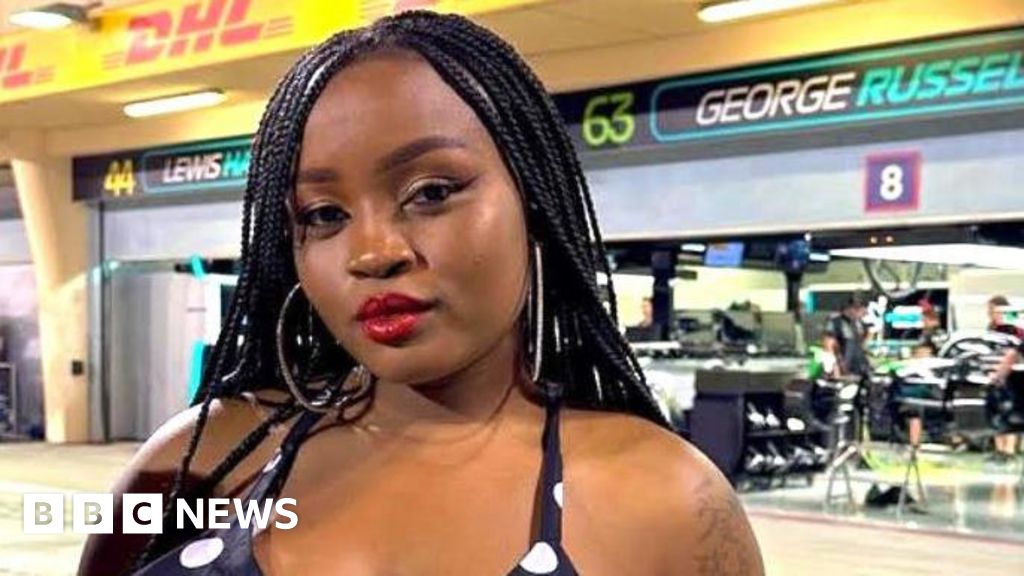
34 mins in the past
Gloria Aradi,BBC Information, Nairobi
 Pleasure Jeptoo/Instagram
Pleasure Jeptoo, a 24-year-old social media influencer from Kenya, spent a number of thousand greenbacks latter yr to wait the System 1 season opener in Bahrain and the overall race of the season within the UAE capital, Abu Dhabi.
She likens her interest to the best way that “football lovers always want to go to the stadiums to support their team and also explore a new country”.
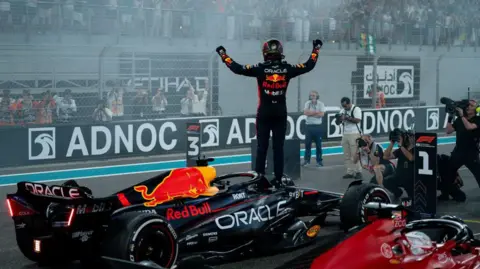
The Heart East, which hosts 4 F1 races a yr, has emerged as a widespread vacation spot for Africans searching for to look at races in particular person. They can’t, alternatively, experience a race on their very own continent as Africa remainder the one one excluded from the F1 race calendar.
For some member of Kenya’s greatest F1 crowd, Paddock Revel in, attending races has transform a once a year customized, with crowd splurging greater than $2,500 (£2,000) to look a unmarried match.
They’re amongst Africa’s fast-growing untouched occasion of diehard fanatics of F1, a traditionally Eurocentric recreation this is experiencing an exceptional increase at the continent.
In North Africa, tv audiences have greater than trebled and the ones tardy F1 see all the continent as a possible enlargement marketplace on TV and virtual platforms.

 Getty Pictures
Many fanatics pin the surge in F1 pastime in Africa at the Netflix impact.
Force to Live to tell the tale, an exhilarating behind-the scenes docuseries detailing the dramatic rivalries within the recreation, has been credited with taking the game past its core Eu target audience.
“When you’re scrolling on Netflix and then you see Drive to Survive, you end up watching and then you get interested in the sport,” Ms Jeptoo says.
Kamal Onyedikachukwu, a Nigerian tardy the F1 information account F1 Naija on X, says that the Covid pandemic boosted pastime as crowd began staring at Force to Live to tell the tale all the way through lockdowns.
He believes that era is some other driver tardy F1’s rising presence in Africa.
When he began following the game in 2005, the one method of viewing it in Nigeria used to be through staring at playbacks of races on terrestrial TV.
Enthusiasts can now get admission to are living races through subscribing to F1 TV, the respectable streaming carrier for System 1, with costs inauguration at $4 a date, or in the course of the Motorsport channel, which is to be had on DStv, Africa’s greatest subscription TV carrier.
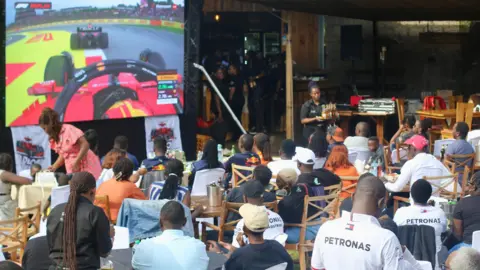
Pace F1-viewing events have transform a widespread backup for fanatics who need extra thrilling race reports.
Quizzes, separate beverages, prize giveaways and tune are on trade in to lure fanatics off their sofas and out in their properties.
In Kenya’s capital, Nairobi, leisure hotspots compete to entice fanatics and their wallets all the way through race weekends.
 Paddock Revel in
Ms Jeptoo is regularly rented through leisure venues within the town to host F1 events and attract fanatics who can spend generously on foods and drinks all the way through races.
She says that leisure hotspots walk for hosts with “engagement and influence”. With greater than 40,000 fans on Instagram and just about 100,000 on X, Ms Jeptoo suits the invoice.
Paddock Revel in, run through pals and long-time F1 fanatics Mbalu Makau, Mose Mokuah and Andrew Alovi, has been website hosting viewing events since 2021, as the game’s recognition began to jump in Kenya.
They spouse with leisure hotspots in Nairobi and somewhere else, bringing in fanatics who spend a median of $15 to $22 every on foods and drinks.
They speed in crowds of as much as 1,400 on some race days. In addition they have relationships with F1 golf equipment in Ghana, the place viewing events have transform a obese phenomenon.
Feminine fanatics of what has been a historically male-dominated recreation also are at the stand in Africa.
“What I’ve noticed from my interactions every weekend is that we have more women coming in to learn about the sport, not just the glitz and glamour of what the sport is, but also the engineering side of things,” Mr Onyedikachukwu says.
 Hairpins and Straights/Instagram
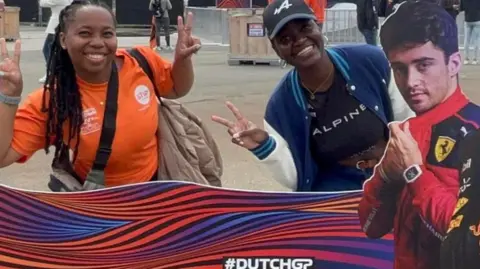
Some feminine fanatics are taking up a extra lively function, equivalent to Baaba Jenkins and Queendela Adu-Poku, two Ghanaian girls operating in finance in London.
Their love for F1 has viewable them proceed to wait races around the globe, from Singapore to Abu Dhabi, Britain and the Netherlands.
The chums run the widespread F1 podcast Hairpins and Straights, giving fanatics in-depth race opinions, interviews and content material about proceed to races.
“We didn’t know where to start from. We didn’t have any ins into motorsport,” says Ms Adu-Poku.
“It was just Baaba and I rambling on a podcast and trying to figure out the whole podcast space… literally starting from scratch, not being popular people, not knowing anything about the sport.”
They have been amongst those that came upon and evolved an pastime in F1 next staring at Force to Live to tell the tale
The younger girls say they wish to percentage their love for the game thru their podcast and importance it to develop the illustration of Africans serious about F1.
However Ms Jenkins says they every so often come upon hostility and prejudice from male fanatics who suppose girls can’t have a real pastime within the recreation or simplest guard it for horny male drivers.
In such eventualities, she says, it’s “very important to stand up for ourselves as women”.
 Getty Pictures
Regardless of the giant following F1 instructions in Africa, the continent has now not hosted an respectable race in additional than 3 a long time.
African fanatics and the game’s maximum a success, and simplest dark, driving force, Lewis Hamilton, were rallying for its go back to the continent, arguing that it’s unfair for Africa to be neglected occasion the USA unloved hosts 3 races a yr.
Even supposing there were studies about F1 mulling a go back to Morocco or probably racing in Rwanda or Zanzibar, the Kyalami circuit related Johannesburg in South Africa, is viewable because the visible venue selection.
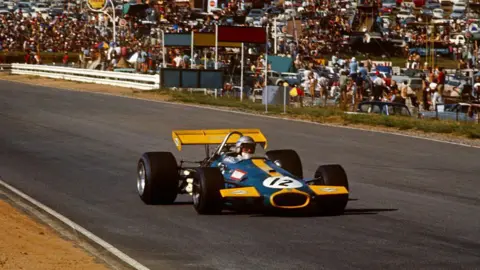
Kyalami, which hosted more than one F1 races between 1967 and 1993, is thought of as one of the vital recreation’s maximum ancient circuits.
The long-awaited System 1 go back to South Africa gave the impression imaginable in 2022, when the control of Kyalami met all of the related teams.
The method appeared on the right track till negotiations collapsed because of South Africa’s ties with Russia.
Toby Venter, head of the OT Venter team of businesses, which owns the Kyalami circuit, says that the mooted attendance of Russian President Vladimir Putin at a peak in South Africa plus the docking of a Russian send at a naval bottom scuppered the plans.
“Thereafter the Americans got cold feet,” he tells the BBC.
He says the circuit had already “made extensive plans and preparations” to improve the circuit so “it was very sad that unfortunately, politics interfered”.
He argues that F1 is “not a true world championship without Africa”.
“I think if F1 came to Africa it would be packed because you have clubs in Ghana, Kenya, South Africa, Uganda, everywhere… you would have the whole of Africa moving to that country to support F1.”
You may also be interested in:
 Getty Pictures/BBC