
 Dennis Osadebe
 Getty Photographs
A drug often prescribed to slim blood can also be repurposed as an inexpensive antidote to cobra venom, a group of scientists based totally in Australia, Canada, Costa Rica and the United Kingdom has came upon.
Snakebites explode about 138,000 folk a age, most commonly in poorer rural gardens in low- and middle-income international locations in Africa, South and South East Asia.
Greater than 400,000 others manufacture necrosis, when the tissue across the chew dies and turns dark.
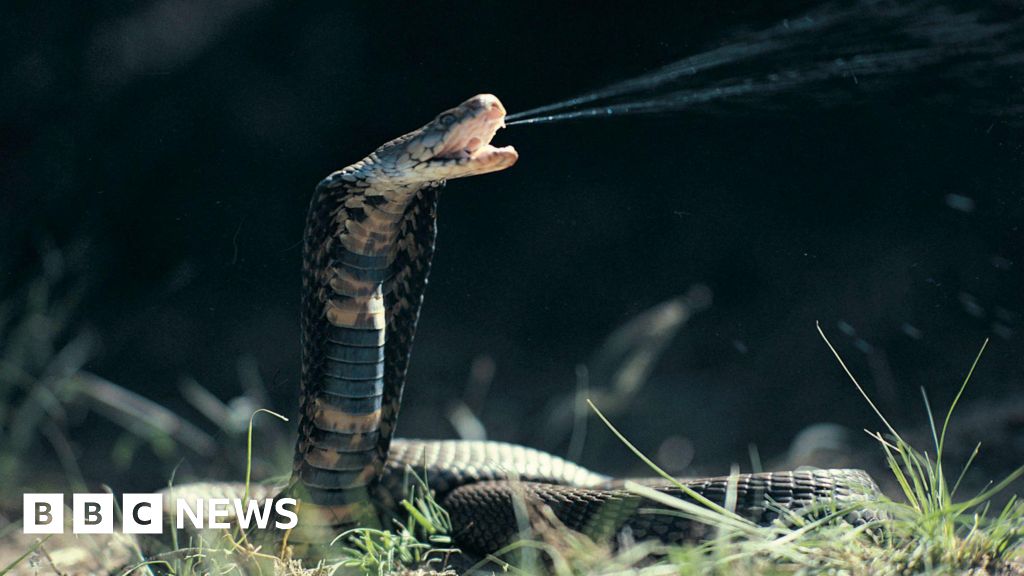
Cobras account for many bites in portions of Africa and Bharat. And Heparin can neutralise the necrosis-causing toxins in some spitting cobras’ venom.
The drug isn’t efficient towards all snake venom – however the scientists say it may well be inexpensive and extra versatile than present antivenoms, lots of which paintings towards just a unmarried snake species and can not stop necrosis.
Having already examined the drug on mice, the upcoming step can be human trials.
‘International battle’
Senior learn about writer Prof Greg Neely, from the College of Sydney, mentioned: “Our discovery may just greatly let fall the severe accidents from necrosis brought about by way of cobra bites – and it may additionally sluggish the venom, which might toughen survival charges.
“Biological agents like venoms and toxins all require some collaboration from the host side, the human side, so our study was to identify what, in humans, interacts with the venom to create this necrosis and death.
“What we’re discovering is after we pluck other venoms from very other species, there’s a little selection of techniques they have interaction with human cells.
“One of the cool things from a science perspective is that we think we can identify four or five different ways that venoms as a whole interact with cells – and then we can make universal antidotes that can block big groups of species.
“We are hoping that the unused cobra antidote we discovered can lend a hand within the world battle to let fall dying and shock from snakebite in probably the most global’s poorest communities.”
‘Lifelong incapacity’
Lead author, PhD student Tian Du, also from the University of Sydney, called it a big step forward.
“Heparin is affordable, ubiquitous and a Global Condition Group-listed crucial medication,” she said.
“Later a success human trials, it may well be rolled out slightly temporarily to turn out to be an inexpensive, safeguard and efficient drug for treating cobra bites.”
Another of the scientists, Liverpool School of Tropical Medicine Centre for Snakebite Research and Interventions head Prof Nicholas Casewell, said: “Snakebites stay the deadliest of the omitted tropical illnesses, with its burden touchdown overwhelmingly on rural communities in low- and middle-income international locations.
“Our findings are exciting because current antivenoms are largely ineffective against severe local envenoming, which involves painful progressive swelling, blistering and/or tissue necrosis around the bite site.
“This will manage to lack of limb serve as, amputation and lifetime incapacity.”













