
 Dennis Osadebe
10 mins in the past
Through Penny Dale, Journalist
 Mario Di Bari
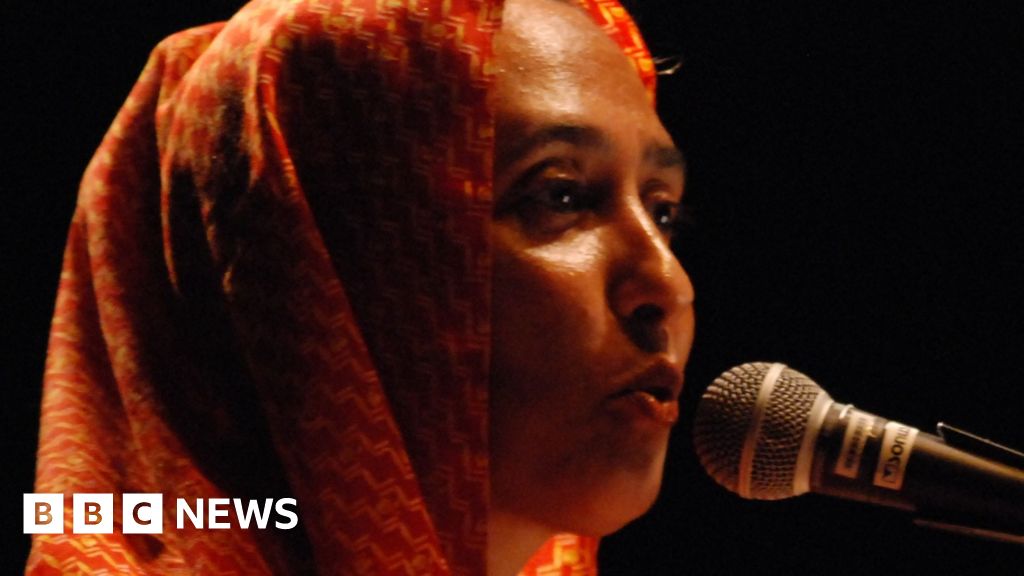
Gabriella Ghermandi recollects with laughter the annoyance she felt concerning the so-called Ethiopian Spice Ladies – charity-backed pop team Yegna that was hoping to modify narratives and empower women and girls via tune.
The all-female team sparked controversy in the United Kingdom as it was once partially funded via British backup and a few say it was once a wastefulness of taxpayers’ cash. However for Ghermandi, guesses that Ethiopian ladies needed to be taught via outsiders was once the problem.
“I was like, what?” Ghermandi tells the BBC. “They want to teach us how to empower women? Ethiopia? With all its epics of women?”
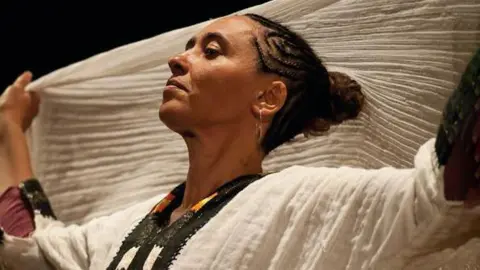
So, Ghermandi – an Ethiopian-Italian writer, singer, manufacturer and ethno-musicologist – additionally became to tune as some way of “saying to the world that we have a huge history about brave women who had as much power as men”.
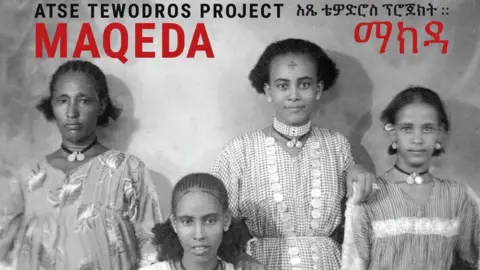
The result’s a nine-track brochure referred to as Maqeda – the Amharic identify for the Queen of Sheba, a vastly remarkable determine in Ethiopian historical past.
Each tune is an homage to feminine figures, communities, rituals and musical kinds.
Many would label this brochure Ethio-jazz however it encompasses so a lot more, says Ghermandi.
“It’s a very rooted Ethiopian music, but at the same time, there are very prog sounds, very rocky and punk sounds. You can find everything”.
Maqeda was lovingly developed over four years, bringing together the Ethiopian and Italian musicians she has worked with since 2010 as the Atse Tewodros Project – plus Senegalese guest musicians, as well as a beat-boxer and a body music performer.
“We wanted to digest the music,” says Ghermandi of the collaboration, including that each and every musician had a task within the preparations “as a result of I in reality sought after my two nations to be one”.

 Gabriella Ghermandi
Born in Addis Ababa in 1965, to a father from Italy and an Ethiopian-Italian mom, Ghermandi recollects the world really feel of the capital town the place she spent her early years.
“Every place, every corner was [filled] with music and dance. And I think I learned the rhythm that has stayed in my blood,” she says.
At the identical boulevard as her mom’s outfitter was once a file collect run via a Greek girl which blasted out an array of pitch from Congolese tune to the Beatles.
Fela Kuti and alternative African greats performed on the nightclubs the place Ghermandi would tag at the side of her used brothers, era on Sundays there have been tea-dancing events at an Italian expat membership.
Even if Ghermandi had disagree formal tune coaching, a radical immersion in Ethiopian musical kinds got here from the numerous wedding ceremony and church ceremonies that had been a part of crowd time.
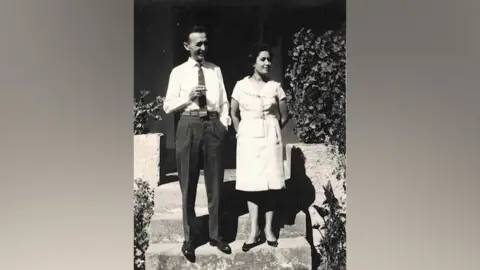
Advance was once some other consistent in Ghermandi’s youth – because of her father.
In 1935 he left Italy to paintings in Eritrea, later an Italian colony. In 1955 he moved to Ethiopia and met her mom, who was once 17 years more youthful.
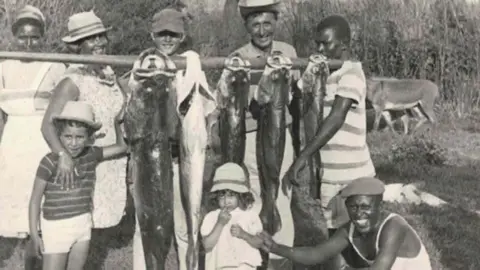
His jobs in development took him to far off grounds, and Ghermandi would ceaselessly discuss with.
She was once most effective 3 months used when she was once taken to the Rift Valley of southern Ethiopia. Her father sought after her to be given a moytse – or “sound name” – via the native Oyda community.
For women, a cow horn is blown – and no matter pitch is heard via an overly used and really younger girl ready in combination beneath a tree within the woodland turns into the pitch identify. Ghermandi’s moytse is tumlele, tumlele, tumlelela.
 Gabriella Ghermandi
Her father died in 1978. Through later, the army dictatorship of Mengistu Haile Mariam dominated Ethiopia and so, within the early Nineteen Eighties, via later an adolescent, she moved to Italy. Ghermandi now lives between Italy and Ethiopia.
However the ones liked early reports have stayed together with her, and this unedited brochure attracts on youth visits to Ethiopia’s far off communities in addition to meticulous analysis as grownup.
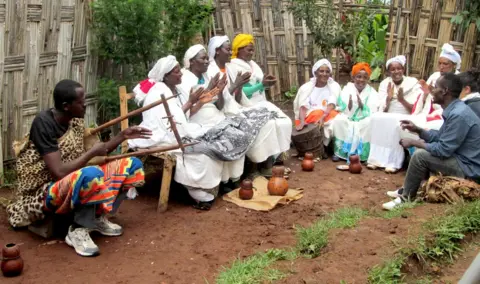
Ghermandi says she began with the folk she grew up with – the Dorze community firstly from the southern highlands of Ethiopia, whose ladies head villages and sing in tough polyphonic choirs.
You’ll pay attention that approach of making a song – with as much as six voices or portions, every with an separate however harmonising melody – within the tune Boncho, this means that “respect” within the Gamo language.
 Gabriella Ghermandi
Ghermandi labored with an Ethiopian feminine poet to assemble Prepared Nat (She is a Feminine), to counter a ordinary pronouncing in Ethiopia that once a lady achieves one thing this is because she is as courageous as a person.
“I hate this saying, because it used to tell me that it’s not enough to be a woman,” Ghermandi says with pastime in her expression. “And I want to say to the world that being a woman is more than enough!”
The tune is led via a choir whose call-and-response has a definite, rhythmic really feel in a 7/4 hour signature. “This is very typical of a part of Ethiopia – and it is a memory of my childhood,” she explains.
Every other song, Kotilidda, honours the matrilineal community of the Kunama community who reside near to the borders with Eritrea and Sudan. It showcases the avangala, a two-stringed software which seems like a bass guitar – performed most effective via the Kunama community.
“I really wanted to mix the Ethiopian traditional instruments with modern instruments because Ethiopia does not promote enough its traditional instruments outside the country,” says Ghermandi.
 Galileo MC
“I also want to show to Ethiopian artists that these instruments can have a dialogue with modern instruments – and be very modern at the same time, even if they are traditional.”
Saba, in the meantime, sings of the mythical Queen of Sheba’s camel progress to Jerusalem to satisfy King Solomon.
The masinqo – a one-stringed mess around – performs an historic Hebrew melody on the finish, in popularity of the conclusion that Ethiopia’s Jewish folk is descended from those that adopted the son of Sheba upon her return house from what’s now Israel.
Ghermandi issues out the parallels between that historic, most likely legendary, progress and the very actual trips taken nowadays via many hundreds of Ethiopians who’ve fled warfare, oppression, drought and poverty for a brandnew time in different places.
“In the song there’s the idea of walking – and the idea of facing all the things that you find during your journey.”
Penny Dale is a contract journalist, podcast and documentary-maker primarily based in London
Maqeda via the Atse Tewodros Undertaking is immune via Galileo MC
You may additionally be occupied with:
 Getty Pictures/BBC













