 Dennis Osadebe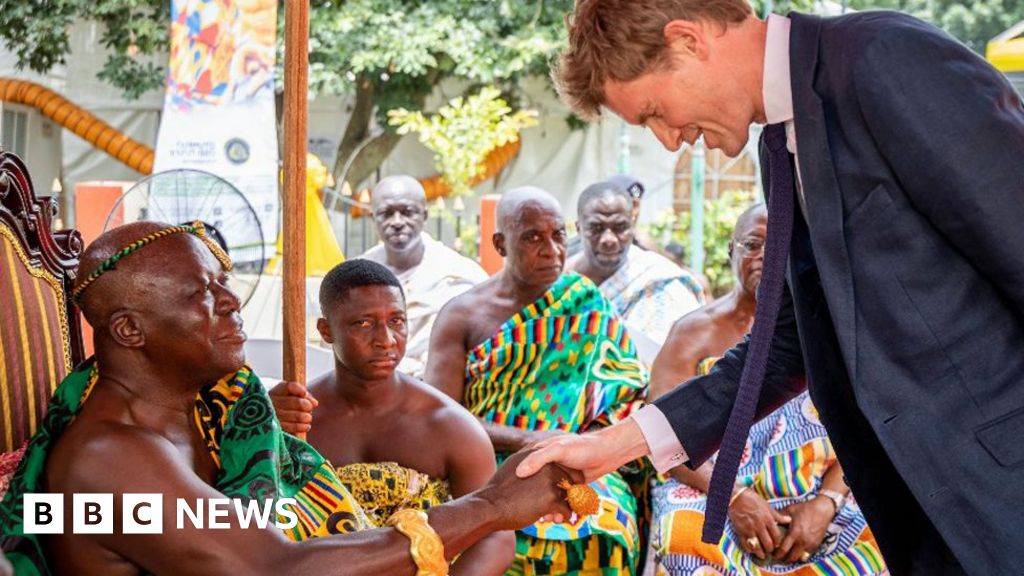
Nii Kwate Owoo, a celebrated Ghanaian film-maker who was once on the rite in Kumasi on 1 Would possibly, made his identify within the Nineteen Seventies together with his documentary You Cover Me, which lambasts the British Museum for hoarding African treasures.
“An armed robber comes into your house, mows down your family and grabs your valuables, and comes back later and says: ‘OK, you’re making noises, I’ll give this back as a loan!’” Mr Owoo instructed me, deeply unimpressed by means of the British phrases.
Mr Agyeman-Duah understands those feelings – his personal great-grandfather was once exiled by means of the British throughout the Anglo-Asante wars – however is assured the Asantehene selected the appropriate trail.
“We’ve been talking about this for 50 years, and nothing happened… if we couldn’t find a middle way, we’d have just continued with this stalemate,” he argues.
There are perceivable similarities between the British pillaging of Kumasi and some other infamous episode in West African colonial historical past – the sacking of the palace of the king, or Oba, in Benin Town in 1897, in what’s lately Edo Condition, southern Nigeria.
That was once when the British took the Benin Bronzes – 1000’s of brass castings and ivory carvings – that are at the leading edge of the talk round looted artefacts in Western museums.
Nigeria has had some good fortune in its marketing campaign for the go back of the bronzes.
In 2022 the German govt introduced the switch of possession of a few 1,000 Benin Bronzes.
Germany’s Overseas Minister Annalena Baerbock flew to Nigeria’s capital, Abuja, and passed over 22 of probably the most impressive items to the Nigerian govt.
She mentioned it was once “a step that was long overdue”.