
 Dennis Osadebe
Simply now
By way of Barbara Plett Usher, BBC Africa correspondent
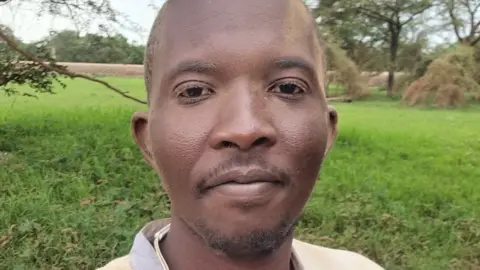 Mohamed Zakaria
At the eve of his perilous departure from his house nation utmost era, Sudanese photojournalist Mohamed Zakaria left his digicam apparatus with a chum, no longer certain if he would ever see it once more.
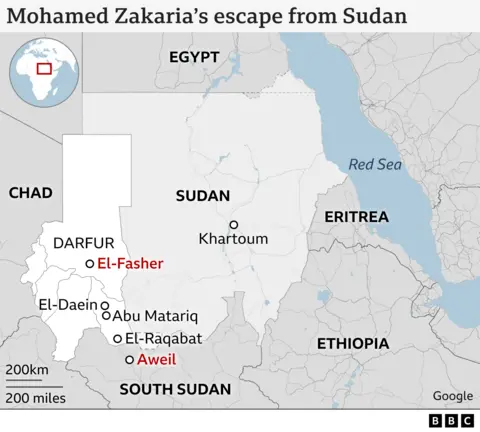
He used to be absconding el-Fasher, the capital of North Darfur condition, which is within the clutch of a punishing combat between the Sudanese military and the paramilitary Speedy Aid Forces (RSF).
Mohamed were protecting this scorching spot of Sudan’s 15-month lengthy civil battle for the BBC. However with the status rising more and more determined, he made up our minds it used to be while to departure.
The RSF escalated a siege of el-Fasher in Might, concentrated on the utmost military foothold in Darfur.
In a while in a while Mohamed’s space used to be clash through a shell, any other struck as he used to be looking to get wounded neighbours to health center. 5 crowd had been killed and 19 injured – Mohamed nonetheless has items of shrapnel in his frame, age his brother misplaced an vision.

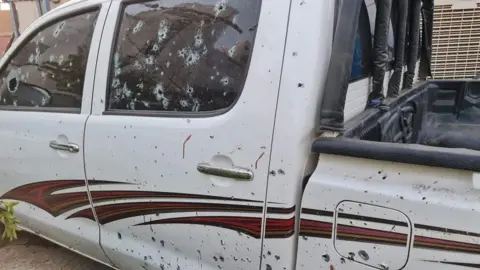 Mohamed Zakaria
Two weeks then Mohamed watched his mom and 3 brothers escape for the protection of Chad, the neighbouring nation to the west. He stayed in the back of to proceed operating to aid them, he says.
However because the RSF combatants persevered to related in, civilians had been trapped in a battle zone of indiscriminate shelling and armed forces airstrikes, with meals provides snip off.
“I couldn’t move, I couldn’t work,” he says. “All you do now in el-Fasher is just stay in your home and wait for death… some residents had to dig trenches in their homes.”
It used to be bad to stick, but in addition bad to escape. In spite of everything he made up our minds to go for South Sudan and in the end directly to Uganda.
He concept this go could be more secure for him than looking to tied his community in Chad, and would permit him to paintings as soon as he were given to his vacation spot.
From el-Fasher to South Sudan, Mohamed handed via 22 checkpoints, 5 manned through the military and 17 through the RSF.
He used to be searched and occasionally interrogated, however controlled to hide his id as a cameraman who had documented the battle. Except for for as soon as.
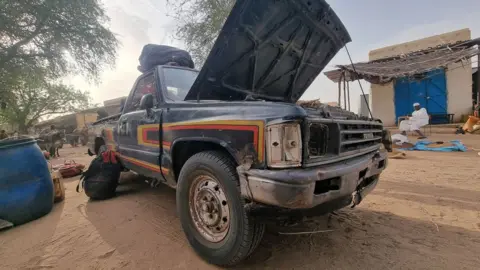 Mohamed Zakaria
The primary prohibit, on 10 June, used to be Zamzam refugee camp at the outskirts of el-Fasher.
Mohamed and his touring better half, his cousin Muzamil, spent the night time with a chum. Right here he concealed his digicam and alternative gear of the industry.
However he took with him a treasured file of his images and movies – saved on reminiscence playing cards and in two exterior dry drives – in addition to his pc and speak to.
“The biggest problem I faced on the road was how I could hide them,” he stated.
“Because these are dangerous things. If the RSF or any soldier sees them, you can’t explain.”
For the primary primary leg of the trek, Mohamed stashed them in a hollow below the substructure pedals of the pickup, with out telling the driving force.
He and Muzamil had been held up at one checkpoint through Sudanese infantrymen suspicious they had been heading into RSF space to tied the enemy. However in a different way, they reached Dar es Salaam, town that marked the tip of military keep watch over, with out incident.
Right here they joined alternative travellers – a convoy of six cars en path to the village of Khazan Jadid.
“We paid the RSF soldiers to go with us,” says Mohamed. “If you want to arrive safely you need to pay the RSF.”
The drivers accrued cash from the passengers and passed it over on the first checkpoint, the place probably the most RSF combatants were given into each and every automobile.
At this level Mohammed concealed his reminiscence playing cards in a work of paper that he put with alternative paperwork.
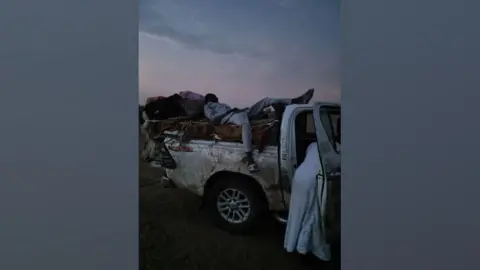 Mohamed Zakaria
On the bus station in Khazan Jadid, Mohammed discovered handiest 3 cars.
“The road was very dangerous,” he says, “and all the cars had stopped traveling.”
However they controlled to get one taking to the town of el-Daein, the capital of East Darfur and so they reached there within the early afternoon of 12 June.
At a checkpoint in the midst of the city, the ones coming from el-Fasher had been put to at least one facet, says Mohamed, below indecision that they’d labored with the military.
Right here’s the place he bumped into bother.
He had deleted all of the messages, images and apps on his cell phone.
However the RSF officer discovered a Fb account he had forgotten to take away, whole with posts he had shared in regards to the bombing of el-Fasher and the struggling of civilians.
There adopted an hours-long interrogation the place Mohamed used to be separated from Muzamil and accused of being a secret agent.
“I was threatened with torture and death unless I disclosed the information I had,” he says.
“I felt lost. It was a very bad situation. If he wanted to kill you, he could do it and no-one would know. He can kill you, he can beat you, he can he can do anything to you.”
Mohamed used to be after all immune at 19:00 upcoming negotiating the fee of a immense amount of cash.
 Mohamed Zakaria
“This was the worst moment,” he says, reflecting at the revel in, “not only in the journey but I think the worst moment in my whole life… because I didn’t see any hope. I can’t believe I’m here.”
Mohamed suspected his interrogator would alert any other checkpoint ill the street to arrest him once more.
He and Muzamil raced to the station to pull out of the city as speedy as they might. There used to be just one automobile, a pickup truck that used to be stuffed complete, however they controlled to squeeze right into a miniature field at the roof.
They made it so far as the village of Abu Matariq, the place the engine beggarly ill and took two days to cure.
Having survived arrest Mohamed used to be fearful to get to South Sudan as briefly as imaginable. Rather, he confronted a long lengthen.
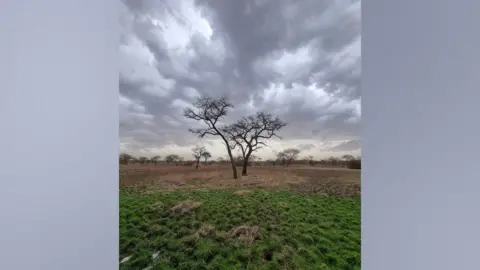
The travellers after all left Abu Matariq on 14 June heading to el-Raqabat, the utmost the city in East Darfur prior to the border. The way in which led throughout the jungle of el-Deim, a flat expanse of grass and sand sprinkled with acacia bushes.
 Mohamed Zakaria
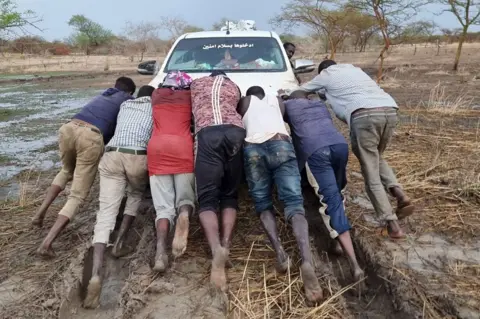
Weighty rains slowed and next cancelled their move, because the pickup were given caught within the dust. They had been stranded.
“It was a severe ordeal,” says Mohamed.
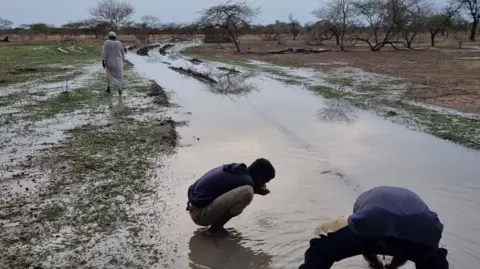
“We spent nearly six days without drinkable water and food. We mostly relied on rainwater and dates.”
In a stroke of good fortune, they had been ready to shop for two sheep from passing shepherds.
Throughout the process the go, says Mohamed, he didn’t have bother getting meals. The RSF-controlled gardens in which they handed had visible battles early within the battle, however had stabilised quite since next.
Markets and miniature eating places had been running. Meals used to be pricey, however no longer “super expensive” like in el-Fasher, the place many crowd had been compelled to ration themselves to at least one meal a past.
 Mohamed Zakaria
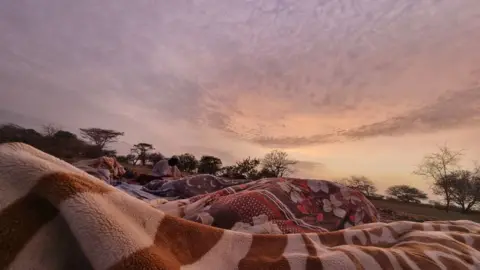
Within the jungle, the boys slept within the viewable, occasionally within the mist, age the 2 ladies and two youngsters within the celebration stayed within the automobile. That they had to pick out thorns out in their toes from strolling with out footwear within the dust.
Ultimately they driven the pickup again onto forged garden. However the engine labored handiest sporadically as a result of a vulnerable battery. And next it ran out of gasoline.
At this level two of the boys prompt to search out the after village. It became out to be a nine-hour progress. To everybody’s vacay they returned overdue within the past with difference gasoline and any other automobile.
Arriving in el-Raqabat, Mohamed and Muzamil had been only a 15-minute force from South Sudan and protection.
However the then morning prior to the travellers may just get started out, they had been picked up and brought to the principle RSF place of business and interrogated for 3 hours.
Anyone had reported that individuals of the Zaghawa ethnic workforce had entered town. That incorporated Mohamed, in addition to the community sharing the automobile with him.
The Zaghawa build up probably the most armed teams preventing along the military in el-Fasher, and the RSF view them as enemies.
Mohamed stashed his reminiscence playing cards, dry drives and pc with probably the most ladies and advised the RSF officer that he used to be a pc engineer.
As soon as once more it got here right down to a pay-off: 30,000 Sudanese kilos ($50; £39) from everybody. Mohamed and a couple of alternative individuals of the crowd paid difference to let fall any other guy who were discovered with a photograph of a military soldier on his telephone.
Next Mohamed and Muzamil clambered right into a motorised rickshaw and headed for the border.
 Mohamed Zakaria
Crossing into South Sudan on 20 June used to be an “unbelievable” date for Mohamed.
“When I saw the South Sudanese men, I thanked God and prayed,” he says. “I felt I’m alive. I really didn’t believe that I am alive, that I am here. I reached South Sudan with all my data and my laptop, even though I had many encounters with the RSF.”
He known as his mom once he used to be ready to shop for an area SIM card. “She didn’t believe that I was alive,” he says.
Mohamed were out of web area for 11 days, and his community had refuse concept the place he used to be or what used to be going down to him right through that while.
“They were very very worried,” he says. “Most of them had told me you must not try this road, don’t go, you can’t make it.”
However he had made it.
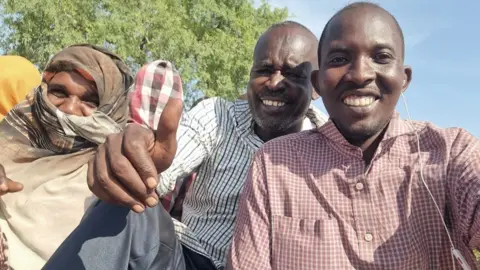
He cancelled within the South Sudanese town of Aweil for a couple of days, the place the Zaghawa community he were touring with hosted him of their house.
He next moved directly to the capital, Juba.
Muzamil made up our minds to stick there, however Mohamed travelled to Uganda and registered as a refugee at a camp related the border as a result of his passport had expired.
 Mohamed Zakaria
Twenty-three days upcoming depart el-Fasher, Mohamed arrived within the Ugandan capital, Kampala, on 3 July. He’s staying together with his uncle.
“I honestly have no idea where life will take me from this point,” he says.
His instant precedence is to appear upcoming his community and attempt to reunite them. But even so his mom and 3 brothers in Chad, he has a brother in Turkey and a sister within the United Arab Emirates.
His dream for the generation is to go back to Sudan in additional non violent occasions and arrange a school in Darfur to show filmmaking, pictures and media research.
“My work did not end after leaving el-Fasher,” he says. “I believe that was just a phase and now I have really begun arranging the second phase by working to convey the truth of the situation there.
“I hope that my effort, even if just a little, will help shorten the duration of the war and save the people in el-Fasher.”
More BBC stories on Sudan’s civil war:
 Getty Photographs/BBC













