
 Dennis Osadebe
 Ed Habershon / BBC
Habitual energy cuts had change into a property of South African time and fed emotions the rustic was once transferring within the incorrect route, however the electrical energy provide has been uninterrupted since March resignation community to miracle what has modified.


This can be a dry wintry weather’s occasion in Johannesburg, a cloudless blue sky shimmering over the bustling township of Alexandra, or Alex, as it’s extra recurrently identified right here in South Africa.
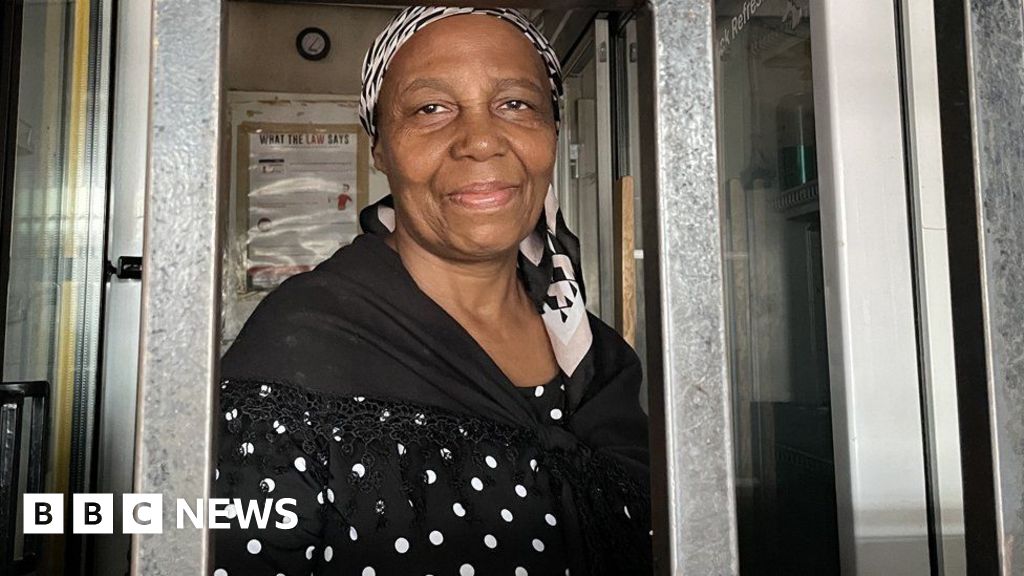
Sizeka Rashamosa is status in her eating place, a current of community swirling round her, some turning in crates of beer, every other grilling meat on a hotplate. A bunch of younger males are sitting at a sun-drenched desk.
“I can’t talk,” she says, “I’m busy.”
This can be a some distance shout from once we first met in March endmost 12 months, on the peak of South Africa’s energy extremity and customery load-shedding, the professional time period for scheduled energy cuts.
Again after Ms Rashamosa had very tiny electrical energy, and only one buyer. A mirrored image of the broader affect at the financial system.
“The power is everything,” she stated on the day. “I’m very stressed. We don’t have money because of the electricity, you can see it’s dark. I don’t think I’ll survive in my business. We’ll have to close down after 25 years. It’s terrible.”
However now, when she in the end reveals a couple of mins to speak, issues are extra certain.
“The load-shedding is much better now,” she says. “You can see, there’s electricity. And now I’m busy. I’m going to stay open, no plans to close, not anymore.”
This can be a noteceable turnaround.
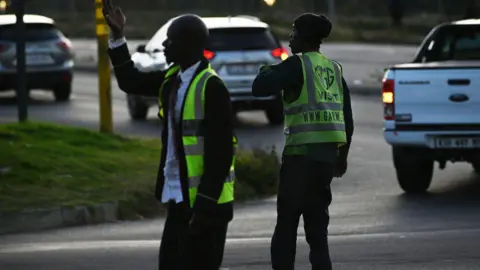
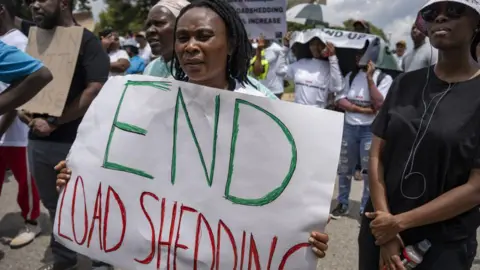
Load-shedding started in 2007, achieving a low endmost 12 months with energy cuts steadily lasting greater than part a occasion.
This 12 months it was once anticipated to worsen. However now there was incorrect load-shedding for greater than 4 months – since 05:00 on 26 March to be exact – the longest fracture in additional than 4 years.
 Getty Photographs
How has the turnaround came about, and can energy cuts go back?
It’s in large part on account of a suite of programmes from the state-owned energy supplier Eskom and the federal government over the endmost two years.
In July 2022 President Cyril Ramaphosa introduced the Power Motion Plan, and please see February he declared a countrywide circumstance of extremity over the electrical energy extremity.
Quickly later he created the position of electrical energy minister, appointing Kgosientsho Ramokgopa.
And after Eskom introduced the two-year Presen Operational Cure Plan, the important thing attempt of which was once to extend the quantity of energy – referred to as the “Energy Availability Factor” (EAF) – to 70% of the community’s attainable.
On the similar day Eskom overhauled its management, which maximum level to as a an important issue.
For years the corporate have been beset by way of corruption beneath former President Jacob Zuma, referred to as “state capture”, when it fell sufferer to acts of robbery and sabotage. A former CEO even claimed to be were poisoned.
“If you look at them now, it’s a good mix. You have technical people, you have financial people, you have people with skills in turn around,” says power analyst Ruse Moleshe.
“Our 40,000 employees that we have are more committed, more motivated, because load-shedding really was discouraging all of us, morale was very low,” says Daphne Mokwena, Eskom’s nationwide spokesperson.
 Getty Photographs
Every other vital walk endmost 12 months was once a 254bn rand ($14bn; £10.9bn) debt-relief bundle from the treasury to plug Eskom’s monetary blackhole.
Because of this there was a considerable relief in unplanned outages at Eskom’s energy stations, that have been led to by way of fracture downs in gadgets.
This in flip supposed {that a} programme of deliberate repairs might be performed.
That has ended in extra power capability, and on 23 July it reached 35,000 MW, its best in six years.
“There’s been a pipeline of these large projects,” says power knowledgeable Chris Yelland, relating to the plans that have been installed playground since July 2022.
“It’s like having a pipe where you stuff marbles in one end, and you keep on stuffing them in because it takes a long time, and eventually the marbles start popping out.”
After there are the exterior components.
“The first thing one can say is that the total demand for electricity [from Eskom] by the South African economy as a country has been reducing, for a decade,” says Mr Yelland.
That is i’m sick to 2 components – the expanding power expenses and the unfold of extra power assets.
“Every year we have an electricity price increase from Eskom at several times the inflation rate so the real price of electricity is going up and has been doing so for years,” says Mr Yelland.
“And there has been a remarkable increase in solar and battery energy storage systems across the board from individual residential applications, to commercial, industrial mining and agricultural.”
Gradual monetary expansion has additionally ended in much less upward drive at the call for for energy.
Minister Ramokgopa holds customery media briefings within the capital, Pretoria, by way of some distance probably the most in South Africa’s govt, and continuously visits Eskom’s energy stations.
He was once most often upbeat in his untouched briefing, specifically pleased with the reality such a lot was once being completed in wintry weather, the day of 12 months that sees probably the most call for on energy.
However may all of this have came about a lot quicker?
“I think we could have managed this situation better when we were told much earlier ‘you’re going to run out of capacity, invest in new generation capacity’,” Mr Ramokgopa advised the BBC.
“We thought the market will resolve that problem, when in fact the state must lead, and we didn’t create conditions for the market to respond appropriately.”
He additionally admits that load-shedding performed a task within the terrible election lead to Would possibly for the African Nationwide Congress (ANC) when it noticed its vote proportion fall underneath 50% for the primary day.
“Our core base was not convinced that the administration is capable and willing to resolve the problem. We have paid the penalty, we are here, government of national unity are committed to that and to resolve the South African problem. I’m confident that we’ll get it right.”
On account of the adjustments is load-shedding now a factor of the day?
“It is too soon to claim victory,” stated President Ramaphosa in an cope with endmost life.
“Our electricity system is still vulnerable and we cannot yet rule out – yes – possible challenges going forward.”
There may be nonetheless the occasional energy short – what’s referred to as “load reduction” – wherein Eskom switches off energy in high-usage boxes to restrain harm to native infrastructure, like transformers, which might in flip top to extra long energy cuts.
Eskom principally attributes this to unlawful connections and overcrowding of homes – what it and the federal government please see as “backyard dwellers”.
The federal government says 5% of South African families are suffering from load relief.
However issues appear in reality certain.
“We’re not out of the woods yet, but the probability of us going back to load-shedding is very slim if we keep doing what we are doing currently”, says Daphne Mokwena.
Again in Alex, Ms Rashamosa is getting ready for a hectic weekend, one she may now not have imagined this day endmost 12 months.
“Life is much better now,” she says, after darts off into the again of her eating place.
You might also be concerned with
 Getty Photographs/BBC













