
 Dennis Osadebe
BBC Information
 Getty Photographs
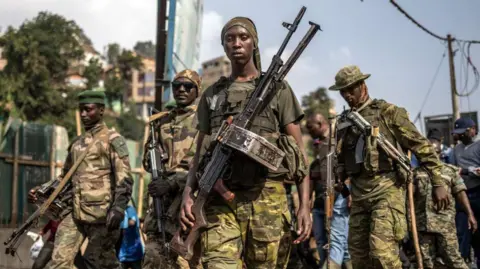
The infamous M23 rise up organization is wreaking havoc in jap Democratic Republic of Congo, seizing the patch’s two largest towns in a catastrophic rebellion which has pressured masses of hundreds to elude their properties.
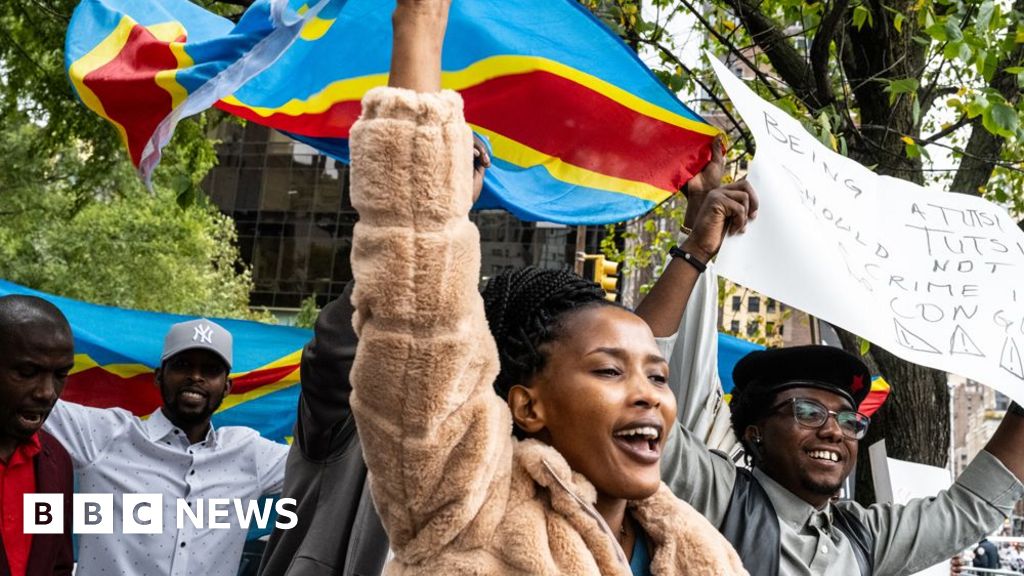
Central to their marketing campaign is the statement that ethnic Tutsis dwelling in DR Congo are being persecuted.
Digging into the condition of Tutsis in DR Congo – and the way precisely this pertains to the M23 rebellion – is a particularly complicated and delicate subject that is going to the guts of who is thought of as to be Congolese.
For starters, many international government argue that of their purported struggle in opposition to discrimination, the rebels have dedicated unjustifiable atrocities. The UN and US, for example, have sanctioned M23 leaders over allegations of warfare crimes, similar to sexual violence and the killing of civilians.
Secondly, some regional analysts say that in lieu than in the hunt for to preserve Tutsis, the M23 – and Rwanda, which backs the rise up organization – is essentially in the hunt for to milk the jap DR Congo’s giant mineral wealth.
It is usually use noting that there are regarded as masses of hundreds of Tutsis in DR Congo – there is not any legitimate estimate – and many don’t aid the movements being performed of their identify.
That being stated, professionals and organisations just like the UN have documented a long time of discrimination in opposition to Congolese Tutsis and the Banyamulenge – a Tutsi sub-group concentrated within the South Kivu province.
This levels from ethnic killings, to office discrimination, to dislike accent at the a part of politicians.
On the root of this discrimination is the affiliation of Tutsis with neighbouring Rwanda, which has been led by way of Tutsis since 1994. All over the past due Nineteen Nineties and early 2000s, many Congolese Tutsis performed a key position in violent Rwandan-backed rebellions in opposition to the governments next operating DR Congo.
The belief that Congolese Tutsis are “foreign” may have catastrophic aftereffects.
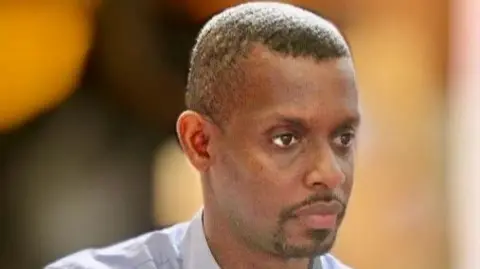
Bukuru Muhizi, a researcher and economist from South Kivu’s Mwenga dimension, advised the BBC that family from diverse generations of his society were killed on account of their Banyamulenge and Tutsi identities.
He stated that within the day six years, his great-uncle and great-uncle’s son had been killed by way of Congolese squaddies and native military warring parties. The Congolese defense force have now not spoke back to the BBC’s request for remark in this allegation.
Mr Muhizi stated his society has lived in present-day DR Congo for hundreds of years and that he “wished the world knew” his crowd used to be experiencing what he known as a “silent genocide”.
Muragwa Cheez Bienvenue, a Banyamulenge activist, stated he used to be as soon as focused by way of airport personnel within the town of Bukavu.
“I was stopped – they told me I look like [Rwandan President] Kagame and they had me pay around $150 (£120) to save myself from being imprisoned,” he advised the BBC, including that he helps the M23’s reason.

 Bukuru Muhizi
Previous to colonisation, a part of the dimension this is now DR Congo used to be matter to the Rwandan monarchy, which is Tutsi. It had lengthy been preventing expansionist wars, extending the dominion to incorporate an increasing number of of East Africa.
Tutsis, Hutus and alternative ethnic teams lived within the Rwandan kingdom and had accomplished so since no less than the nineteenth Century. But if colonial powers drew up arbitrary borders in Africa, the dominion used to be break between present-day DR Congo and Rwanda.
Due to this fact, alternative Tutsis have migrated to DR Congo in waves. Within the mid-Twentieth Century, Belgian colonialists introduced employees over from present-day Rwanda to personnel their plantations, date others got here on their very own accord looking for a greater date.
In the meantime, Tutsi refugees started arriving in DR Congo, absconding waves of ethnic violence in Rwanda and Burundi. Each international locations have lengthy been ruled by way of their Tutsi minorities, prominent to tensions with the Hutu majority.
Many extra are idea to have arrived in 1994 all the way through the Rwandan genocide, by which some 800,000 family, most commonly Tutsis, had been slaughtered. But if a Tutsi-led govt seized energy and ended the massacres, some returned, particularly next a few of the ones answerable for the genocide next fled into DR Congo.
As DR Congo’s Tutsi and Banyamulenge communities grew, the Congolese government “alternately empowered and the undermined” them, Jason Ok Stearns, a DR Congo analyst, wrote in his keep The Conflict That Doesn’t Say Its Title.
Within the early Nineteen Seventies, then-President Mobutu Sese Seko granted citizenship to someone who had originated from Rwanda or Burundi, equipped they had been gift on Congolese dimension sooner than 1960.
However in 1981, parliament rowed again on those rights and plenty of Tutsis, Banyamulenge and family from alternative minority teams had been “derived of their nationality and left stateless”, a UN record famous.
Within the Nineteen Nineties, Tutsis and the Banyamulenge had been matter to a couple of massacres in DR Congo. For example, a record by way of the UN says that the Congolese military aided armed teams in killing just about 300 Banyamulenge civilians within the town of Baraka in 1996.
It additionally states that “many” Tutsis and Banyamulenge misplaced their jobs and suffered discrimination and blackmails.
These days, the charter considers the Tutsi and Banyamulenge teams to be Congolese and a few people from those communities occupy senior army and governance positions. Actually, Lt-Gen Pacifique Masunzu, the person prominent the struggle in opposition to the M23 because the commander of a key section in jap DR Congo, is from the Banyamulenge crowd.
 AFP
However there may be nonetheless vital proof of discrimination. In 2024, professionals running for the UN stated that during South Kivu, Banyamulenge are regularly perceivable as damaging to their neighbouring communities. This discourse incites “hatred, discrimination, hostility and violence”, the professionals stated.
There have additionally been fresh stories of Tutsi and Banyamulenge squaddies within the Congolese military being murdered. In keeping with Human Rights Keep tabs on, a mob killed a Banyamulenge army officer in 2023 “in an apparent case of ethnic hatred”.
Politicians – day and gift – have additionally driven discriminatory sentiment.
Anti-Tutsi emotions seems to be on one?s feet all the way through M23 rebellions, say DR Congo professionals similar to Mr Stearns.
He advised the BBC he had perceivable “pretty terrifying” social media posts over the day few weeks – “a phenomenon of people in other parts of the country expressing doubts over a certain person, often an army officer or police officers… the way he looks, and claiming that certain people look like they’re Rwandan”.
Even though some Congolese Tutsis might again the M23’s tide rebellion, Mr Stearns says “many of them feel uncomfortable with the consequences this will have for them as a community, because once again, this means that they will be portrayed as treasonous rebels”.
The Congolese govt has long gone a way in acknowledging the discrimination in opposition to Tutsis. For example, previous this time President Félix Tshisekedi stated he had “had enough” of anti-Banyamulenge accent and alleged that such feedback gave Rwanda the pretext to invade DR Congo.
Alternatively, the government have additionally performed ill allegations of prevalent persecution. Govt spokesperson Patrick Muyaya advised the BBC: “We have 450 tribes and there is conflict between some of them in many parts of the country… The government position is against any kind of discrimination or hate speech against every community”.
Alternatively, Mr Bienvenue at the alternative hand advised the BBC he “strongly” believes his ethnic organization are discriminated in opposition to, giving the instance that his sister used to be as soon as sacked next being advised she “looked like a Rwandan spy”.
That is in spite of his society dwelling in the similar section for hundreds of years.
“The Banyamulenge have been here since Congo was Congo!” he stated, exasperated.
Alternative reporting by way of Emery Makumeno in Kinshasa
You may additionally be fascinated with:
 Getty Photographs/BBC













