
 Dennis Osadebe
4 hours in the past
Through Barbara Plett Usher, BBC Africa correspondent, Nairobi
 BBC
In Kenya, the adolescence protests towards deliberate tax will increase have served as a warning sign for the Church.
They’ve shaken up an impressive establishment, in a rustic the place greater than 80% of the society, together with the president, are Christian.
The younger demonstrators accused the Church of siding with the federal government, and took motion towards politicians the use of the pulpit as a political platform.
On a up to date Sunday afternoon, Catholic leaders replied to the problem.
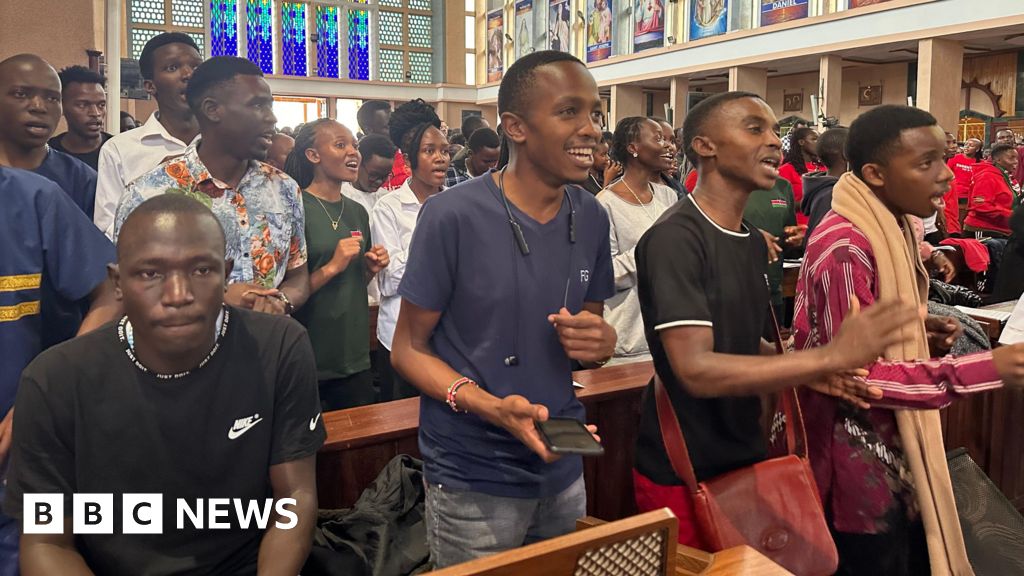
They organised a different Pile for the adolescence from church buildings in and round Nairobi, to celebrate those that’d been killed via police within the anti-tax protests.
Masses of younger community crowded into the Holy Crowd Basilica to hope for the lifeless.
Simply weeks previous, Sunday Pile have been interrupted via chants from the altar of the basilica.
It was once an unparalleled protest from younger community – the digitally savvy hour referred to as Time Z or Gen-Z.
They felt the church wasn’t backing their marketing campaign towards tricky tax hikes.
Now, Bishop Simon Kamomoe attempted to persuade them they’d been heard.
“I know as young people sometimes you feel disappointed even in the Church,” he stated.
“We would like to renew our commitment in serving you. We can be mistaken…May the Lord forgive us as a Church, where even before God, we have disappointed you.”
He additionally admonished them to be affected person in pursuit in their goals, to be guided via the Church, and to repent of any sins dedicated right through the protests.
“We don’t want to lose you, we don’t want to lose our young people,” he stated, with important candour. “The Catholic bishops are so concerned about losing this generation,” he stated, urging them to stick non violent and offer protection to their lives.
The Pile was once punctuated via spirited making a song and ended with rowdy cheering as community waved Kenyan flags.
A number of who attended stated the carrier was once a welcome first step, however a belated one.

 EPA
“I feel like for the first time, the Church is realising that the young people are serious,” stated Yebo, who attended the protests earlier than they became violent and sought after to stay nameless.
“And I feel also the Church hasn’t been really on our side. They have been sitting on the fence for a long time.
“The youth have actually been more persistent, they have brought results more than the Church with the current economic change. We can hear the president is taking the youth more serious than he takes the Church serious.”
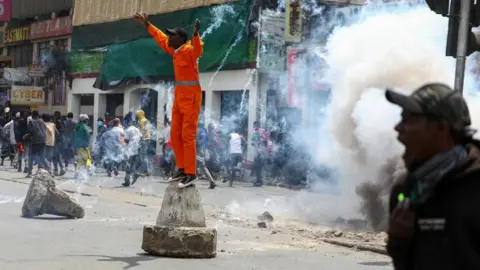
Church organisations did foyer towards the tax invoice, nevertheless it was once younger community committing to the streets in overwhelming numbers that pressured President William Ruto to backtrack.
Now not handiest that.
The Gen-Z protesters at the moment are condemning what they see as the comfortable dating between Christian and political establishments.
Over and over at the sidelines of the Pile, they discussed suspicions about visits via Church leaders to the Order Space, the presidential place of dwelling, together with right through the protests.
“We believe the president is buying the Church,” stated Meshack Mwendwa.
On social media “the Church leaders are seen holding envelopes (alongside) the executive leaders and the permanent members of the government,” he said. “And that’s not what we want as the youth, now it’s time for a change.”
One trade they demanded, and were given, was once an finish to the ostentatious apply of “harambee” – politicians giving immense sums of cash to the Church.
Such donations should purchase political affect on Sunday mornings.
The protest motion aimed to block that – they referred to as it #OccupyChurch.
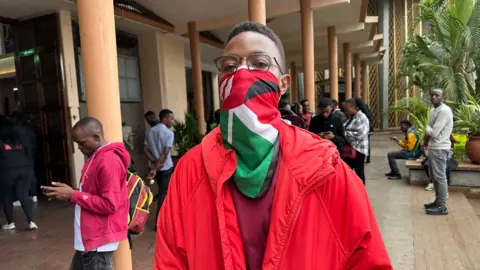
Some even demonstrated towards President Ruto’s attendance at a Church-sponsored tournament. However he supported their place.
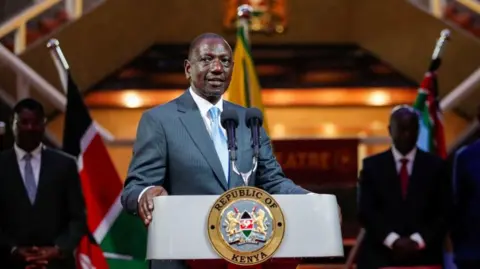
“On matters of politics on the pulpit I am 100% aligned,” he informed a media roundtable that aired nationally.
“We shouldn’t be using the pulpit in churches or in any other places of worship, to prosecute politics. It is not right.”
A number of days next, he prevented condition officials and crowd servants from making crowd charitable donations, and directed the lawyer common to create a mechanism for structured and clear contributions.
However the president himself has been a part of this political tradition, changing the pulpit right into a marketing campaign platform.
“His political message was actually driven within the Church,” says Reverend Chris Kinyanjui, the overall secretary of Kenya’s Nationwide Council of Church buildings (NCCK).
“So, people feel that they have a Christian government.”
Mr Ruto’s Christian narrative has made it tricky for lots of pastors to retain him to account, Rev Kinyanjui stated. Instead they behave like “shareholders of this administration,” he claimed.
“Our president speaks from the pulpit. You know what the pulpit means? He cannot be questioned. So, he has become a very powerful figure in Kenya’s politics and church circles. The Gen-Z are questioning, and are saying, we don’t know the difference between the government and the Church.”
The BBC asked the Kenyan government for a response but the spokesman said he was unable to comment right now. He was speaking amidst sweeping changes in the cabinet and security services made by Mr Ruto in response to the protests.
The backlash from Kenya’s young people has the potential to reshape the way power works in Kenya.
They make up the vast majority of the population, and are outside predictable political dynamics.
The president is listening now, and so is the Church.
 Reuters
“We are the Church,” stated Mitchelee Mbugua outdoor the basilica because the Pile wound up.
“If the Church shows that they don’t support us, we draw away from them. If there are no us, there’s not a Church. So, they have to listen to our grievances. Because we are the Church.”
Rev Kinyanjui goes further, underlining what he sees as the fragility of the social contract with Kenya’s youth. He acknowledged that NCCK leadership had been worried that Kenya might go the way of Sudan.
There, a youth revolution was aborted by a military coup, which eventually led to civil war.
“We were happy that the president was able to defuse [this crisis],” he said, “because if he had signed that finance bill into law, who knows what we’d have become.”
Rev Kinyanjui said the NCCK came out “too quietly” against the finance bill. Going forward they will adopt a strategy of “being proactive, being visible, being the voice of and the consciousness of society… by questioning, by correcting the regime.”
“In a way, we see the Gen-Z as doing the Lord’s work, and I think that’s something that has made many pastors to wake up.”













