
 Dennis Osadebe
BBC Information, Ogoniland
 Getty Photographs
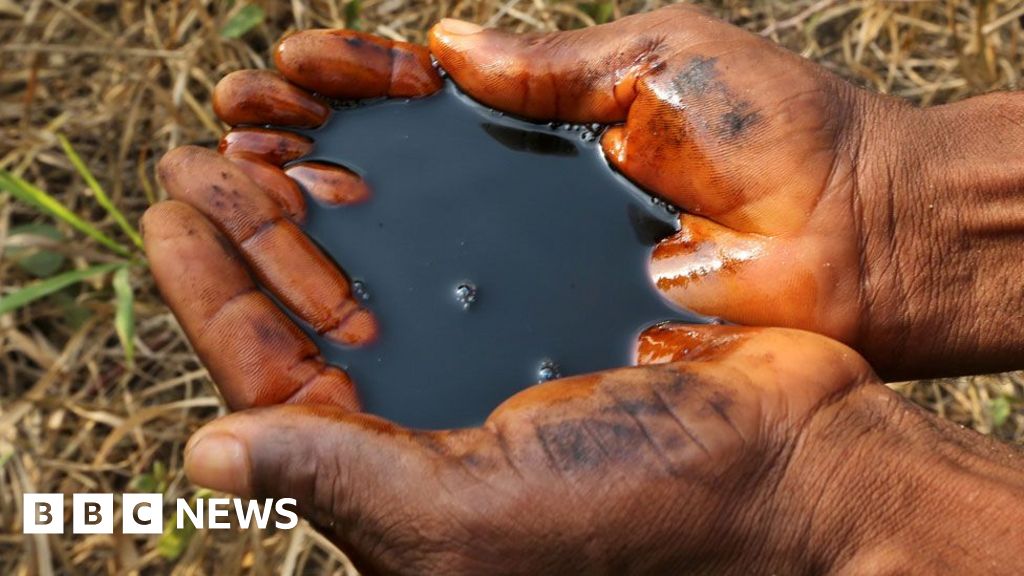
A BBC investigation has exposed allegations that power immense Shell has omitted repeated threats {that a} debatable clean-up operation of oil-polluted subjects of southern Nigeria has been beset via issues and corruption.
The multinational headquartered in London, together with the Nigerian executive, has time and again mentioned that paintings to wash up oil-contaminated websites of Ogoniland, which kicked off round 8 years in the past, goes smartly.
However the BBC has came upon proof that they have been warned time and again over a number of years that the scheme, arrange via the federal government and funded via numerous oil companies to the music of $1bn (£805m), has been affected by a yarn of problems.
One related eyewitness has described the clean-up challenge as a “con” and a “scam” that has wasted cash and left the folk of Ogonliland within the Niger Delta patch proceeding to are living with the appalling affect of oil pollutants – 13 years upcoming a ground-breaking UN record lifted the lid at the seriousness in their status.
Shell instructed the BBC: “The operating environment in the Niger Delta remains challenging because of the huge scale of illegal activities such as oil theft.
“When spills do occur from our amenities we swab up and remediate, without reference to the motive. If it’s an operational spray, we additionally compensate folk and communities.”
The allegations come as a civil trial is expected to begin on Thursday at the High Court in London, where lawyers representing two Ogoniland communities of around 50,000 inhabitants will say Shell must take responsibility for oil pollution that occurred between 1989 and 2020, allegedly from its infrastructure.
The communities say the spills have left them without clean water, unable to farm and fish, and created serious risks to public health.
Shell, which has been pushing to sell its assets in the West African country to focus on offshore drilling and onshore gas, has indicated it will defend the claims.
It denies wrongdoing and says spills in the region have been caused by sabotage, theft and illegal refining for which the company says it is not liable.
The BBC has visited the affected areas in the Niger Delta, where Shell, the largest private oil and gas company in the country, discovered the existence of crude oil 68 years ago.
The UN says at least 13 million barrels – or 1.5 million tonnes – of crude oil have been spilled since 1958 in at least 7,000 incidents in the Niger Delta region.
The spills have left many families worried for their health and livelihoods.
Grace Audi, 37, lives with her partner and two-year-old in Ogale, where there have been at least 40 oil spills from Shell’s infrastructure, according to Leigh Day, the UK-law firm representing the communities in this case.
Her family and neighbours only have access to a contaminated borehole, forcing them to buy clean water to use for drinking, cooking, washing and, once a day, flushing, at a cost of 4,500 Nigerian naira ($3, £2.40) – in an area where the average daily wage is less than $8.
It is a familiar story to many in Ogoniland.
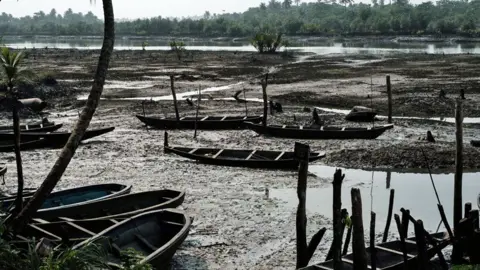
Paulina Agbekpekpe told the BBC that lush greenery once surrounded thriving mangroves of her community in Bodo – which is not one of those going to court on Thursday. She said the rivers and ponds used to brim with all kinds of animals and fish, particularly periwinkle.
“The park used to be greener, now not most effective mangroves, however all via the coastline – there have been pawpaw timber, palm timber and extra. However throughout the spills, the wreck has polluted in every single place,” the 50-year-old mother of six said.
Her family had for generations survived on fishing, until a devastating spill 10 years ago.
“Lots of the youngsters – from the consuming aqua – have were given sicknesses. Many have died. I’ve misplaced 8 youngsters. My husband is unwell.
“Because our livelihoods have been taken away, people in Bodo are hungry and suffering.”
In 2011, the UN’s Situation Programme (UNEP) revealed a big find out about into the affect of pollutants at the oil-rich segment.
It discovered contributors of 1 crowd in Ogoniland have been consuming aqua infected with a recognized carcinogen at ranges greater than 900 occasions above the Global Fitness Group (WHO) tenet. The similar chemical, benzene, used to be detected in all their wind samples.
It additionally discovered that websites that Shell’s Nigerian subsidiary, the Shell Petroleum Building Corporate of Nigeria (SPDC), claimed to have remediated, have been nonetheless polluted and the tactics they impaired didn’t achieve regulatory necessities.
The record concluded {that a} complete clean-up of the segment would whip 25-30 years – and it ended in the formation of the Hydrocarbon Air pollution Remediation Mission (Hyprep).
This used to be to begin with established via the Nigerian executive in 2012, however disagree clean-up used to be began – till it used to be relaunched via a brandnew executive in December 2016.
Hyprep used to be part-funded via oil corporations together with the state-owned Nigerian Nationwide Petroleum Corporate (NNPC) and Shell, which gave $350m.

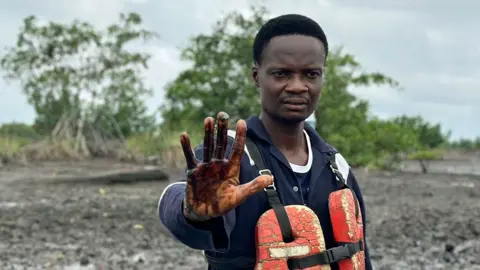
Then again, the BBC has noticeable inner paperwork that counsel representatives of Shell and of the Nigerian executive have been warned various occasions of the company’s alleged fraudulent practices.
One individual conscious about the challenge said to the BBC about their issues – and requested to stay nameless out of a terror of reprisals.
“It’s common knowledge that really what we’re doing is a scam. Most of it is to fool the Ogoni people,” the whistle-blower mentioned.
“It’s a con perpetuated so that more money can be put into the pot and end up in the pockets of politicians and other people in power.”
The allegations about failings at Hyprep come with:
- Oaths being awarded to corporations that had disagree related revel in
- Laboratory effects being falsified – infrequently labelling infected park and aqua as swab
- Mission prices being inflated
- Exterior auditors on life being restrained from checking the clean-up on websites have been executed correctly.
Within the mins of 1 assembly in 2023, attended via representatives from Shell’s Nigerian subsidiary, the UNEP and Hyprep, it used to be identified that “incompetent” contractors have been “being engaged again” and that they must “not be allowed to further degrade the environment”.
In a distant leaked record noticeable via the BBC from the similar yr, it used to be identified that laboratory effects have been “regularly reported with deviations”.
In 2022, the UN wrote to the Nigeria’s climate ministry, blackmail that if not anything modified, the “extremely poor standards” of the clean-up would proceed.
The BBC has requested Hyprep and the Nigerian executive to remark at the allegations however has gained disagree reaction.
However our investigation has noticeable proof that Shell used to be conscious about the issues.
In a gathering with the British prime commissioner to Nigeria in January ultimate yr, mins of which have been got below the Self-rule of Data Operate, Shell representatives stated the “institutional challenges” of the clean-up company and the anticipation of the refusal of “future funding” against it.
Shell instructed the BBC: “Hyprep is an agency established and overseen by the federal government of Nigeria, with its governing council largely made up of senior ministers and government officials, along with five representatives of communities and NGOs and a single Shell representative.”
 AFP
This isn’t the one remediation challenge in Ogoniland this is purported to had been botched.
In 2015, Shell correct to a £55m agreement for a clean-up upcoming two dreadful spills in 2008 from its infrastructure within the segment Bodo.
The corporate mentioned the clean-up, performed via the Bodo Mediation Initiative (BMI), which is supposed to provide as a mediator between oil corporations, together with Shell, and the Bodo crowd (and is part-funded via the oil immense and Nigerian regulators) has been qualified as 98% entire.
Then again, the BBC visited websites inside the segment and located crude oil oozing from the park and floating on waters.
Shell and the BMI insist any occurrences of oil spills within the patch are on account of robbery – recognized within the business as “oil bunkering”.
“There is a plan to call back the contractors to clean those areas to specification, to standard,” Boniface Dumpe, a director on the BMI, instructed the BBC.
“It is the responsibility of all stakeholders, Shell, yes, to take care of their facilities, to ensure that re-oiling does not come from their facilities.
“However for the subjects which were wiped clean. I’d assume that some accountability could also be for the crowd to assure that some unlawful actions does now not additionally motive re-pollution.”
Shell said it takes active measures to prevent oil spills caused by oil bunkering.
The company said: “We whip intensive steps to restrain this task and the spills it reasons together with aerial surveillance, putting off unlawful connections on pipelines, and via construction metal cages to offer protection to wellheads.”
The alleged failings in the oil clean-up come as Shell prepares to sell its Nigerian subsidiary, the SPDC, to Renaissance Africa, a consortium of local and international companies.
Some locals in Ogoniland have accused the oil giant of “working away” from properly cleaning up the land and waters it is alleged to have polluted.
They also fear Shell may still profit from the area by simply trading the oil extracted from the region in future.
“The operations of whichever oil operator takes over the related pipelines could have a huge affect on their day by day era,” Joe Snape, a lawyer at Leigh Day, told the BBC.
“There’s extremely negligible quality about what those do business in will manage to.
“It is unclear how Renaissance [Africa] will act going forward. At least with Shell we have means of holding them to account.”
Mineral merchandise, like petroleum oil and gasoline, account for 90% of exports from Nigeria, maximum of which comes from the Niger Delta patch.
Locals, whose major supply of livelihood has been agriculture and fishing, instructed the BBC that because the discovery of oil, or what some please see as “black gold”, their house have been pumped for benefit – via primary oil corporations, via oil thieves and via corrupt politicians.
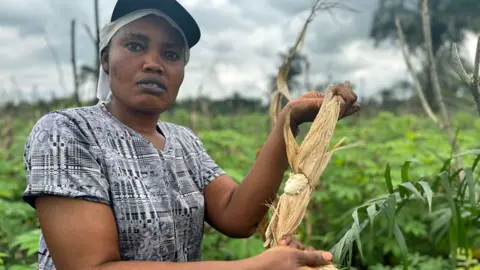
They are saying they have got noticeable disagree get advantages, most effective struggling – like Endurance Ogboe who blames fresh oil spills for her failing plants.
“Formerly if I harvest I can eat some with my family and even sell some… but for the past few years I could not get anything. It’s really bad,” the 42-year-old the BBC.
You may additionally be occupied with:
 Getty Photographs/BBC













