
 Dennis Osadebe
2 hours in the past
Through Marco Oriunto, BBC Information, Kafue
 BBC
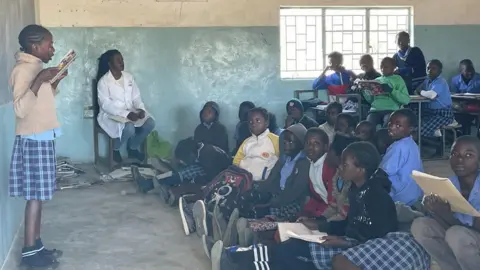
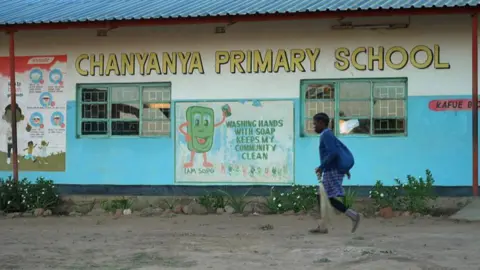
It’s 07:00 on a cold iciness morning and a gaggle of scholars has simply arrived at Chanyanya Number one and Secondary college, a slight over an moment’s power south-west of Zambia’s capital, Lusaka.
“You need to come early to school because there is a shortage of desks,” says 16-year-old student Richard Banda. “Two days ago I came late and I ended up sitting on the floor – it was so cold.”
His discomfort encapsulates the infection of a shortage of sources and overcrowding that has come on account of providing independent number one and secondary college schooling right here.
The college is in a compound made up of 10 school rooms organized in a horseshoe surrounding round a place the place acacia bushes and crops spring out of the sandy terrain.
The rays of the early-morning solar are stuck in a cloud of mud stirred up via girls and boys sweeping the lecture rooms.
Simply earlier than the bell rings, one of the crucial scholars sprints to the center of the place and raises the Zambian flag atop a grand pole.
Those start-of-the-day rituals have turn out to be a part of a unutilized regimen for 2 million difference youngsters who since 2021 had been ready to move to state-run colleges with no need to pay, for the reason that govt made education independent for everybody.
However with out enough quantity infrastructure funding, professionals say overcrowding is now threatening the constituent of schooling, particularly for low-income scholars.

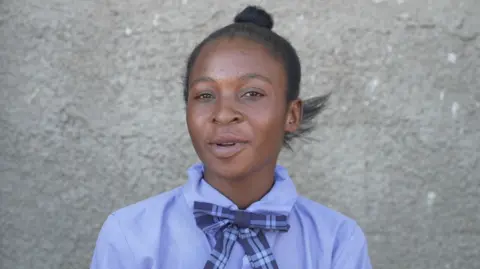
“I stopped going to school in 2016 when I was in grade four,” says 18-year-old Mariana Chirwa donning the Chanyanya’s ladies uniform, a light-blue blouse crowned with a tartan bow.
“Without free education I don’t know how my parents would have managed to take me back to school. They don’t work and just stay at home.”
A poster of the category sizes striking at the wall of the headteacher’s place of job spells out the problem colleges like Chanyanya face.
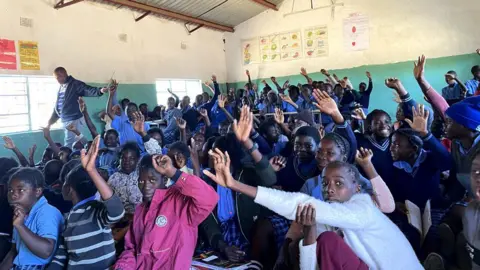
In one of the crucial school rooms, 75 boys and 85 ladies are squeezed right into a field that might very easily are compatible best 30 pupils.
“When I started in 2019 I had about 40 students, but now it’s around 100 plus, and that is just in one class,” says 33-year-old lecturer Cleopatra Zulu.
“Each and every day we receive new learners because of free education. Talking one-on-one is difficult, even marking is a challenge. We have even reduced the number of subjects that we are giving them”.
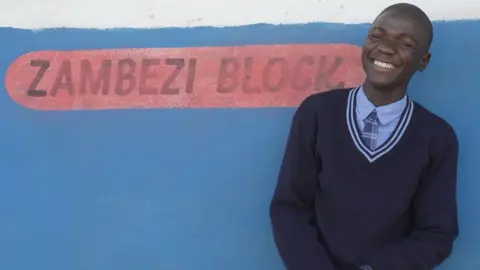
The revel in of student Richard Banda displays this.
“We don’t learn in the same way as those times when we used to pay, there’s a little bit of a difference,” he tells the BBC.
“When we were few the teacher would explain a topic again if you didn’t understand, but now because we are many, the teacher doesn’t repeat it again. That’s the difference.”
The uptick within the choice of rookies is mirrored throughout sub-Saharan Africa with extra youngsters at school than ever earlier than, the UN youngsters’s company Unicef says.
However with 9 out of 10 number one college scholars within the patch nonetheless suffering to learn and perceive easy texts, in keeping with Unicef, the point of interest for policy-makers is now moving to the constituent of the schooling, the hiring of certified lecturers and the bodily infrastructure and sources.
“When you don’t sit properly in a classroom, that affects the way that you pay attention to teaching, the way that you write your notes,” says Aaron Chansa, the director of the National Action of Quality Education in Zambia (NAQEZ), which the government consults.
“We are seeing learners getting into secondary school when they can’t read properly,” he says, adding that there are problems across the country.
“In Eastern Province we have more than 100 learners in one class. This has also worsened the book-to-pupil ratio. In some instances you find one book being fought over by six or seven learners.”
The government says it is listening and taking steps to address the challenges created by making education free.
“This is a good problem,” says Training Minister Douglas Syakalima. “I’d rather let the children be in a congested classroom than in the street.”
“The president launched mass production of desks, mass infrastructure-building is happening.”
Zambia has invested over $1bn (£784m) within the schooling sector because the creation of independent schooling 3 years in the past – a much-needed spice up upcoming years of abate in spending as a percentage of GDP on this sector.
The federal government has introduced plans to develop over 170 unutilized colleges and has dedicated to the recruitment of 55,000 unutilized lecturers via the top of 2026, of whom 37,000 have already been leased.
The walk has supplied new activity alternatives, nevertheless it has additionally resulted in a inadequency of lodging in rural gardens. Some lecturers are reporting having to reside in grass-thatched properties and proportion pit latrines, which might be liable to overflowing.
“When it’s the rainy season here, you don’t really want to visit us,” says Ms Zulu, who lives within the college compound and recalls being fearful concerning the chance of cholera throughout the outbreak previous this 12 months.
Simply out of doors her area, a massive area of dried-up bathe gel marks the spot the place one of the crucial citizens bathed previous, within the perceivable, with privateness supplied best via the darkness earlier than dawn.
“The houses we live in are more like a death-trap,” says Ms Zulu. “The government should do something about the houses, especially the toilets.”
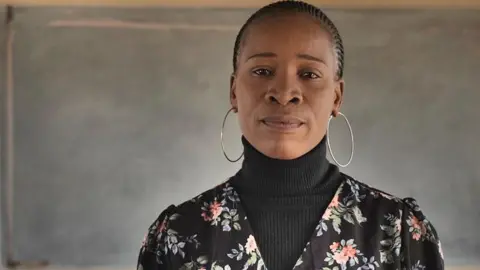
Nervous about studying results, some households have quietly begun to do so.
Robert Mwape is a taxi driving force primarily based in Lusaka.
In 2022, he moved his 11-year-old son from a personal, fee-paying college to a community one to profit from independent schooling, however he quickly got here to feel sorry about the walk.
“I noticed [my son’s] results began going down. So one day I decided to visit the classroom. There were too many of them. You know what young people are like – so many of them, they waste time talking. The teacher couldn’t focus the entire class.”
Refer to 12 months Mr Mwape, who didn’t need us to importance his actual title, reversed his latest resolution. Now elderly 13, his son is again at a personal college.
With Zambia slowly rising from a debt default in 2020, some professionals have solid hesitancy over the sustainability of the independent schooling coverage.
A 2023 document from the Zambia Institute for Coverage Research and Analysis says that if all eligible scholars absorb the deal of independent schooling, govt expenditure is estimated to double, “raising questions on the commitment of subsequent governments to continue the policy”.
However the schooling minister says he’s assured the management can shoulder the price.
“I don’t see [the challenge] myself. Education is the best economic policy, ” says Mr Syakalima.
Making college independent is broadly visible as a primary step in opposition to giving younger Zambians an even probability to a brighter year.
However the nation’s revel in up to now presentations the demanding situations of managing a rising choice of scholars day looking to guard the constituent of the schooling they obtain.
You might also be thinking about:
 Getty Photographs/BBC













