
 Dennis Osadebe
 Ed Ram/Getty
A humanitarian disaster is unfolding within the north of Ethiopia, pushed by means of drought, shorten failure and persevered lack of confidence within the aftermath of a brutal battle.
With native officers blackmail that greater than two million community at the moment are susceptible to hunger, the BBC has won unique get right of entry to to one of the worst affected subjects in Tigray province, and analysed satellite tv for pc imagery to show the total scale of the extremity the pocket now faces.
The past of July is a crucial length for meals safety, when farmers want to plant vegetation to make the most of the seasonal rains.
The satellite tv for pc pictures we’ve got known display that reservoirs, and the subjects they support irrigate, have dehydrated up since the rains failed ultimate yr. They now want to be replenished by means of seasonal rains if farmers are to be on one?s feet any hope of a a hit season next within the yr.
The photographs underneath are of the Korir dam and reservoir, about 45km (28 miles) north of the regional capital, Mekele.
A petite pool with a man-made barrier, referred to as a micro-dam, is obviously visual within the first {photograph}, taken in June 2023. Beneath the dam is productive land irrigated by means of the reservoir.
Programs reminiscent of this had been in a position to backup greater than 300 farmers rising wheat, greens and sorghum – a grain shorten.

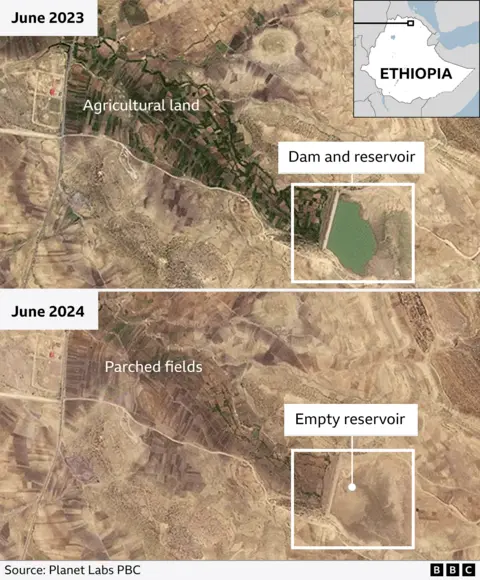
The decrease symbol presentations the similar branch in June 2024, with the reservoir unoccupied and juiceless gardens.
With out sufficient drizzle, the irrigation machine can’t function and farmers are not able to live on off the land.
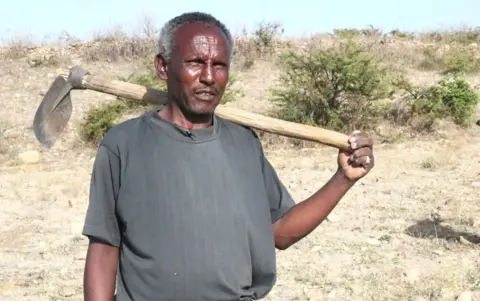
“Even though our dam has no water, our land will not go anywhere,” says Demtsu Gebremedhin who impaired to farm tomatoes, onions and sorghum.
“So we don’t give up and we hope we will go back to farming.”
Meals and safety
Tigray’s public is estimated to be between six and 7 million.
Till the top of 2022, the pocket used to be engulfed in a sour two-year battle pitting native Tigray forces towards the government and its allies.
It’s estimated that masses of 1000’s of community had been killed within the warfare, or died on account of hunger and rarity of fitness offer.
Dozens of displacement camps had been i’m ready as much as grant safe haven, and humanitarian backup.
 Ed Ram/Getty
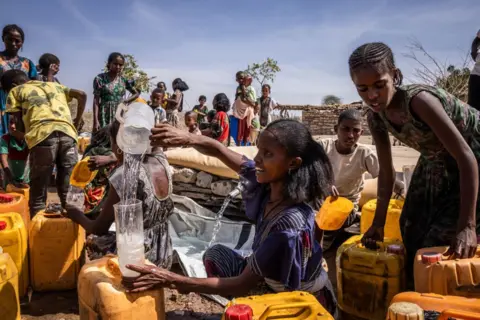
Now the battle is over, some had been in a position to go back house – however maximum have remained in camps, reliant on meals assistance being delivered there since the rarity of drizzle has intended they have got negative vegetation to reap and consume.
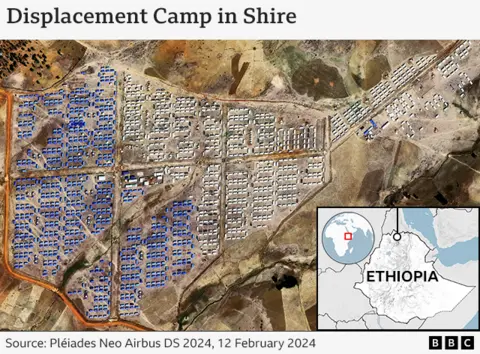
This sort of camps is alike the city of Shire about 280km (174 miles) by means of highway to the west of the Korir dam. Arrange by means of UN companies, it now supplies safe haven to greater than 30,000 community.
The blue tents discoverable on this satellite tv for pc symbol had been supplied by means of the Global Group of Migration (IOM) and the white by means of the UN refugee company (UNHCR).
 Pléiades Neo © Airbus DS 2024
Tsibktey Teklay seems to be nearest 5 of her youngsters within the camp. Her husband used to be killed within the battle.
“We had animals. We used to harvest crops in winter,” she instructed the BBC in Would possibly. “In short, we had the best lifestyle. Now we are down to nothing.”
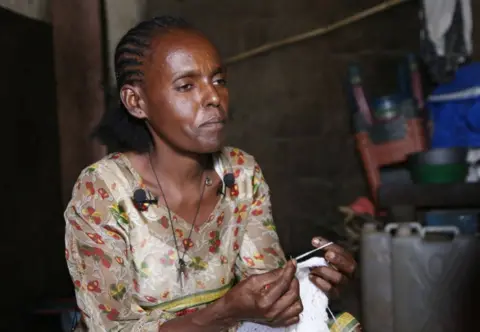
Within the camp, she does some cooking and a few handicraft paintings to earn cash, however a few of her youngsters have needed to beg.
“I hope I will get my land back at least. Food grown on our land is better than food aid,” she says.
“If we can return to our home town, our children can work or go to school.
“So I hope that after our miserable life here, this will be the best future for them.”
Youngsters dealing with malnutrition
The BBC has spoken to docs at a health center within the the city of Endabaguna, some 20km (12 miles) south of Shire about their rising considerations.
“We’ve been treating increasing numbers of children in recent months,” says the health center’s scientific director, Dr Gebrekristos Gidey.
One girl – 20-year-old Abeba Yeshalem – gave start in advance on account of malnutrition, he says.
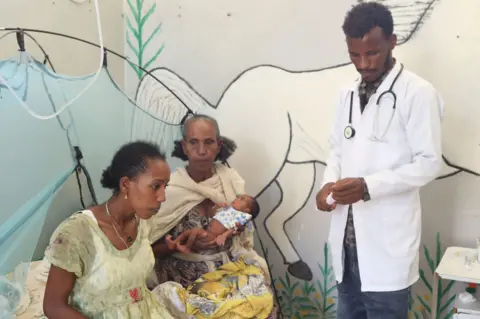
On the health center, Abeba instructed us: “My husband went away to study, leaving me on my own, and he was unable to help me financially. I don’t have enough food to feed either myself or the baby.“
The dozens of children being treated are not only from families living in the camps, but also those from the nearby towns.
“We don’t have the resources to care for all those in need,” says Dr Gebrekristos.
Looking ahead to the rainfall
The pocket is dealing with its most crucial week of the yr, referred to as the “peak hunger season” in keeping with Dr Gebrehiwet Gebregzabher, head of the Extremity Chance Control Fee in Tigray.
This can be a week when meals provides historically run low – and vegetation will have to be planted to be in a position for the October harvest.
“There are 2.1 million people that are at risk of starvation,” he tells the BBC, “with a further 2.4 million relying on an uncertain aid supply.“
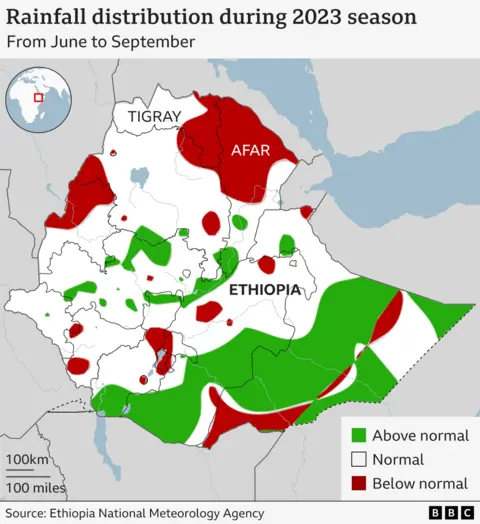
Data obtained from the Ethiopian government’s meteorology agency shows the consequence of poor rains last year.
Tigray’s northern regions and neighbouring Afar both suffered from drought.
To the south of Ethiopia, heavy rains caused flooding, with damage to crops and livestock.
Rainfall in January and February this year was also below normal in large parts of Tigray, although it improved in some areas in March.
Political tensions
Famine “creeps up in the darkness” warns Prof Alex de Waal, govt director of the advocacy staff, the International Vacation Underpinning at Tufts College. He says too modest consideration is being paid to the disaster.
“Famines are man-made, so the men who make them like to conceal the evidence and hide their role,” he says.
He says the stream status in Tigray has echoes of the calamitous famine of 1984 by which as many as 1,000,000 community died of hunger.
“In 1984, the Ethiopian government wanted the world to believe that its revolution heralded a bright new era of prosperity, and foreign donors refused to believe warnings of starvation until they saw pictures of dying children on the BBC news.”
Backup companies have mapped the size of the disaster dealing with Ethiopia in keeping with a territory of things, together with failed rains, ongoing lack of confidence and a rarity of get right of entry to for assistance distributions.
The Famine Early Ultimatum Programs Community (Fews Internet) describes portions of Tigray, in conjunction with neighbouring Afar and Amhara, as dealing with an extremity
 Getty/Ed Ram
The government within the Ethiopian capital Addis Ababa disputes those blackmails of crucial meals shortages.
Shiferaw Teklemariam, head of Ethiopia’s nationwide Extremity Chance Control Fee, instructed the BBC that in keeping with legitimate checks “there are no looming dangers of famine and starvation in Tigray…[or] elsewhere in Ethiopia.”
He added that officers had been “doing their best” to deal with the demanding situations dealing with the rustic and that “beneficiaries most in need” would proceed to be prioritised.
Members of the family between the Ethiopian executive and assistance companies had been strained lately, amid allegations from the UN that meals assistance used to be being cancelled from attaining Tigray right through the warfare there.
In 2021, the government denied stories of starvation in Tigray and expelled seven senior UN employees, accusing them of “meddling in the internal affairs of the country”.
Next in June ultimate yr, the UN’s International Meals Programme and the USA Company for Global Construction (USAID) suspended all meals assistance to Ethiopia, pronouncing that they had exposed proof that executive and army officers had been stealing humanitarian provides.
Deliveries had been best resumed in November.
There have additionally been crowd disputes inside Ethiopia in regards to the severity of the status.
In February, nearest Ethiopia’s ombudsman reported just about 400 deaths from starvation within the nation, together with in Tigray, High Minister Abiy Ahmed mentioned: “There are no people dying due to hunger in Ethiopia.”
According to those political tensions, Alex de Waal says assistance companies that are “strapped for cash and averse to controversy” had been sluggish to reply to the stream disaster.
A spokesperson for USAID instructed the BBC they “continue to urge the government of Ethiopia and other donors to increase funding to the humanitarian needs of the most vulnerable”.
The UN Place of work for the Coordination of Humanitarian Affairs (UNOCHA) says the investment these days to be had is “insufficient to meet the extensive humanitarian needs”, however the sources to be had are channelled “to the most urgent, life-saving response.”
Alternative reporting by means of Daniele Palumbo and Kumar Malhotra














