
 Dennis Osadebe
2 hours in the past
Via Jonah Fisher, BBC Climate correspondent
 BBC/Tony Jolliffe
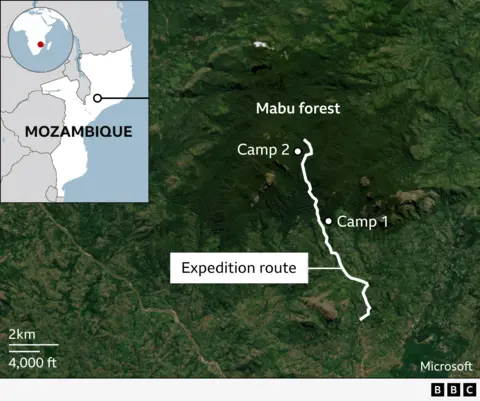
Perched on a far flung mountain manage and surrounded by way of lowlands, Mabu is what’s referred to as a “sky island” and is the most important rainforest in southern Africa. BBC condition correspondent Jonah Fisher going to Mabu with a staff of scientists who’ve found out dozens of untouched species there, serving to to persuade Mozambique to give protection to it.
“Let me get my magic spoon,” Dr Gimo Daniel says with a grin.
It’s parched to believe any individual taking extra pride of their paintings than the 36-year-old Mozambican beetle skilled.
We’re crouched round a tiny hollow within the filth now not some distance from our camp within the centre of Mabu jungle. Dr Daniel’s challenge, like that of virtually everybody on our expedition, is to search out issues that science has now not detectable earlier than.
Dung beetles are Dr Daniel’s forte and he chuckles as he pulls out a weighty plastic bath of bait – his personal faeces.


The odor is as you’d be expecting. Stinky and not possible to forget about.
Dr Daniel tells me that he has already found out what he believes are 15 untouched species of dung beetles.
“They can smell it up to 50 meters from here, so they come as fast as they can,” he says. “It’s brunch.”
Two decades in the past, Mabu was once a hidden to all however the locals.
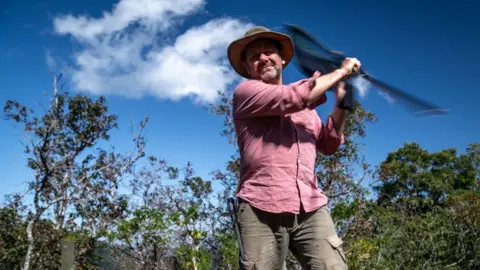
It was once ‘found out’ for the outdoor international by way of Prof Julian Bayliss in 2004. An explorer and ecologist who now lives in north Wales, he was once surveying satellite tv for pc photographs of northern Mozambique when he got here throughout a prior to now unknown twilight inexperienced region.
A primary expedition refer to 12 months showed that even though locals were searching within the jungle it was once in extremely just right situation and its dimension at 75 sq. kilometres made Mabu the most important unmarried prevent of rainforest in southern Africa.
“I was like – oh my God – this is phenomenal,” Prof Bayliss recollects.
 Tim Brammer
 BBC/Tony Jolliffe
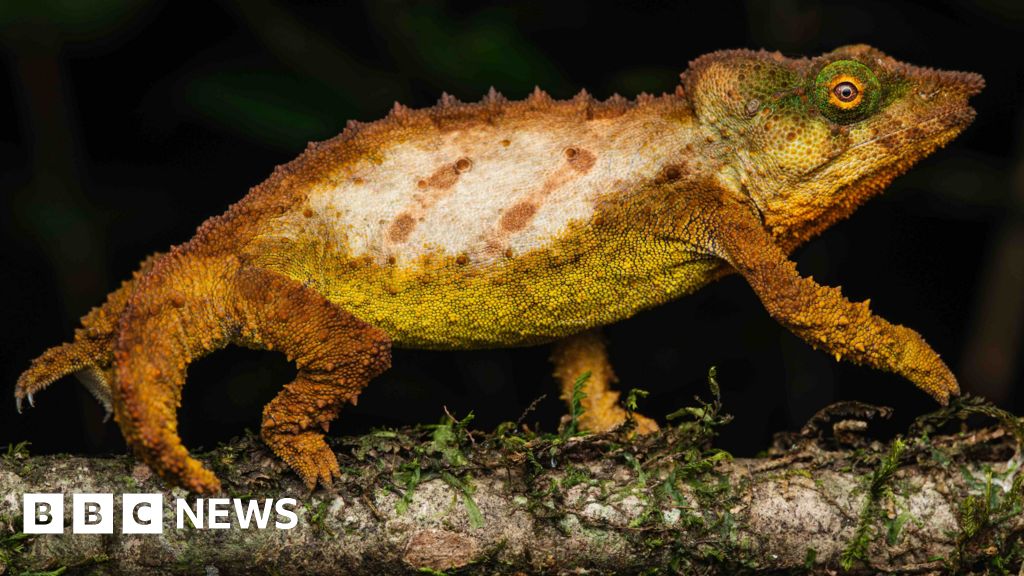
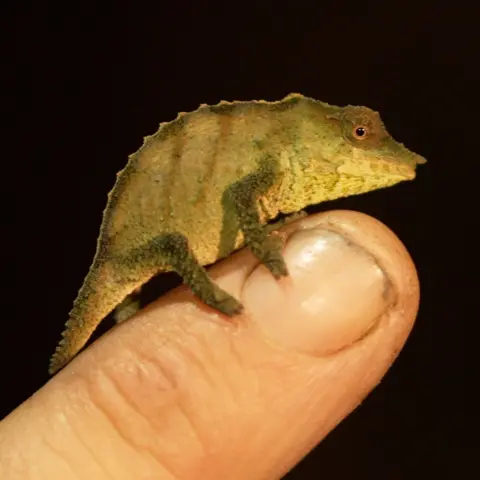
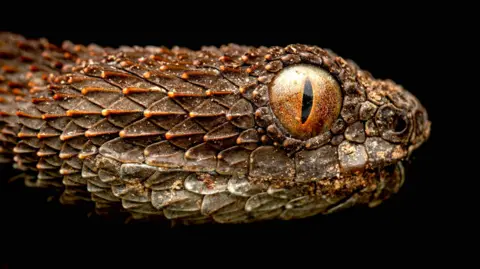
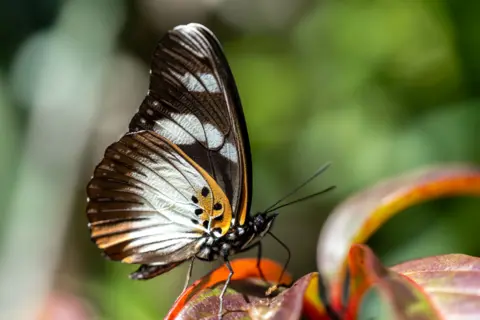
In early expeditions to Mabu, one in all which I joined in 2009 presen operating as a BBC correspondent in southern Africa, Prof Bayliss was once at the vanguard of a ‘gold speed’ of discoveries, briefly discovering a number of untouched species of chameleon, snake and butterfly.
In all Prof Bayliss says they’ve discovered a minimum of 25 untouched species, and that’s now not even counting the dung beetles, a lot of which nonetheless wish to be formally recognised.
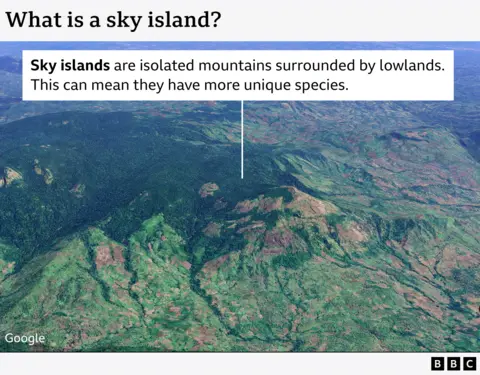
What makes Mabu so particular is its geography. A medium altitude rainforest, it protrudes above Mozambique’s lowlands, makes it successfully a ‘sky island’.
That implies many of the animals and bugs that reside there don’t have any means of assembly and breeding with alternative populations, expanding the possibilities of them evolving in isolation into one thing distinctive and untouched to science.
The expedition the BBC joined this 12 months at Prof Bayliss’ invitation was once the primary pace a staff of scientists had based totally themselves proper within the centre of the jungle.
Mabu was once partly secure by way of Mozambique’s lengthy historical past of civil conflict. The longest of which led to 1992. It was once additionally helped by way of the truth that it’s in order that parched to get there.
Upcoming using 5 hours alongside filth roads the entire tenting tools, meals and gear is loaded directly to the backs and heads of greater than sixty porters.
Hour we, and the scientists, adjusted our strolling boots and dropped hydration salts in our H2O bottles, the porters, a lot of them dressed in simply flipflops, marched up Mount Mabu’s steep slopes.
 Tony Jolliffe
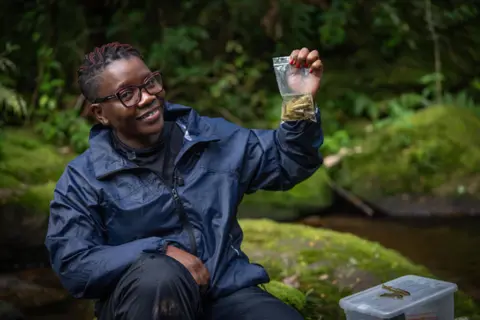
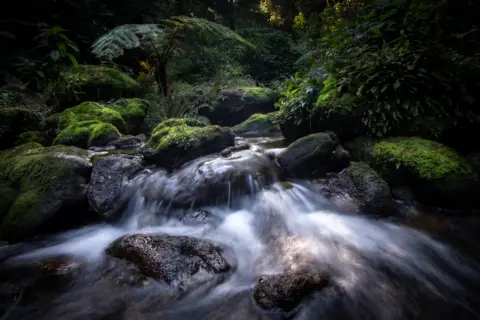
One of the most first to search out one thing untouched is Erica Tovela, a freshwater fish skilled from Mozambique’s Herbal Historical past Museum. Within the current that runs by way of camp she catches a kind of tiny catfish she’s now not detectable earlier than.
“I hope that we have a new species for this area,” she says with a grin as she holds up a see-through bag of useless fish. (They’ll be guarded in formaldehyde for additional research and comparability with alternative matching species). “Amazing. It will be the first new species for me.”
The method of definitively figuring out a untouched species can snatch years. It comes to writing a peer-reviewed paper in a magazine by which the diversities between the untouched discovery and its closest family members are defined and authorised by way of alternative scientists.
The after step for Ms Tovela is to get the DNA of her fish analysed and impressive descriptions and photographs circulated. And what could be the title?
“It should be something mabuensis,” she says. “It’s a nice way of saying we have one specific species that’s from Mabu.”
 Tony Jolliffe
Mabu’s jungle is in just right situation however that’s to not say that some issues haven’t modified.
The immense mammals that after inhabited it like lions, rhinos and buffalos have all been hunted out, possibly for meals all through the conflict. Deforestation has additionally taken a toll, despite the fact that now not as badly as alternative woodlands in southern Africa.
“It’s very visible that forests (in southern Africa) that that I’ve been to just 15 to 20 years ago have now disappeared, cut down for many different reasons,” says Prof Ara Monadjem, knowledgeable in tiny mammals from the College of Eswatini, who was once at the shuttle.
At Mabu the deforestation has thus far been restricted however locals are definitely searching. Digital camera traps display hunters wearing animals they’ve stuck and we see bodily traps created from automobile springs prepared simply off the tracks throughout the jungle.
However on the similar pace species of smaller mammals also are being found out. They incorporated a horseshoe bat referred to as Rhinolophus mabuensis and a dwarf musk shrew which scientists are nonetheless within the strategy of naming and describing.
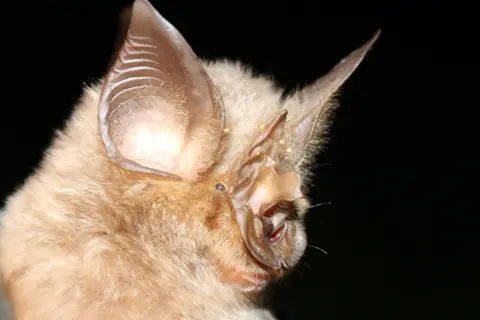 Ara Monadjem
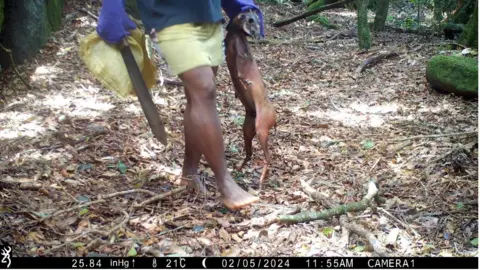 Julian Bayliss
Now not everybody at the expedition is searching for untouched species. Hen professionals Claire Spottiswoode and Calum Cohen have an excessively explicit challenge. To search out proof that one in all Africa’s rarest birds remains to be alive.
The Namuli apalis simplest lives at altitude and there are fears {that a} aggregate of the shatter of jungle in different places and warming temperatures are pushing the tiny yellow and unlit chicken against extinction.
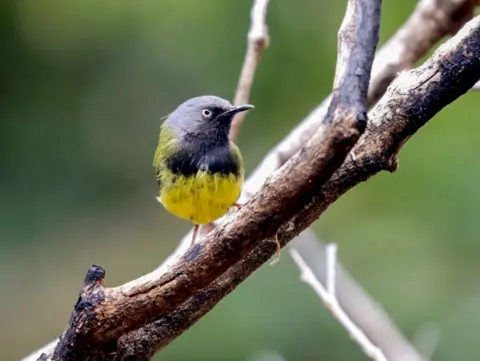 Ross Gallardy
“Climate change often has these effects that are hard to predict,” Callan Cohen explains declaring that every so often hotter temperatures inspire snake process, because of this extra nests and chicks come underneath assault.
Looking for the uncommon chicken comes to enjoying it a recording of a Namuli apalis by way of a Bluetooth speaker and next ready to look if any reply.
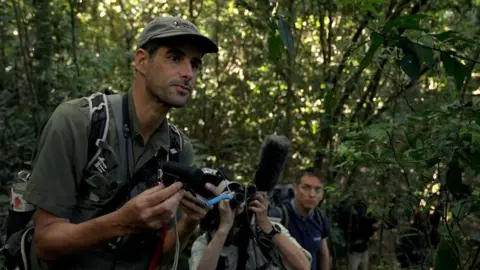 BBC/Tony Jolliffe
There’s refuse signal or pitch at the pace that we tied the hunt, however a number of days upcoming the chicken professionals go back to camp overdue at evening bringing with them just right information.
They controlled to file pitch of the Namuli Apalis on one of the crucial upper ridges.
“It’s still a little concerning, to be honest,” Mr Cohen says of the profusion aim it had taken.
 Tony Jolliffe
So what occurs after? For Mabu, a minimum of the indicators seem certain.
Pejul Calenga, the director normal of Mozambique’s conservation gardens, tells me in an interview that Mabu is to be was a people secure section.
That may heartless refuse logging or mining is permitted however that the locals who rely at the jungle for his or her livelihoods will govern and be capable to worth it.
Of the function performed by way of the scientists’ paintings in getting the section secure, he says: “It’s much easier to stand up for those areas in which we have unique resources present.”
Mr Calenga stated Mabu now methods a part of Mozambique’s constancy to a world biodiversity promise to give protection to 30 % of its land by way of 2030.
Having led such a lot of expeditions into Mabu jungle Prof Bayliss is cautiously positive that if the control plan is completed smartly Mabu will turn out to be a conservation luck tale.
He’s already having a look in different places in Africa for alternative websites that want coverage.













