
 Dennis Osadebe
BBC Information, Morogoro
 BBC
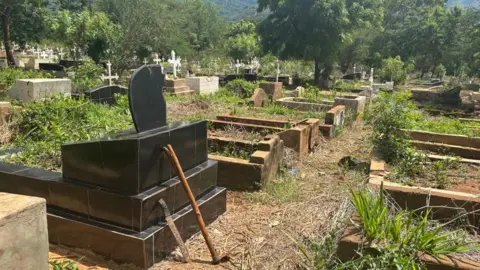
Grave nearest grave nearest grave on this cemetery within the japanese Tanzanian town of Morogoro has been vandalised.
In some, there’s a hole the place a steel crucifix as soon as stood, in others the non secular image is crooked as thieves, who had been hoping promote it to scrap traders, attempted and failed to take away it.
Greater than 250 had been centered in a single little category of the Kola Municipal Cemetery abandoned.
The crimes most commonly occur at evening when there’s no safety there are not any cemetery employees round.
They have got left households devastated and the websites desecrated, sparking infuriate.
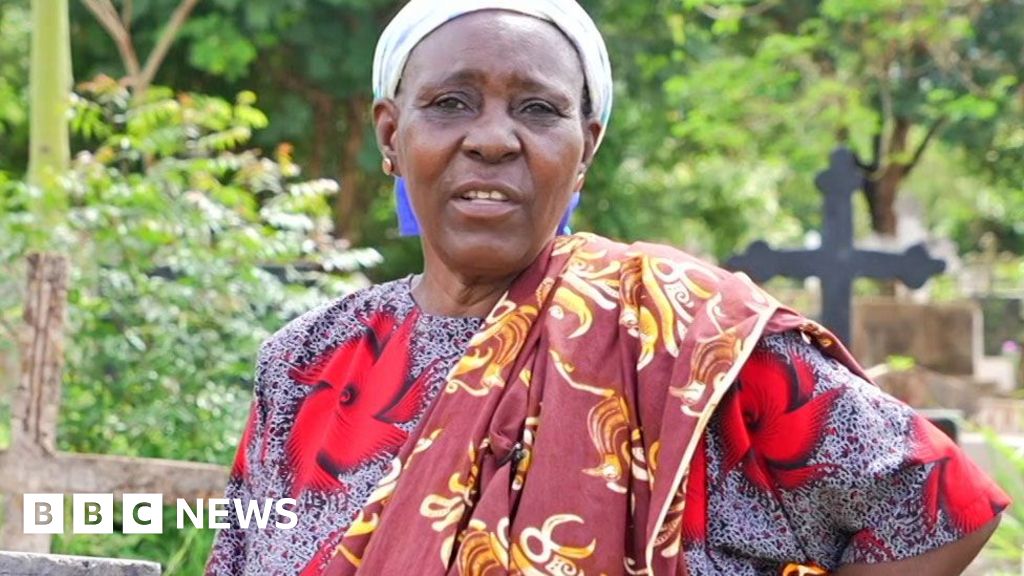
For greater than twenty years Pudensiana Chumbi has been getting to the cemetery about as soon as a day to seek advice from the graves of her daughter and mom – and to her misery each had been desecrated over the ultimate few years, more than one occasions.
The primary to be centered used to be her grave of her mom who had died in 2000.
A couple of months nearest the nation had controlled to avoid wasting as much as exchange the stolen move in past due 2021, her daughter’s grave used to be later broken. It used to be within reach and a slight used – her daughter had died in 1997 elderly 15.
Prior to Ms Chumbi may construct a call about solving her daughter’s move, to her horror the unutilized move on her mom’s grave used to be swiped.
In a predicament about what to do nearest, she felt steel used to be now not an possibility when it got here to changing her daughter’s move.
“This is my child’s grave – my fourth child,” she mentioned pointing in opposition to the concrete move.

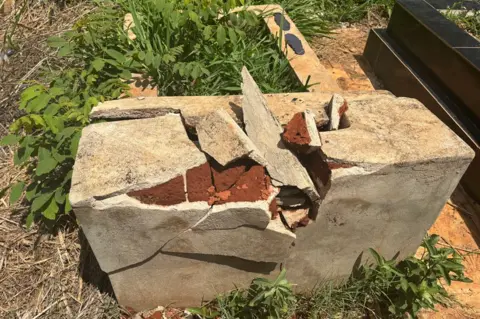
The robbery of crosses and markers from graves has develop into a hectic pattern on this a part of Tanzania pushed via the emerging call for for scrap steel.
“The people doing this are cursed because everyone is sad about what is going on,” Ms Chumbi tells the BBC.
“There are some young men who now demand payment to guard graves overnight, especially those with tiles.”
Tiles may also be bought on for community to usefulness as decorations of their house.
Augustine Remmy, Ms Chumbi’s brother, says it’s provoking for the entire folk.
“This is too bad… when these areas that deserve respect are subjected to such bad acts, it truly hurts a lot,” he tells the BBC.
The rash of thefts displays a desperation amongst some to construct some cash that overrides moral considerations about harmful sacred websites.
The criminals can earn someplace between 700 and 870 Tanzanian shillings ($0.27-$0.34; £0.22-£0.28) in step with kilogram.
It’s not a profusion sum of money however it may be plethora to pay for a plate of meals from a dealer or some in the community brewed alcohol.
“Metal dealers often buy without asking questions,” says one guy who admitted to the BBC that he had stolen crosses from a cemetery to promote at the scrap steel marketplace.
Agreeing to talk on status of anonymity, he describes how the thieves would exit to welders first who scale down the crosses into items sooner than taking them to the scrap traders.
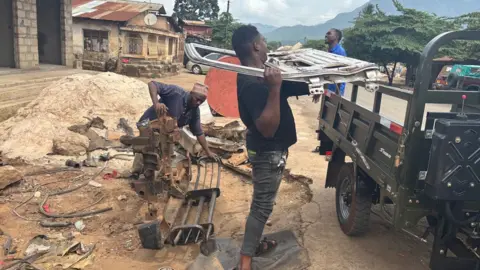
The traders themselves are confronted with the selection of buying less expensive stolen items or following the regulation.
Izire Ramadhani, a broker in Morogoro town centre, remembers how in 2023 he, along side some alternative scrap traders, stuck any individual looking to promote a stolen move and reported him to the government.
“In the past, they used to bring us crosses. But then we took one of them to the police, and later he was sentenced to three-and-a-half years in prison – after that, the theft reduced, but now it has returned,” Mr Ramadhani tells the BBC.
He insists that he does now not purchase stolen items.
“If a cross is brought here, the person coming to sell to us will be in trouble because we will take him to the police.”
Thieves have additionally begun focused on alternative grave markers like tiles and marble decorations, which is able to simply be bought directly to alternative consumers.
Dr Ndimile Kilatu, Morogoro’s condition officer, mentioned the town’s government deliberate to toughen cemetery safety via introducing fences and guards however warned that “this requires resources and time.
“It’s not one thing that we will do these days or the next day.”
He also mentioned initiatives to educate scrap metal dealers about the materials that should not be bought, such as grave markers and railway components.
In response to the crimes, Tanzania’s government has also pledged to regulate the scrap metal industry.
Deputy Prime Minister Dotto Biteko has emphasised the need for licensed businesses to adhere to the laws and regulations.
“What is needed is solely to implement that and stock the folk skilled at the similar topic. We will be able to stock so teaching our community in order that we put our infrastructure shield,” he told the BBC.
Religious leaders are also appealing to their communities to do more to prevent those involved in these crimes from carrying them out.
Pastor Steven Msigara from the Jesus Assembles of God in Morogoro has called for a united effort to educate the youth on the need to respect sacred places.
“In combination, we should repair their dignity, we all know some adolescence are uncovered to wicked acts however we will go back them to the appropriate observe,” he says.
For relatives of those whose graves have been desecrated there is a feeling of frustration.
Ms Chumbi wants more money to be spent on security at the cemeteries as well as a commitment to look after the sites with care befitting a place where loved ones are laid to rest.
She is in the process of replacing her mother’s cross for a second time – and, as in her daughter’s case – is opting for concrete.
More BBC stories from Tanzania:
 Getty Photographs/BBC













