
 Dennis Osadebe
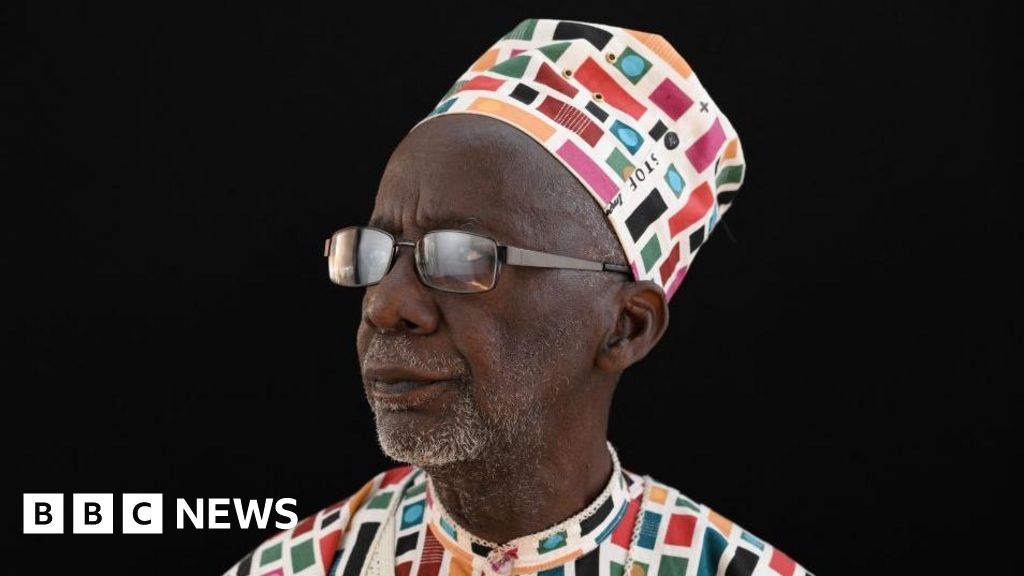
Malian movie director Souleymane Cissé, one of the crucial pioneers of African cinema, has died elderly 84.
His daughter, Mariam Cissé, showed his loss of life at health facility within the capital Bamako, expressing injury and mourning “the loss of a man who dedicated his life to film and art”.
The reason for his loss of life has now not been introduced.
Cissé first received world popularity in 1987 when his movie Yeelen (The Brightness) gained the Jury Prize on the Cannes Movie Competition, changing into the primary cloudy African film-maker to win the prize.
His trailblazing profession spanned greater than 50 years, profitable many accolades alongside the way in which.
In 2023, Cissé used to be honoured via Cannes with a Carrosse d’Or award, most often given to administrators who’ve “marked the history of cinema with their boldness, their exacting standards and their intransigence in staging”.
Cissé used to be additionally a double winner of the brilliant prize at Burkina Faso’s Pan-African Movie Competition, Fespaco.
On the month of his loss of life he were because of progress to the Burkinabè capital to preside over the jury on the competition which opens this weekend.
Tributes were pouring in for the person, praising his determination to African storytelling.
Mali’s Tradition Minister Mamou Daffé lamented the loss “of this monument of African cinema”, month fellow Malian director Boubacar Sidibé mentioned the rustic’s movie trade used to be in “mourning”.
Movie fanatics have praised Cissé’s works for his or her complexity, political engagement and deep humanity.
His first property movie, Den Muso (The Younger Woman) shot in 1975, used to be within the native Bambara language, and is regarded as an African vintage.
The movie is set a tender lady who’s raped, turns into pregnant and is unacceptable via her community.
The movie used to be forbidden via the Malian government, and Cissé used to be jailed for having approved French investment. He wrote the screenplay for his 2d movie, Baara (Paintings), month in jail.
He made alternative movies together with Finyè (The Air) in 1981, and Yeelen (The Brightness), which gained the Jury Prize in Cannes in 1987. His closing movie in 1995 used to be Waati (Pace).
Cissé used to be born within the Malian capital Bamako, and spent a part of his early life in neighbouring Senegal.
Next, he studied movie in Russia’s capital Moscow, changing into one of the crucial first pace of African film-makers.
Cissé went directly to champion govt assistance for and funding within the movie trade.
He used to be the starting president of the union representing West Africa’s marketers in cinema and audiovisual arts.
Cissé used to be steadily outspoken about alternative boundaries to the unfold of African cinema – criticising “censorship” and “contempt”, and urging younger film-makers to not office like “beggars who must plead every time for financing from Europe” however in lieu search higher liberty.
Hours ahead of his loss of life, he reportedly instructed Mali’s army govt to backup the rustic’s trade meet up with its continental competitors.
“It is not enough to make cinema, the works must also be visible,” the AFP information company quoted Cissé as pronouncing.
“May the authorities help us with the construction of cinemas.”
Supplementary reporting via Natasha Booty













