 Dennis Osadebe
2 hours in the past
Via Wycliffe Muia, BBC Information, Nairobi
 Reuters
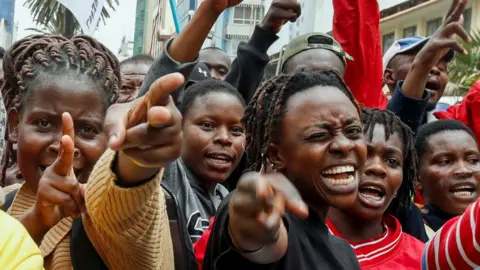
A daring and untouched future of younger Kenyan protesters has emerged at the streets forcing the federal government to back off on a few of a slew of unpopular tax proposals.
What began as arouse on TikTok a couple of debatable finance invoice has morphed right into a rebel – with out being organised by means of political events.
The federal government of President William Ruto has controlled to do what generations of politicians within the East African crowd have did not do – unite abundance numbers of Kenyans past ethnicity and birthday celebration.
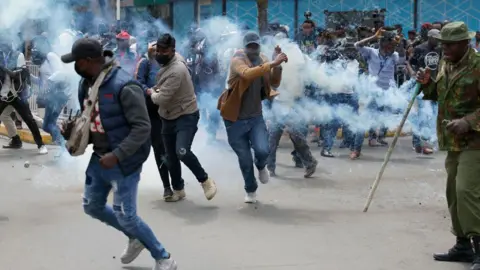
On Tuesday, loads of trainer-wearing protesters, who really feel Kenyans are already overtaxed with negligible to turn for it, braved tear gasoline lobbed by means of police to march throughout the capital, Nairobi, bringing the town’s central trade district to a standstill.
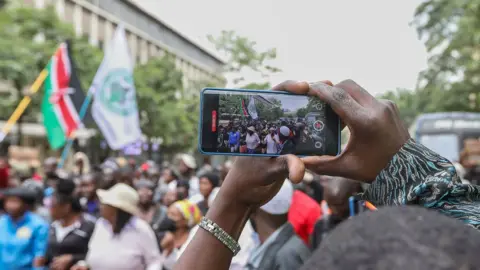
Armed with their smartphones, they live-streamed the serious confrontations with officials.

 EPA
EPAThe protests, dubbed “occupy parliament”, had been co-ordinated and mobilised on social media against this to these led and backed by means of politicians.
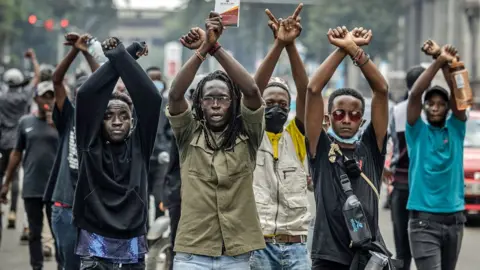
Organisers inspired fellow protesters to put on lightless garments, however some nonetheless grew to become up in ripped denims and classy hairdos.
The younger demonstrators, popularly known as Gen Zs – in connection with the time period in most cases impaired to explain the ones born throughout the overdue Nineties and early 2000s – confirmed up in abundance numbers, vowing to safeguard that their discontent didn’t finish with only a hashtag or meme.
“We are the Gen Zs, we were able to mobilise ourselves. We use TikTok as a space to be able to not only have young people come to protest but to educate them on the why,” protester Zaha Indimuli advised newshounds.
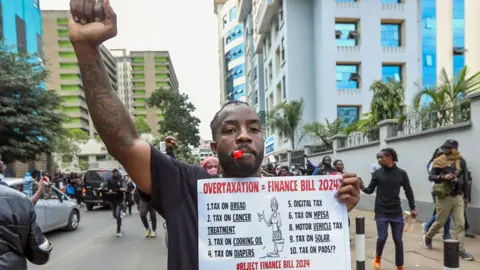
Lots of them had been demonstrating for the primary era and waved indicators equivalent to “Do Not Force The Taxes On Us” , past others chanted: “Ruto must go”.
“I’m here slaving for a country I love. It is the first time I’m doing this because my parents are old and they cannot do it any more,” Ken Makilya, a 24-year-old college pupil, advised the BBC.
 AFP
AFPThe hashtags impaired to force MPs and rally protesters had been “#OccupyParliament” and “#RejectFinanceBill2024”.
“This is my first demonstration. I hope it will be the last. I hope things change after this,” said Naserian Kasura, who opposed the proposal to tax sanitary pads.
The protesters’ efforts to march to parliament were thwarted as police used water cannon to block them.
“We have been arrested but don’t let them get to you please proceed to parliament,” Hanifa Farsafi, reportedly one of the organisers, posted on X, formerly Twitter.
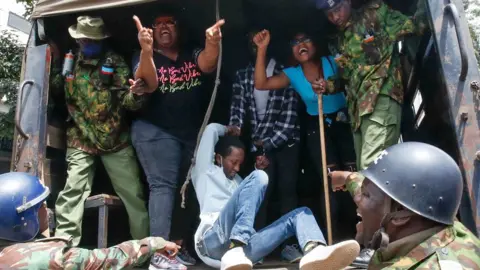
More than 200 young protesters were arrested but some of them were later released after lawyers went to the police stations where they had been detained.
“I am not going, I am not co-operating, why are you arresting me?” one protester used to be heard announcing in a viral video as she refused to board a police car.
 Reuters
Those who did not make it to the streets helped spread the word by sharing messages, pictures and videos on social media.
As the protest lacked any clear leadership, the police have found it hard to target those behind it. They banned the march on a technicality though the protesters said all requirements had been met.
And unlike previous political anti-government protests, it was not characterised by looting, destruction of property and stone-throwing.
No political affiliations or ethnic alignments were mentioned – just a clear determination by the protesters to be heard.
Several hours after the demonstrators had mobilised, the presidency appeared to bow to the pressure and announced that it would scrap some of the bill’s most contentious provisions, including a proposed 16% value-added tax (VAT) on bread.
“We have now listened to the view of Kenyans,” Kuria Kimani, the chairman of parliament’s finance committee, mentioned at a press briefing attended by means of President Ruto and lawmakers within the ruling coalition.
Adjustments to the finance invoice had been pushed by means of a “need to protect Kenyans from increased cost of living”, Mr Kimani added.
The federal government had previous defended the tax hikes, which have been projected to lift $2.7bn (£2.1bn), announcing they had been had to trim reliance on exterior borrowing.
Alternative proposed taxes which have been axed come with ones on cooking oil, cellular cash services and products and on motor cars, which critics mentioned would have crash the insurance coverage trade.
MPs at the moment are debating the revised invoice and are anticipated to vote on it after Tuesday.
The opposition, which didn’t take part within the demonstrations, needs the withdrawal of all of the invoice, terming it “punitive”.
 EPA
EPAAny other hashtag being impaired by means of the campaigners is “#unfollowRuto”, encouraging population to block following the president on X in a bid to force him to let fall the invoice.
They’ve vowed to proceed with the protests in Nairobi and alternative towns till the invoice is dropped altogether
A couple of days in the past, presidential helper David Ndii had rudely disregarded on-line efforts that began on TikTok round two weeks in the past, however following Tuesday’s display of energy he stated their fulfillment.
Following the newsletter of the draft invoice, TikTokers started making video explainers that had been extensively shared on alternative platforms like WhatsApp, Fb, Instagram and X – that will pattern for days helped by means of pushes from Kenyan influencers.
One tactic that has compelled MPs to rush realize is the record in their telephone numbers that has been shared throughout social media with the message “SMS your MP”.
MP Stephen Mule advised native media that his telephone used to be spammed with greater than 30,000 messages from younger Kenyans asking him to abjure the invoice. Alternative legislators have additionally complained that their telephones have turn out to be nearly unusable on account of the choice of texts they had been receiving.
Native media have additionally picked up the web conversations, amplifying the voices of protest and problems about the price of residing.
Some suggested veteran opposition chief Raila Odinga, who has been the face of anti-government protests for years, to avoid Tuesday’s march.
He obliged, posting on social media: “I’m a very proud father today! Well done to all those who bravely stood up for their rights!”
 AFP
AFPMutuma Mathiu, a veteran journalist, mentioned Tuesday’s occasions had shifted the dynamics of Kenyan politics: “Protest politics found a new fulcrum and a new and different generation of Kenyans found their rather loud voice.”
Prevalent political commentator Pauline Njoroge affirmative: “They aren’t simply courageous, they’re additionally very cool and neatly spoken. Lately’s youth-led protest has been probably the most non violent but very a success.”
Prof Kivutha Kibwana, a law scholar and a former county governor, urged dialogue in his post on X: “Essentially the most unhealthy factor for a central authority to do is to claim conflict on its youthful.”
Dr Willy Mutunga, a former chief justice, said young people across the world had a common enemy in “their respective ruling categories, blackmail: “The uprising is on the horizon.”
The federal government has lengthy held fears that social media may well be impaired to advertise discord and has driven for stricter oversight by means of regulators.
The net collective referred to as Kenyans on X (XOT) is famend for calling out problems and Kenya is one of the nations with the absolute best TikTok utilization price international.
In March, the inner minister threatened to limit the importance of TikTok, which he accused of spreading unholy content material.
However the protesters don’t intend to be cowed.
“We are not scared, we are not moved and this is only the beginning of the revolution. We are coming, we are many and in good numbers,” mentioned Ms Indimuli from the sidelines of Tuesday’s demonstration.
Extra BBC tales on Kenya:
 Getty Pictures/BBC