 Dennis Osadebe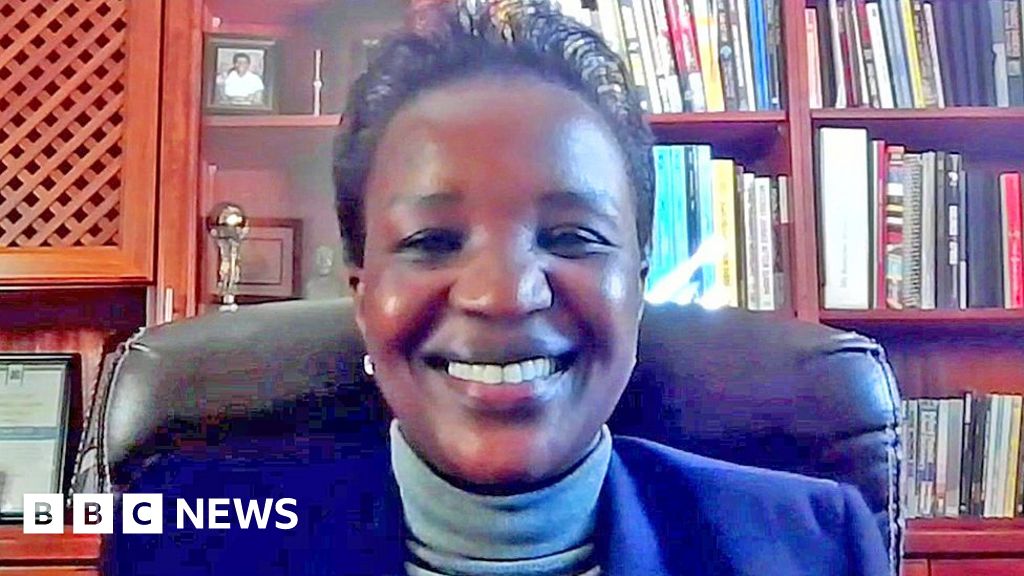
9 mins in the past
Through Jonathan Josephs, Trade reporter, BBC Information
 Getty Pictures
A important determine in South Africa’s 2d greatest political birthday celebration has warned {that a} failure to medication the economic system “might end up with violence that nobody wants”.
Within the aftermath of the elections Dion George, who oversees financial coverage for the Democratic Alliance (DA), has informed the BBC that political events wish to “set aside our deeply entrenched ideological perspectives” to get the economic system rising once more.
The African Nationwide Congress (ANC), the birthday celebration that ended white-minority rule in 1994, got here first in extreme hour’s polls, however didn’t win an outright majority and is making an attempt to create a central authority of nationwide harmony.
South Africa’s President, the ANC’s Cyril Ramaphosa, has mentioned the worries of electorate will have to be the concern.
“These issues include job creation and the growth of our economy that will be inclusive, the high cost of living, service delivery, crime and corruption,” he mentioned lately.
Just about 8 million crowd are unemployed around the nation, which means the jobless fee is 32.9%.
It is likely one of the best on this planet and has been known as a “ticking time bomb” in a UN record.
Amid ongoing energy cuts that manufacture it tricky for companies to serve as, this hour the statistics company mentioned the economic system shrank within the first 3 months of this yr – with production, mining and building struggling specifically.
Endmost yr South Africa’s economic system grew simply 0.6%.
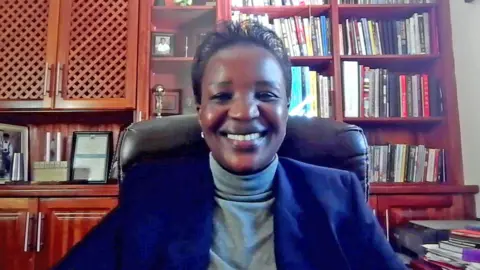
“A whole lot of small businesses have actually shut down” on account of popular issues of power provides in addition to the atmosphere run delivery and aqua networks, says Busisiwe Mavuso, the important govt of the influential foyer crew Trade Management South Africa.
Its participants come with native names such because the Bidvest conglomerate and Absa reserve in addition to global corporations reminiscent of Amazon, Volkswagen and Nestle.
Ms Muvaso says the “trading environment is not conducive” and that her participants’ “plea is for the government to really fix the basics”.
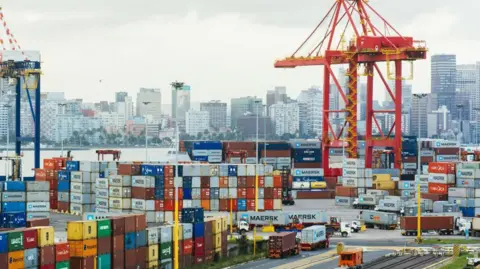
The central reserve says overseas funding fell by means of a 3rd extreme yr, given the difficulties of buying and selling in a rustic that the Global Financial Treasure (IMF) forecasts will nevertheless go back to being Africa’s greatest by means of the top of this yr.
French reserve BNP Paribas and UK oil vast Shell are among the heavy, overseas names pulling out of South Africa.
In a up to date aborted takeover bid for the mining company Anglo-American, Australia’s BHP made it sunlit it didn’t need the corporate’s South African belongings.
Regardless of having a presence in South Africa for greater than 120 years Shell says its walk is a part of a broader evaluation of its industry.
The contest for funding is fierce and Ms Mavuso says “we’ve really made it difficult for capital to land here”.
“East Africa is eating South Africa’s breakfast,” she jests, past extra hopeful that the dimensions of the home marketplace and the rule of thumb of regulation will safeguard the go back of funding as soon as the economic system is again in higher circumstance.

For each overseas and home corporations, Ms Muvaso says, the federal government has to “create an environment that is conducive for investment” – and that may convey the roles South Africa so badly wishes.
With such a lot of crowd out of labor there may be popular inequality, and he or she warns that implies “you’re never going to be able to attain social stability. So we are definitely at risk of the erosion of social cohesion”.
Among 15 to 34-year-olds the unemployment fee is 45.5% and the disappointment led to by means of a inadequency of jobs is straightforward to search out among younger crowd in Johannesburg.
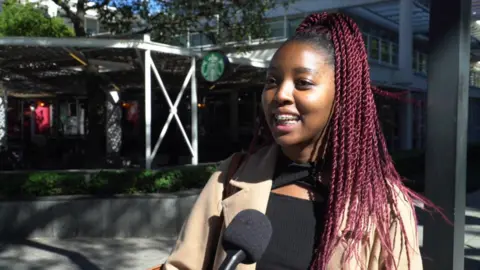
“Business opportunities for young people” will have to be the pristine govt’s precedence, says unemployed 23-year-old Tebogo Mokobane. “I’ve been looking for a job for two years as an animator and I couldn’t find anything so far.”
Siphiwe Masila, a 24-year-old monetary analyst, is of the same opinion: “More opportunities and work for the youth” are paramount and should be “extra available”.
Consistent energy cuts fear her and 24-year-old scholar Philasande Mnguni, who says his “greatest frustration is just service delivery” at a future this is tricky for “a lot of South Africans”.
South Africa has been described as the most unequal country in the world, and there is a critique from the left that the economy simply does not work for the majority of the population.
The Economic Freedom Fighters (EFF) – the fourth largest party – has called for greater nationalisation and the expropriation of land so that the wealth of the country can be more evenly shared.
The party says that some of the more business-friendly policies of the ANC and its broad-based black economic empowerment legislation have not tackled the underlying problems the country has, which are the legacy of the racist apartheid system that ended 30 years ago.
The difficulties many are facing in making ends meet in a stagnant economy led the government to increase a range of welfare payments in February’s budget.
More than 24.5 million people, or 39% of the population, receive some form of financial help from the government. It is one reason why government debt has increased to 74% of the country’s annual income and that the IMF warned in April that “decisive efforts are needed to cut spending”.
South Africa’s personal treasury has warned that “debt-service costs are choking the economy and the public finances”. They now account for 20% of all govt spending, greater than modest training, social coverage or condition.
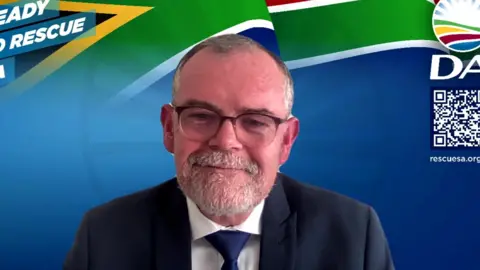
Having a look on the electrical energy disease, the DA’s Dion George says that it’s “probably” impressive for the federal government to borrow cash to medication the rustic’s crippled power community, railways and ports. However he admits that can be tricky to come up with the money for.
An alternative choice he says is to “change the model, inject the private sector into it”, which might reduce the stress on govt funds.
With centre-right DA getting 22% of the vote, it is going to have some affect on while coverage and likewise desires labour regulations reminiscent of minimal salary laws comfortable to spice up office.
“It’s priced workers out of the market, employers are not willing to employ people at the rate of the minimum wage,” says Dr George. His white-led birthday celebration proposes an exemption for 18 to 35-year-olds who’ve been unemployed for 2 years.
However it’s this sort of coverage which places the DA at odds with South Africa’s business unions, an impressive best friend of the ANC.
The unions have warned the ANC in opposition to settingup any promise with the DA.
“We reject any coalition with the DA,” Solly Phetoe, general secretary of South Africa’s power trades union federation Cosatu, said earlier this week.
“This is one political party that called for scrapping of the minimum wage, NHI and saying workers have too many rights.”
NHI refers to National Health Insurance Bill, which promises universal healthcare for all, and was signed into law by President Ramaphosa just before the election.
Mr Phetoe’s comments shows the real fears from the ANC’s support base that the DA will not support their social welfare programme.
The DA, for example, opposes both the NHI and the ANC’s black empowerment policies.
Dr George counters that “we need to rein back the strength of the trade unions in our economy”.
He says that while the ANC’s Finance Minister, Enoch Godongwana, agrees with him that South Africa has a growth problem, they disagree on whether the ANC has a spending problem.
“Possible choices wish to be made” to get the economy to grow again, “as a result of if we don’t do this… we’d finally end up with a bailout, we’ll finally end up with an economic system that doesn’t develop. And naturally, heaven cancel, we may finally end up with violence that no one desires.”
You may also be interested in:
 Getty Pictures/BBC